Large-batch scone bakers
If several trays need to come out close together, focus on usable shelf positions and tray fit, not cavity litres alone. Which? notes that a fan setting is particularly useful when cooking on more than one shelf.


For repeated trays of cheese scones, start with a fan oven whose usable shelves and cavity fit your baking trays. A double oven becomes more useful if other buffet dishes need a separate temperature or timing, but check the cabinet opening and electrical requirements before choosing either configuration.
If several trays need to come out close together, focus on usable shelf positions and tray fit, not cavity litres alone. Which? notes that a fan setting is particularly useful when cooking on more than one shelf.
If the scones must bake while another hot dish cooks, separate oven cavities let you plan different temperatures or timings. Check each cavity’s size against the dishes you intend to use.
If an existing built-in oven is being replaced, establish the cabinet and electrical fit before comparing baking functions. Bosch says installation measurements vary by model, while Electrical Safety First advises checking an oven’s power requirements.
Choose when: Scones are the main oven task and the model’s shelves can take the trays you plan to use.
Trade-off: One cavity cannot cook another dish at a different temperature at the same time.
Choose when: Other buffet dishes need a separate cooking temperature or schedule while the scones bake.
Trade-off: The cavities have their own dimensions, and a taller appliance needs suitable housing.
| Concern | What to check | Who this matters to |
|---|---|---|
| Batch capacity | Check your tray dimensions against the supplied shelves and usable positions; for a double oven, check each cavity separately. | If I need several trays ready for the buffet, I want to know how many will actually fit without splitting the baking into too many batches. Around 29% of consumers put usable batch space first. |
| Multi-shelf results | Look for an exact-model multi-level baking claim and, where available, independent temperature and heat-distribution tests. | When scones bake on more than one shelf, I want consistent results without assuming a fan feature makes every tray identical. Roughly 29% of consumers prioritise multi-shelf results. |
| Kitchen fit | Compare the exact installation instructions with the cabinet opening and electrical arrangement. | If I am replacing a built-in oven, it needs to suit my kitchen before its baking features matter. Around 24% of consumers put installation fit first. |
| Cleaning and energy use | Identify the model’s cleaning method and compare energy information between comparable oven types and sizes. | After preparing a buffet, I want cleaning to be manageable and the oven’s size to make sense for how often I use it. About 18% of consumers prioritise cleaning and running considerations. |
Combined litres describe two separate cavities in a double oven. Neither combined nor single-cavity capacity tells you whether your trays fit the available shelf positions.
Check the dimensions of your trays, the individual cavity layouts and which shelves are supplied.
A stated multi-level function does not establish identical browning for every recipe, load and tray position. Which? assesses oven temperature control and heat distribution separately.
Look for tests of the exact model where available, and try a small batch before the buffet if consistent results are especially important.
A tall double oven is not automatically a replacement for a standard single oven. Bosch notes that installation measurements vary by model, and Electrical Safety First advises reviewing power requirements.
Measure the opening, consult the model’s installation instructions and seek a qualified electrician’s assessment if the electrical connection is uncertain.
Changing the cabinet or electrical installation may also require additional work.
Energy Saving Trust notes that larger appliances often use more energy even when they have the same rating. The space you use for a typical batch matters alongside the label.
Compare similar oven configurations and consider how often your cooking calls for the additional capacity.
A reference point for single built-in ovens with a stated multi-level baking function, including the Serie 4 HQA534BS3B.
A reference point for a single built-in oven with a stated three-level hot-air function, such as the N 30 B1DCC0AK3B.
A reference point for cooks considering a built-in double oven for scones and other buffet dishes, including the BBXDF25300.
These built-in single ovens suit a scone-focused cooking plan, while the double ovens offer separate cavities for other buffet dishes. Check tray space and installation fit for the particular model you choose.
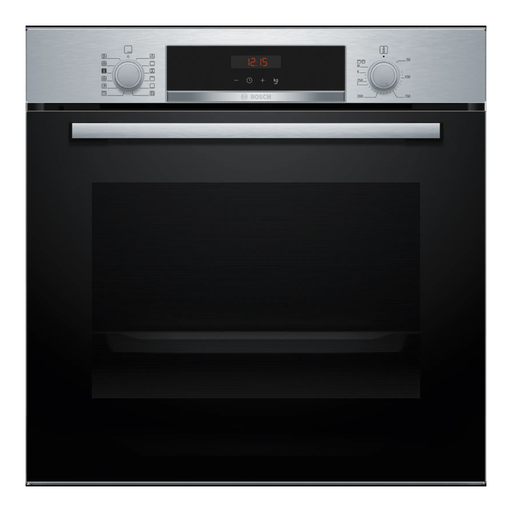 No image available
Consider a single oven when scones are the main dish needing oven space. This model is listed as pyrolytic; check your tray fit and the model’s installation instructions before ordering.
 No image available
Separate cavities may suit a buffet that includes hot dishes alongside the scones. Check each cavity’s tray space and confirm that your kitchen has suitable housing for this 90cm double oven.
 No image available
A single cavity suits a plan centred on baking the scones rather than cooking a second dish at another temperature. Check the shelf layout against your trays and the installation instructions against your kitchen.
 No image available
Separate cavities are useful to consider when scones and another buffet dish need different timings. This model is intended for eye-level built-in installation, not under a worktop; check the housing and electrical requirements before choosing it.
 No image available
A double oven gives you separate cavities to plan scones and another hot buffet dish. Check the usable tray space in each cavity, as well as the cabinet and electrical requirements for this model.
A fan setting is a useful starting point for multi-shelf baking: Which? says it works well for most cooking, particularly when more than one shelf is used. Check the exact oven’s stated multi-level capability and, where available, independent temperature and heat-distribution tests.
Not necessarily: a single oven may suit scone-focused batches if its shelves accommodate your trays. A double oven is more relevant when another dish needs a separate temperature or timing; compare the usable size of each cavity rather than relying on combined litres.
Measure the cabinet opening and compare it with the exact model’s installation instructions, including the required clearances and connection arrangement. Bosch says installation measurements vary by model, so a general size description is not enough to establish fit.
Arrange a qualified assessment if the electrical connection or circuit suitability is uncertain. Electrical Safety First advises checking an oven’s power requirements, and Neff recommends installation by a trained and certified electrician; follow the instructions for the model and the requirements applicable to your home.