What matters when buying?
Decide whether replacing the installed oven is possible before comparing baking and cleaning features. A countertop model avoids built-in fitting, but it still needs an appropriate place and electrical connection.
Built-in oven
Consider it when: the kitchen has suitable housing and electrical provision, and you are authorised to arrange a replacement.
Allow for: fixed dimensions and model-specific connection requirements; Bosch GB says its HQA534BB3B has no plug and requires electrical connection by an electrician.
Countertop mini oven
Consider it when: changing the installed appliance is not an option and a suitable shared worktop position is available.
Allow for: its footprint, the manufacturer’s clearance instructions and its electrical load. Electrical Safety First warns against overloading extension leads.
| Concern |
Buying checks |
Who this matters to |
| Even shortbread baking |
Check the exact model’s fan or multi-level setting, usable shelf positions and whether your shortbread tray fits. |
When I make several trays, I want to know whether the oven can accommodate them without assuming every shelf will bake alike. Around 40% of consumers put repeatable tray baking first. |
| Shared cleaning and allergens |
Check how the cleaning feature works and which trays, racks and surfaces still need washing between uses. |
If others use the oven between my batches, I need a routine that deals with residue and keeps allergen-sensitive equipment separate. Around 30% of consumers make shared cleaning and hygiene their primary concern. |
| Fit, power and permission |
Measure the housing or clear worktop area; confirm the connection requirements and permission to change the installed appliance. |
Before choosing cooking modes, I need an oven that can be placed or installed appropriately in our kitchen. For around 30% of consumers, space, electrical provision or permission comes first. |
Relevant brands to consider
These model examples illustrate features worth checking; a feature on one oven does not apply to every oven from the same brand.
Bosch
A reference point for built-in ovens with model-specific multi-level heating and cleaning features.
- Bosch GB lists 3D Hotair for even heat on up to three levels and CleanCoating on the HQA534BB3B.
- That model measures 595 × 594 × 548 mm and is specified without a plug, with electrical connection by an electrician. Check both housing and connection requirements.
NEFF
A reference point when multi-level baking, cleaning features and access to a built-in oven door matter.
- NEFF lists CircoTherm baking on up to three levels, Clean Coating with EasyClean and a Slide&Hide door on the B3ACE4AN3B.
- The B3ACE4AN3B measures 595 × 594 × 548 mm and has no plug; its specified electrical connection is by an electrician.
AEG
A reference point for a built-in cavity with documented multi-level cooking and a pyrolytic cleaning option.
- AEG UK lists a 72 L cavity, Multilevel Cooking and pyrolytic cleaning on the BPX535061M.
- AEG lists a 3490 W total electrical load for that model. Check the proposed installation and remember that its cleaning programme does not replace washing shared trays and racks.
Joybuy oven choices
These Joybuy choices are built-in ovens for kitchens where replacing the installed appliance is an option. Compare each model’s housing and connection requirements before considering its baking or cleaning features.
 No image available
Bosch Series 4 MBA533BB3B Electric Double Oven
Consider the two-cavity format if several sharers need to plan oven time, but check that your shortbread trays fit the usable shelf positions. This model requires eye-level built-in housing rather than an under-worktop position; have the housing and electrical provision assessed before ordering.
View on Joybuy
 No image available
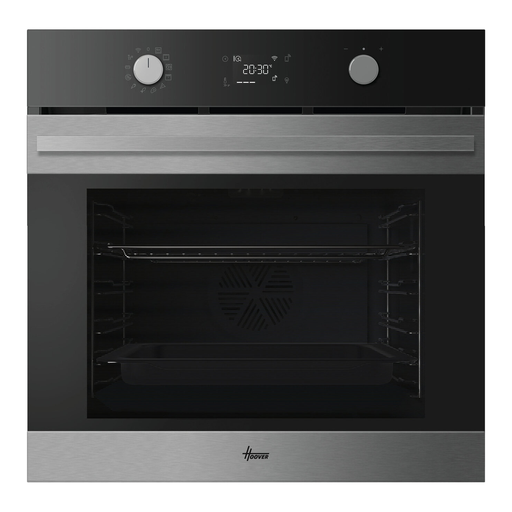
Hoover HO6 C5B3YTX H-Oven 500 70 L Pyrolytic Oven
The pyrolytic feature may interest sharers who want help dealing with baked-on residue, though trays and allergen-sensitive equipment still need an agreed cleaning routine. Check the required installation format before buying: the product’s descriptions conflict between built-in and freestanding. Also confirm tray fit and usable shelf positions if you plan to bake more than one shortbread tray.
View on Joybuy
 No image available
Candy FIDCN605 65 L Built-In Electric Single Oven
This single-oven format suits a kitchen replacing an installed unit rather than adding a countertop appliance. If you want to use its fan-assisted setting for shortbread, check your tray fit, usable shelf positions and recipe instructions. Confirm the specified 13A connection with a qualified installer; no plug is supplied.
View on Joybuy
Common questions
Do I need a fan oven to bake shortbread?
Not necessarily, but a documented fan or multi-level heating feature is worth checking if you regularly bake several trays. Bosch GB and NEFF describe baking on up to three levels on their named models; check tray dimensions, shelf positions and the instructions for the particular oven rather than assuming all fan settings behave alike.
Can I replace the built-in oven in a rented shared home?
Check the tenancy agreement and obtain the relevant landlord or manager’s agreement before arranging a replacement. GOV.UK advises tenants to carry out repairs only if their tenancy agreement permits it. The proposed oven’s connection and fitting requirements also need checking; Electrical Safety First advises using a qualified electrician for oven fitting.
Could a countertop mini oven work instead?
A countertop mini oven could work if the household can allocate suitable worktop space and meet the model’s placement and electrical requirements. For a sense of footprint, The Tower T14045 is listed at H34 × W55.5 × D38 cm; measure the oven you actually intend to buy and follow its clearance instructions.
Does every shared kitchen need an extra oven?
Do not assume one appliance requirement applies to every shared property. Stockton-on-Tees Borough Council publishes local communal-kitchen standards, but the relevant requirements depend on the property and its location. If this is a property-compliance question, check the local council’s current standards and any licence conditions.
How should we handle allergens when sharing an oven?
Use an agreed cleaning and equipment-handling routine rather than relying on an oven feature to prevent cross-contamination. The Food Standards Agency’s MyHACCP guidance calls for potential cross-contamination areas to be identified and controlled. Clean trays and racks, and agree how equipment will be stored and prepared where separation is needed.


