Who needs to consider these choices?

Regular batch bakers

If several trays of oat cookies need baking in one session, check the chosen model's guidance for using more than one shelf. Bosch and Neff describe multi-level cooking on the cited models, while Hotpoint's guidance for its cited model allows up to two shelves and advises swapping trays halfway through.

Shared-kitchen coordinators

When several people use the oven, agreeing who cleans it and when it is available can matter as much as cavity size. Cleaning features may make routine upkeep easier, but users still need a workable handover routine.

Home cookie sellers and event bakers

If cookies are sold or supplied through a food business, oven choice sits alongside food-business registration and allergen management. The applicable duties depend on what the kitchen is used for, not on the oven's baking functions.

What matters when choosing?

Existing or replacement single built-in oven

Consider it when: Most sessions involve one or two trays and the kitchen already has a suitable single-oven space.

Trade-off: One cavity must be shared with other cooking; a replacement still needs model-specific fitting and electrical checks.

Built-in double oven

Consider it when: Cookie batches regularly clash with other cooking and separate cavities would ease that conflict.

Trade-off: It needs a suitable housing and connection. Bosch lists its MHA133BR0B double oven at 888 mm high, compared with 595 mm for the cited Neff B1GCC0AN0B single oven; these are model-specific dimensions.

Separate countertop oven

Consider it when: Another appliance is permitted and there is a suitable worktop location and electrical supply.

Trade-off: It avoids changing fitted cabinetry but adds an appliance whose ventilation, cable and socket arrangements must be managed in the shared space.

ConcernWhat to checkWho this matters to
Even baking and batch capacity Check the exact model's guidance for simultaneous shelf use and whether the trays you need are included. A fan function alone does not specify how many cookie trays to use. When I bake several trays in one session, I want a clear plan for using the shelves without relying on a claim about a different model. Around 42% of consumers would put batch baking first.
Cleaning and shared use Check the cleaning system and agree who clears crumbs and residue after each session. For food-business use, keep allergen procedures separate from oven-cleaning features. If other people need the oven after me, I need a clean-up routine we can all follow. For around 33% of consumers, shared-use cleaning would be the primary concern.
Space and electrical fit Check the installation instructions against the available space and connection; obtain permission before changes. For an added appliance, keep ventilation clear and avoid overloaded or daisy-chained extensions. Before bringing another oven into a kitchen I share, I need to know where it can go and how it can be connected. Space and installation would come first for around 25% of consumers.

Mistakes to avoid

  • Choosing a built-in oven by front width alone

    A similar-looking front can conceal a very different housing requirement. Bosch lists the MHA133BR0B double oven at 888 mm high and Neff lists the B1GCC0AN0B single oven at 595 mm; both specify electrical connection by an electrician.

    Measure the cabinet opening and depth, consult the selected model's installation instructions, and confirm permission and electrical arrangements before ordering.

  • Confusing multi-level baking with allergen control

    A claim about heat distribution does not establish that cookies are suitable for someone with an allergy. For food-business use, the Food Standards Agency requires allergen information and allergen management during preparation.

    Keep ingredient information and an appropriate cleaning and separation process for food-business activity; do not use an oven feature as an allergen-safety claim.

  • Adding a countertop oven without planning its location

    An extra appliance changes how the kitchen's worktop and sockets are used. Electrical Safety First warns against overloaded extension equipment and blocked appliance ventilation.

    Check the appliance instructions and electrical ratings, use an appropriate location, and do not overload or daisy-chain extension leads.

  • Buying another cavity to solve a scheduling problem

    Separate cavities can allow different cooking tasks at once, but they do not settle who has access to preparation space or who cleans up afterwards.

    Agree how baking sessions and cleaning will work before deciding whether the additional cavity addresses the conflict.

Relevant brands for reference

Bosch

Its MHA133BR0B is an example of a built-in double oven to consider for frequent shared-kitchen baking.

  • Bosch states that its 3D Hotair system distributes heat across up to three levels on this model.
  • At 888 × 594 × 550 mm, this model needs compatible housing; Bosch specifies connection by an electrician.

Neff

Its B1GCC0AN0B is a built-in single-oven example for buyers considering multi-level baking.

  • Neff states that CircoTherm allows baking on up to three levels at once on this model.
  • The cited oven measures 595 × 594 × 548 mm and requires electrical connection by an electrician.

AEG

Its GE7CP61FB is a built-in double-oven example with features relevant to batch cooking and shared upkeep.

  • AEG states that this model supports cooking on up to three trays and includes catalytic cleaning.
  • Check the exact installation instructions against the kitchen: AEG lists built-in dimensions of 875 × 560 × 550 mm and a total electrical loading of 5800 W.

Hotpoint

Its HO 455H B UK is a built-in single-oven example for buyers weighing baking arrangements against cleaning.

  • Hotpoint describes a steam-cleaning cycle and a removable door for this model.
  • Its Convection Bake guidance allows a maximum of two shelves at once and advises swapping tray positions halfway through.

Ovens and cooker options for shared-kitchen baking

These Joybuy choices include single and double built-in ovens, plus a freestanding cooker with two oven cavities. Choose by the kitchen's existing space and connection before weighing up how many baking sessions must share the oven.
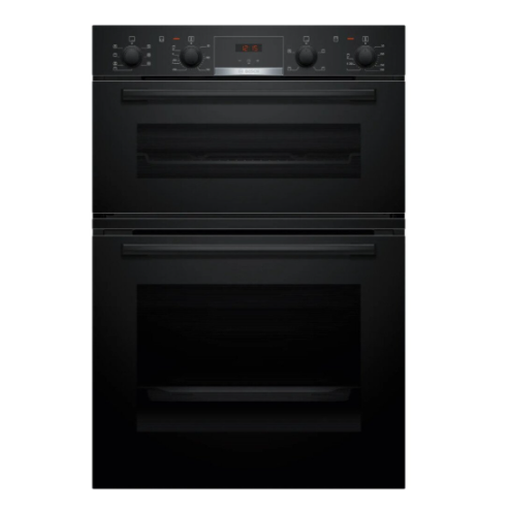
Bosch Series 4 MBA533BB3B electric double oven in black

Bosch Series 4 MBA533BB3B electric double oven, black

Consider this built-in double oven if separate cooking spaces would ease clashes over the shared kitchen. Confirm that the proposed housing, electrical arrangement and any supplied trays suit your baking plans.

View on Joybuy

Bosch HHF113BA0B Series 2 built-in single electric oven in black

Bosch HHF113BA0B Series 2 built-in single electric oven, black

A single-cavity option if the kitchen has a suitable built-in space and users can schedule baking around other cooking. Check the model's cookie-tray guidance, housing requirements and electrical connection before replacing an existing oven.

View on Joybuy
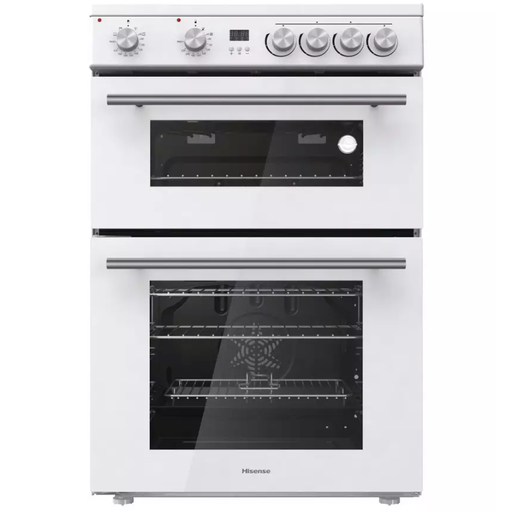
Hisense HDE3211BWUK 60 cm electric cooker with double oven and ceramic hob in white

Hisense HDE3211BWUK 60 cm electric cooker with double oven and ceramic hob, white

Consider this freestanding cooker only if the shared kitchen has space for a cooker rather than a built-in oven. Its double-oven layout may help separate cooking tasks; confirm permission, electrical requirements and the model's guidance for simultaneous cookie trays.

View on Joybuy
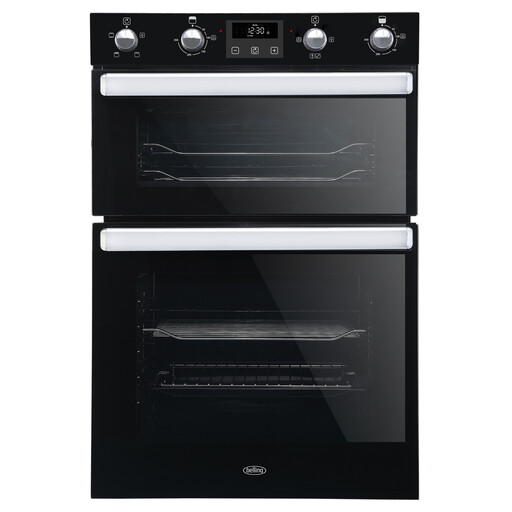
Belling BEL BI902FP built-in double electric oven in black

Belling BEL BI902FP built-in double electric oven, black

A double-oven option for a shared kitchen where separate cavities would make scheduling easier. Check the exact cabinet and electrical requirements, along with the permitted number of simultaneous baking trays, before committing to this model.

View on Joybuy
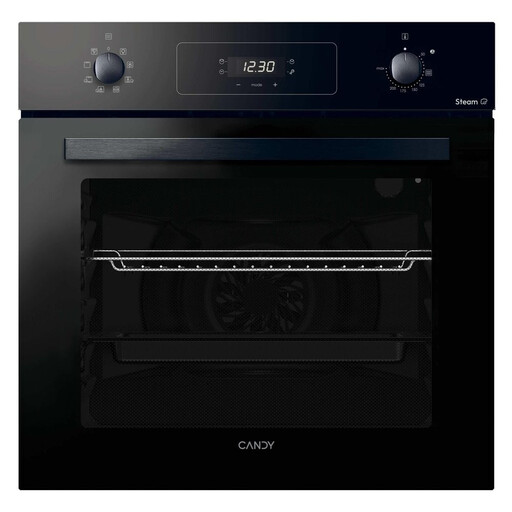
Candy FIDCN605 65 L built-in single electric oven in black

Candy FIDCN605 65 L built-in single electric oven, black

This single oven may suit a kitchen where baking can be scheduled within one cavity. If several oat-cookie trays are central to the choice, check its model-specific shelf guidance; also confirm the housing and final electrical connection.

View on Joybuy

Common questions

Do oat cookies need allergen controls in a shared kitchen?

If the cookies are prepared through a food business, allergen information and management are required. The Food Standards Agency lists oats among cereals containing gluten for allergen-information purposes; an oven's fan or cleaning feature does not replace ingredient records and preparation controls. Private sharing does not, by itself, establish that the kitchen is a food business.

When should a home cookie seller register a food business?

If the activity counts as a food business, GOV.UK says to register with the local authority at least 28 days before trading or starting food operations. Selling, preparing or distributing cookies can bring an activity within food-business rules, so establish how the planned activity is classified before starting.

Can a countertop oven use an extension lead?

Do not assume an extension lead is suitable for the oven and other appliances using the socket. Electrical Safety First advises against overloading extension equipment or daisy-chaining leads; check the appliance and lead ratings and the existing socket load, and keep appliance ventilation unobstructed.

Does a built-in oven normally use a standard plug?

Connection depends on the exact model. Bosch specifies electrician connection for its MHA133BR0B, as does Neff for its B1GCC0AN0B; check the installation instructions for the oven you intend to buy rather than assuming it can use an existing plug socket.