Small-batch countertop cooks
If you roast modest amounts of squash and cannot install a fitted oven, consider a countertop mini oven. Check both the usable tray area and the worktop clearance required by its instructions.


Choose a countertop mini oven if you have no suitable built-in space and usually roast small batches. A compact built-in oven with microwave functions suits a fitted kitchen where cabinet height is limited; a standard built-in fan oven suits an existing full-height oven space and regular larger batches. Whichever format you choose, check that your tray fits with room to spread the squash cubes: cavity capacity and a fan setting alone cannot establish that.
If you roast modest amounts of squash and cannot install a fitted oven, consider a countertop mini oven. Check both the usable tray area and the worktop clearance required by its instructions.
If you have a suitable fitted position but limited cabinet height, a compact built-in oven with microwave functions may cover both roasting and reheating. Check the exact installation requirements before committing to the format.
If your kitchen accommodates a standard built-in oven and you roast larger batches regularly, compare usable tray space as well as independent assessments of heat distribution and temperature accuracy.
Decide where the oven can safely go before comparing its cooking functions. Countertop, compact built-in and standard built-in models solve different space problems.
Choose when: You need a worktop appliance for small batches without altering cabinetry.
Trade-off: It occupies worktop space, and its usable tray area may limit each batch.
Choose when: You have a suitable fitted position, limited cabinet height and a use for microwave functions.
Trade-off: It requires compatible cabinetry and electrical provision rather than a clear worktop.
Choose when: You already have a conventional oven space and routinely cook larger batches.
Trade-off: It does not solve a shortage of full-height cabinet space.
| Concern | What to check | Who this matters to |
|---|---|---|
| Kitchen fit and installation | Measure the available worktop or cabinet position; check required clearances and the model’s electrical instructions. | If cabinet alterations are not possible, I need an oven I can place and power appropriately. Roughly 31% of consumers put space and installation first. |
| Usable batch capacity | Compare internal rack and tray dimensions with your cookware, not just cavity litres. | When cooking for more than one sitting, I want enough tray area to spread the squash rather than crowd it. For around 25% of consumers, usable batch size is the primary concern. |
| Even browning | Confirm the exact model’s fan or hot-air mode and look for independent heat-distribution and temperature-accuracy assessments where available. | I care most about avoiding pale pieces beside over-browned ones. Dependable browning is the first priority for roughly 25% of consumers. |
| Cleaning and other uses | Check how the tray and interior are cleaned, and whether you would use the additional cooking modes. | If the oven also handles occasional reheating or grilling, I want it to remain practical to clean after roasting. Around 19% of consumers primarily value cleaning and versatility. |
The stated volumes of the Russell Hobbs 26680 and Bosch CMA583MS0B do not establish whether your chosen tray fits or leaves room to spread the squash.
Compare internal cavity, rack and supplied-tray dimensions with the cookware you intend to use.
An energy claim based on one food and cooking method does not establish energy use for fresh squash cubes.
Read the comparison conditions before using such a claim to choose between ovens for your routine.
Electrical Safety First notes that oven connection requirements differ and that high-power appliances can overload an extension lead shared with other large appliances.
Check the exact model’s installation and power instructions; arrange a qualified electrician when the required connection or your installation calls for one.
Which? reports substantial variation in heat coverage across its oven grill-pan tests. A fan label alone does not establish how evenly a particular oven cooks.
Compare model-specific independent assessments where available, and leave room between the squash cubes on the tray.
A countertop option for kitchens where a fitted appliance is impractical.
A compact built-in combination option where a suitable cabinet position and microwave functions are priorities.
Compact built-in ovens for kitchens considering several cooking tasks in one fitted position.
A standard built-in fan-oven option for kitchens with a conventional fitted-oven space.
These choices cover a countertop oven for smaller batches and standard built-in ovens for kitchens with a suitable fitted position. Check tray fit and installation requirements for the individual model.
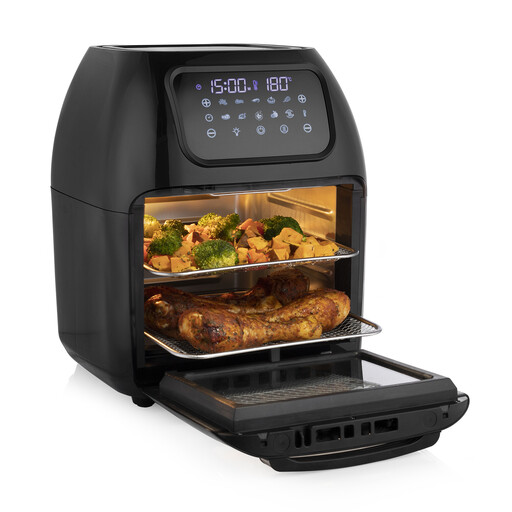 No image available
Consider this countertop format if you roast small batches and do not want a built-in oven.
The product name specifies 10L, 1800W and 10 programmes. Check the internal rack and tray dimensions, worktop clearance and electrical instructions against your intended setup.
 No image available
Consider this for roasting only if your kitchen has a suitable built-in position and compatible gas provision.
The product name specifies a 70L gas fan oven. Confirm cabinet fit, the gas installation requirements and whether the baking tray accommodates your intended batch.
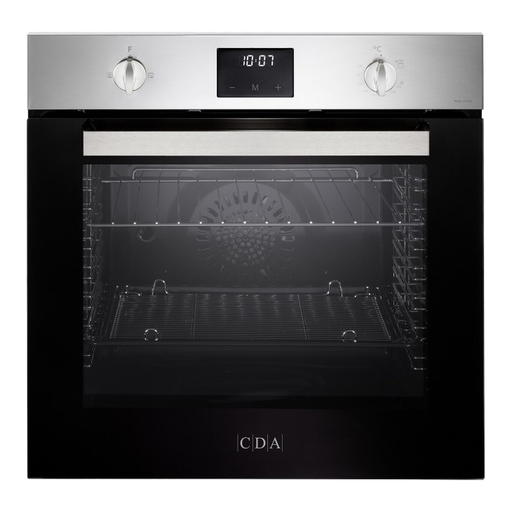
 No image available
Consider this standard built-in format if you have a suitable fitted position and want to roast in an electric oven.
The product name specifies a 65L cavity. Confirm the installation instructions and electrical connection requirements, then check the supplied-tray dimensions against your batch.
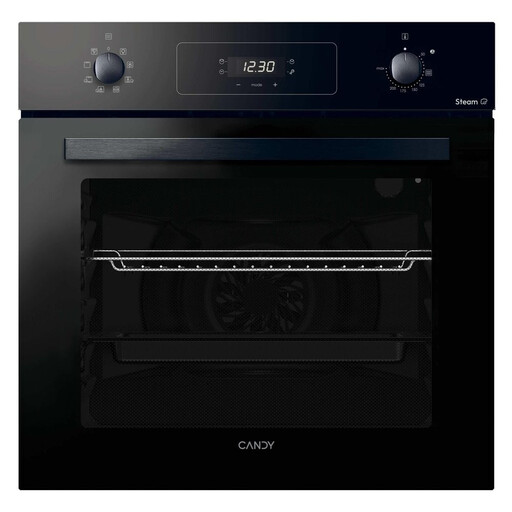
 No image available
Consider this for a kitchen with a suitable standard built-in oven position, rather than for portable worktop use.
Check the housing dimensions, ventilation and electrical installation instructions. Compare usable tray dimensions and model-specific cooking assessments if single-layer fit and even browning are priorities.
Yes, if the model has a suitable baking mode and enough usable tray area to spread the cubes. Russell Hobbs lists a Bake function for its 26680 mini oven, but its 20-litre capacity does not tell you whether your preferred tray fits.
Not in the two examples here: Bosch specifies the compact CMA583MS0B at 594 mm wide and 454 mm high, while Beko specifies the standard BBIF12311 at 59.4 cm wide and 59.5 cm high. For these models, the significant dimensional difference is height; check the installation dimensions of whichever oven you choose.
Do not assume an extension lead is suitable. Electrical Safety First warns that high-power cooking appliances can overload one when shared with other large appliances; follow the oven’s electrical instructions and seek a qualified electrician’s advice if your setup is uncertain.
No single connection method applies to every model. Electrical Safety First says some ovens use a plug and fuse while others require hardwiring into a dedicated circuit, so check the exact oven’s installation instructions before ordering.
No: check the squash itself for the tenderness and browning you want, and follow the recipe or packet’s temperature guidance. The Food Standards Agency advises following cooking guidance on recipes or packaging; instructions for any prepared or frozen ingredients remain relevant.