Choose support according to the task: repeated raised-arm installation or finishing may suit shoulder support, while a compatible heavy drilling or demolition tool may call for a tool balancer. Before choosing a wearable, assess whether task redesign or fixed equipment can avoid hazardous handling; then trial the proposed equipment with the worker’s tools and other worn kit, since support specifications do not establish comfortable all-day use. For Great Britain workplaces, the Health and Safety Executive (HSE) advises avoiding hazardous manual handling where reasonably practicable, assessing unavoidable work and reducing its risk.
Who this is for
Ceiling installers and finishers
If you regularly fasten, tape, sand or install services with your arms raised, you need support that still allows useful reach and movement. Hilti identifies ceiling fixing and surface finishing as EXO-S tasks; a construction-worker study published in Applied Sciences also identified upper-track installation and ceiling taping as tasks workers perceived could benefit from shoulder support.
Heavy-tool drilling crews
If your main challenge is controlling a particular heavy tool during repeated drilling or demolition, check the tool, holder and working angle together. Hilti describes the EXO-T-22 for specified drilling and demolition applications, rather than as general support for ceiling finishing.
Site managers planning controls
If you are comparing wearables with changes to the work method, start with the handling task and the equipment workers already use. HSE guidance prioritises avoiding hazardous manual handling where reasonably practicable and identifies ceiling lifts and adjustable props for positioning plasterboard overhead.
What to consider before buying
Shoulder-support exoskeletons
Consider when: your recurring task involves raised-arm installation or finishing, rather than supporting the full weight of a board.
Trade-off: check fit, reach and compatibility with harnesses and tool belts in a task-specific trial; manufacturer claims do not establish comfort for a full shift.
Powered overhead-work support
Consider when: adjustable powered assistance suits the work in front of the chest or overhead and battery management is workable.
Trade-off: Festool specifies up to 50 N support per arm for EXO 18-Basic, a 7.00 kg product weight without accessories and a 1.5–5 hour runtime with its stated 4.0 Ah battery; confirm the supplied components and trial the complete setup.
Wearable tool balancers
Consider when: one compatible heavy drilling or demolition tool is the main load, particularly for the specified wall-facing tasks and some over-shoulder drilling angles.
Trade-off: Hilti specifies a 17 kg maximum load and a 7.75 kg EXO-T-22 device weight; check the exact tool, holder and working angle rather than treating it as general arm support.
Task redesign and fixed equipment
Consider when: you can remove or reduce the overhead handling demand before choosing wearable support.
Trade-off: the aid must suit the site and task; for overhead plasterboard positioning, HSE advises considering ceiling lifts and adjustable props.
| Concern |
What to check when buying |
Who this matters to |
| Support during raised-arm work |
Trial the actual task and arm positions; check adjustable support and the model’s stated applications. |
If I am fastening or finishing above shoulder height, I need support that still lets me reach and change position; about 33% of consumers put raised-arm support first. |
| Avoiding overhead handling |
Assess whether positioning equipment, lighter tools or a changed work sequence is practicable before procurement. HSE identifies ceiling lifts and adjustable props for overhead plasterboard positioning. |
When I am positioning boards overhead, I want to know whether equipment or a different method can remove that handling before I consider a wearable; about 27% of consumers prioritise avoiding hazardous overhead handling. |
| Control of a specific heavy tool |
Confirm the complete tool load, holder fit, drilling direction, power components and task sequence. |
If one heavy drilling or demolition tool is my main concern, I need to check that the balancer and holder suit that exact setup; about 20% of consumers put heavy-tool control first. |
| Fit and movement across tasks |
Trial representative users with their usual worn kit and task changes; check adjustment, cleaning instructions and movement. |
When my work changes between tasks or involves tight spaces, I need a wearable that works with my other kit and movements; about 20% of consumers prioritise fit and mobility. |
Buying pitfalls
-
Assuming a shoulder exoskeleton replaces controls for handling boards
Arm support does not remove the need to assess the handling task. For Great Britain workplaces, HSE’s manual-handling guidance sets out avoiding hazardous handling where reasonably practicable, assessing unavoidable work and reducing risk.
Assess material positioning and practicable fixed aids before selecting support for any remaining fastening or finishing work.
-
Choosing a tool balancer by its maximum load alone
A stated load limit does not establish that a particular tool housing, holder or working angle is suitable.
Check the exact tool and holder combination, supplied power components and planned drilling or demolition task.
-
Treating an all-day comfort claim as proof of site suitability
Construction-worker research and a review of construction exoskeletons identify concerns including comfort, mobility and compatibility with personal protective equipment; they do not establish all-shift performance for every model.
Run a task-specific trial that includes movement, other worn kit, cleaning and changes between tasks.
Relevant brands
Hilti
Hilti’s UK listings cover the EXO-S passive shoulder support and the distinct EXO-T-22 powered tool balancer for specified heavy-tool applications.
- Hilti specifies EXO-S for repetitive overhead tasks such as installation and finishing. Its standard listing covers bicep circumference up to 40 cm; Hilti lists a separate large variant for measurements above 40 cm.
- Hilti specifies the EXO-T-22 at 7.75 kg with a maximum load of 17 kg, and lists different holders for tool housings.
- The tool balancer’s wall-oriented applications should not be generalised to ceiling finishing. Check the exact tool and holder, and assess fit and movement in the intended task.
Festool
Festool lists the powered EXO 18-Basic ExoActive for overhead and in-front-of-chest trade work.
- Festool specifies adjustable assistance of up to 50 N per arm and a 1.5–5 hour runtime with its stated 4.0 Ah battery.
- Festool gives a product weight of 7.00 kg without accessories. Confirm which power components are supplied and trial the complete setup; the stated assistance does not establish full-shift comfort or suitability for a particular load.
Skelex
Skelex describes the 360 as a passive shoulder and arm support for elevated work.
- The manufacturer describes adjustment options for support, height and arm-cup positioning.
- Descriptions of comfort or breathability do not establish how the device will feel across a full shift. A UK supplier lists washable components and a two-year warranty for a named variant, subject to its terms; check the instructions and warranty for the model offered.
Joybuy product choices
These Joybuy listings cover fixed supports for overhead ceiling-panel and plasterboard work, rather than wearable exoskeletons.
 No image available
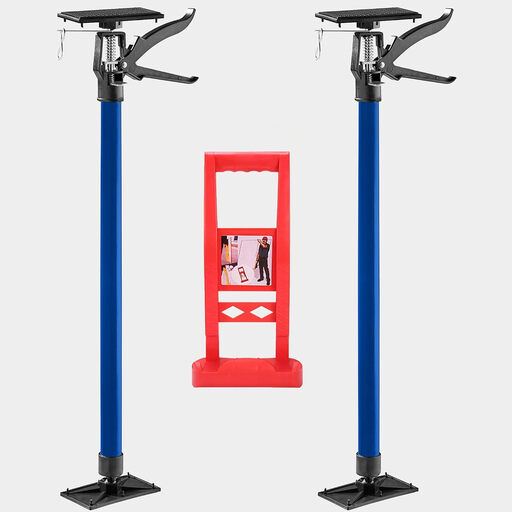
Two-Pack Telescopic Plasterboard Support Props with Board Carrier
For overhead ceiling-panel work, these props are a fixed-support option rather than wearable arm assistance. The title specifies a board carrier and double-locking tensioner poles.
Using props does not replace the applicable workplace manual-handling assessment and controls.
View on Joybuy
 No image available
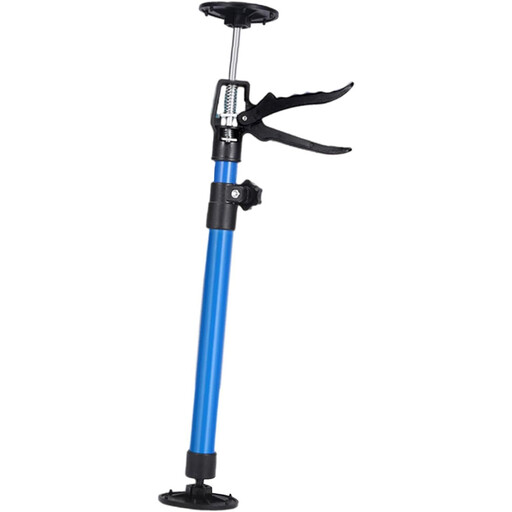
Pair of Adjustable Drywall and Plasterboard Support Props, 115–290 cm
For overhead ceiling and plasterboard work, these props are a fixed-support option rather than wearable arm assistance. The product name gives an adjustment range of 115–290 cm.
Using props does not replace the applicable workplace manual-handling assessment and controls.
View on Joybuy
Frequently asked questions
Can an exoskeleton replace a workplace manual-handling assessment?
No. For Great Britain workplaces, HSE advises avoiding hazardous manual handling where reasonably practicable, assessing unavoidable operations and reducing risk. Northern Ireland has separate manual-handling requirements, including consideration of its control hierarchy.
Will an arm-support device hold a plasterboard panel against a ceiling?
Do not infer that from an arm-support rating. For overhead plasterboard positioning, HSE advises considering ceiling lifts and adjustable props; assess positioning and fixing as separate parts of the job.
How should a crew check fit and cleaning before deployment?
Trial the device with the worker’s actual tool belt, harness where used, access conditions and representative movements. A construction-worker study published in Applied Sciences identified compatibility with harnesses and tool belts, adjustability, movement in tight spaces and ease of cleaning as considerations; follow the selected model’s cleaning instructions.
How should I assess a powered model’s runtime?
Compare the stated runtime with the work pattern and confirm which battery and charger are included. Festool specifies a 1.5–5 hour runtime for EXO 18-Basic with its stated 4.0 Ah battery, so trial the supplied setup against the shift’s task sequence.
What should employers check when the worksite is in Northern Ireland?
Apply the Northern Ireland requirements rather than treating Great Britain guidance as the statement of Northern Ireland law. The Health and Safety Executive for Northern Ireland identifies the Manual Handling Operations Regulations (Northern Ireland) 1992 and requirements to manage manual-handling risks, assess them and develop a safe system of work.


