Fixed overhead painting creators
You want to leave a repeatable view above the desk, fit the whole sheet into the shot and keep brushwork visible without rebuilding the setup each time.


For a mostly fixed overhead watercolour shot, start by checking whether a compact camera can fit the whole sheet in frame and focus at the height your room allows. A pocket gimbal camera makes more sense if you also want handheld clips and compact storage; an interchangeable-lens camera offers more lens choice but requires a larger setup. Whichever route you take, plan for a secure overhead support and test the composition under your usual lighting.
You want to leave a repeatable view above the desk, fit the whole sheet into the shot and keep brushwork visible without rebuilding the setup each time.
You need to put the camera away in a shared bedroom and may switch between overhead painting footage, handheld process clips and vertical video.
You are willing to store a camera and lenses separately because changing lenses for later projects matters more to you than keeping equipment to a minimum.
Measure your available camera-to-paper distance and the area you want in frame before comparing recording features. That measurement helps distinguish a fixed-lens compact, a pocket gimbal camera and a camera with interchangeable lenses.
Consider it when: You mainly film a repeatable desk view and want to avoid choosing and storing separate lenses.
Trade-off: The built-in lens cannot be changed if your available mounting height later calls for a different view.
Consider it when: The camera must be put away after painting or also used for handheld process clips.
Trade-off: A gimbal does not replace a rigid overhead support. DJI specifies a 0.2 m minimum focus distance for Osmo Pocket 3.
Consider it when: You want to select different lenses as your painting videos or other photography change.
Trade-off: The lens, support and storage space become separate decisions; check the complete mounted weight.
Consider it when: Compact equipment or an unusual mounting position matters more than a conventional-looking desk view.
Trade-off: Test the paper edges and background before committing to a very wide view.
| Concern | What to check | Who this matters to |
|---|---|---|
| Overhead framing and mounting | Measure the paper and available mounting height; check the view and close-focus distance there. Choose a support rated for the mounted equipment. | I need the whole painting to stay in a repeatable, secure shot without moving the stand mid-session; around 36% of consumers put overhead framing and mounting first. |
| Indoor detail and colour | Check lens and sensor specifications, then try the planned lighting and white balance with your paper and paints. | If changing bedroom light makes the paper or paint look wrong, I need a setup I can adjust consistently; indoor detail and colour are the main concern for roughly 29% of consumers. |
| Compact workflow | Check the camera’s size, storage media and how readily the mounted setup can be removed from the desk. | I share the room and need to clear the desk after filming rather than leave equipment in place; about 21% of consumers primarily need a compact, low-disruption workflow. |
| Lens flexibility | Confirm the exact body-and-lens kit, lens mount and total mounted weight. | I want to change lenses for future close-ups or other projects and can accommodate more equipment; lens flexibility comes first for around 14% of consumers. |
A camera can have a useful-looking wide lens yet still fail to frame or focus on your sheet at the height available. Sony specifies an approximately 5 cm focus minimum for the ZV-1 II; DJI specifies 0.2 m for Osmo Pocket 3. Those figures alone do not establish that either camera will fit your paper in frame.
Measure the paper and planned camera position, then check the composition with a paper-sized mock-up before choosing the camera and support.
If the planned position does not work, a different arm, stand or mounting arrangement may be needed.
Insta360 lists a 157° lens for the Ace Pro 2. A view that wide may include unwanted room edges or change how the paper edges appear in a top-down composition.
Test the intended paper position and crop before selecting an ultra-wide action camera for a fixed desk shot.
DJI specifies microSD storage for Osmo Pocket 3 and lists a mini tripod separately on its UK store page. Neither a handheld camera nor a small tabletop tripod establishes that the camera can be held securely above a painting.
Check the exact bundle contents, suitable storage media, mounting hardware and support rating as one setup.
London Fire Brigade warns against covering chargers or charging devices and highlights risks from counterfeit chargers.
Use a manufacturer-supplied or manufacturer-recommended charger, keep it uncovered and away from bedding, and follow the camera’s charging instructions.
The ZV-1 II is a fixed-lens compact to investigate for a constrained overhead position.
Canon presents the PowerShot V1 as a video-first compact camera.
Osmo Pocket 3 is a pocket-gimbal option for people who also want handheld footage and compact storage.
The LUMIX G100D provides an interchangeable-lens route through the Micro Four Thirds system.
These cameras offer compact and action-camera routes to consider for painting videos in a shared room. Check each one against your paper size, mounting height and need for handheld footage; a handheld accessory is not necessarily an overhead support.
 No image available
Consider this compact combo if the camera needs to be put away between painting sessions. Check its focus distance, view at your planned mounting height, recording modes and exact bundle contents before relying on it for an overhead shot.
 No image available
Consider a compact camera when you mainly want a fixed desk composition. The product name identifies a 1-inch sensor and an ultra-wide lens; confirm the exact lens configuration, close-focus distance and full-sheet framing at your available height before choosing a support.
 No image available
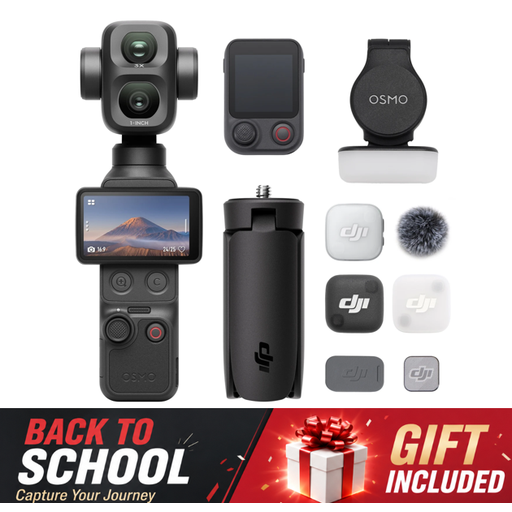
Consider this pocket-gimbal bundle if you want both overhead painting footage and handheld process clips. Its product name lists a 1-inch CMOS sensor, 4K/120fps video and three-axis stabilisation; DJI specifies a 0.2 m minimum focus distance for Osmo Pocket 3. Check the framing at that distance and arrange a secure overhead support separately.
 No image available
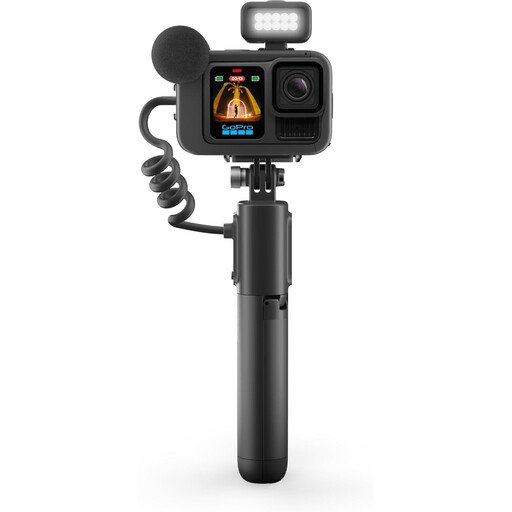
Consider this action-camera bundle if you also need filming positions beyond a fixed desk view. Test whether your whole painting fits without unwanted room edges, confirm close focus at the planned height and use a support suitable for overhead mounting.
For a locked overhead shot, a rigid support and workable framing matter before camera stabilisation. Stabilisation becomes more relevant if you also record handheld clips; DJI lists three-axis mechanical stabilisation for Osmo Pocket 3, while Panasonic lists 5-axis HYBRID I.S. for the LUMIX G100D.
No: 4K describes recording resolution, not how your bedroom lighting renders the paper and paint. Test your usual light, white balance and exposure with the materials you actually use before recording a full session.
Check for a secure overhead stand or arm, compatible mounting hardware and suitable storage media. DJI specifies microSD storage for Osmo Pocket 3; confirm the contents of the particular bundle rather than assuming a mini tripod can hold a camera above the desk.
Keep the charger uncovered and away from bedding, and use equipment supplied or recommended by the manufacturer. London Fire Brigade warns against covering charging devices and using counterfeit chargers.