
24/7 Customer Support

Free returns

Same-day & Next-day Delivery

Quality Guaranteed

Unlock Your Welcome Offers: FREE Delivery | Up to 80% OFF | Free 30-day JoyPlus trial
Download the APP
For any UK business that ships goods, from a small e-commerce startup to a large logistics firm, the right packaging supplies are not just a necessity—they are a critical part of your operation and brand reputation. Choosing incorrectly can lead to damaged products, unhappy customers and escalating costs. Yet, the market is filled with options that look similar but perform very differently.
As the Joybuy Product Recommendation Officer, my role is to help you navigate these choices. We will look past the marketing clutter and focus on the practical details that ensure your items arrive safely and professionally. Let's start by identifying the common pitfalls that many businesses fall into.
To make an informed choice, focus on these three non-negotiable factors. They determine the performance, reliability and cost-effectiveness of your postal supplies.
The durability of your packaging is directly related to its material thickness. This is typically measured in GSM (grams per square metre) for paper products and microns for plastics.
The sealing mechanism is crucial for both security and operational efficiency.
Using the correct size not only looks more professional but can also save you money on postage. In the UK, envelopes generally follow the 'C' series sizing.
Choosing an envelope that is too large allows the contents to slide around, increasing the risk of damage and may push your parcel into a higher postage bracket.
Based on these practical criteria, here are some packaging supplies suited for different business needs.
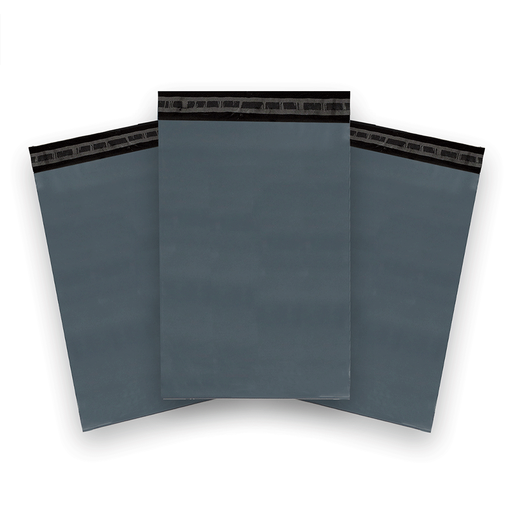
Why This Fits Their Persona: Ideal for new e-commerce sellers on platforms like Etsy or Depop shipping non-fragile items like clothing. This pack of 100 offers a low initial investment, while the opaque material ensures customer privacy.
It avoids the "cheapest price" trap by specifying a durable 55-micron thickness and a 3-layer construction, preventing tears. The strong peel & seal strip provides a tamper-evident closure.
Lightweight design helps keep postage costs low. Made from recycled polythene and is fully recyclable (Code 4 LDPE).
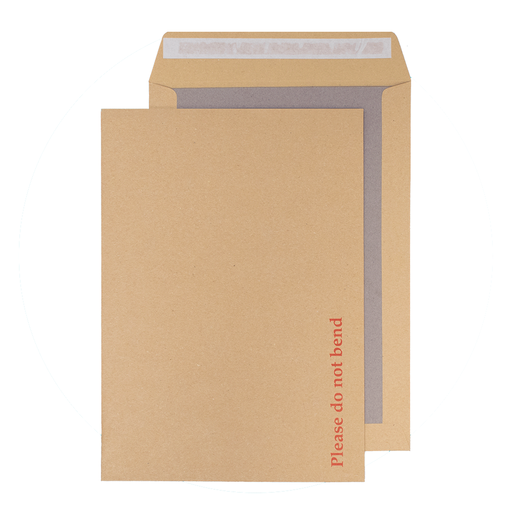
Why This Fits Their Persona: Essential for any business mailing contracts, legal papers, artwork or certificates. The primary need is to prevent bending and creasing to maintain a professional image upon delivery.
This product's value is in its specifications: a rigid 1000-micron board back and a strong 120gsm kraft paper front. The prominent "Please Do Not Bend" message also helps prevent mishandling.
Provides excellent structural rigidity to protect important A4 documents. The peel & seal closure is fast and secure for efficient office workflows.
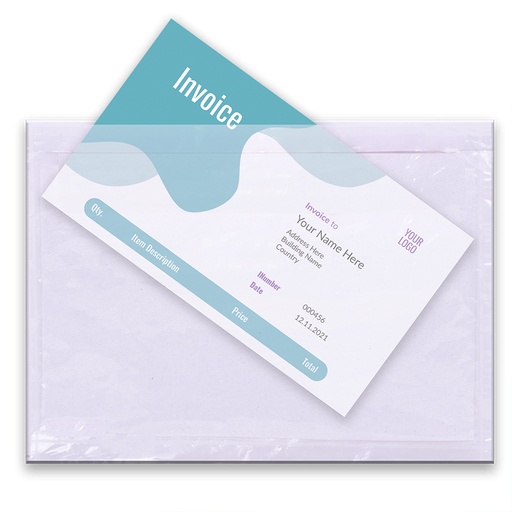
Why This Fits Their Persona: For a busy warehouse or dispatch centre, speed and reliability are paramount. These wallets are used to attach invoices and shipping labels to parcels and buying in a bulk pack of 1000 is highly cost-effective.
Directly counters the "weak adhesive" pitfall by using a strong hot melt adhesive that stays fixed during transit. The weatherproof plastic also protects documents from rain and dirt.
Designed for efficiency with a peel-and-seal backing and top-edge slit for fast document insertion. The clear front ensures labels are scannable.
We have compiled a complete, real-time list of products that fully satisfy these strict selection criteria and UK safety regulations.
These are standard UK paper sizes designed to correspond with 'A' series paper.
Yes, when it is manufactured to high standards. Quality biodegradable bubble wrap provides the same level of cushioning against shocks and bumps. For example, some options use a special polymer that attracts microbes in landfill conditions, allowing it to biodegrade according to standards like ISO 15985. During its usable life, it still functions as a protective material and can often be recycled as LDPE (Code 4), offering a flexible and responsible disposal route.
The most effective way is to buy smarter, not just cheaper. Purchase in bulk quantities for lower per-unit costs, especially for items you use frequently like mailing bags or document enclosed wallets. Always right-size your packaging to avoid paying for unnecessary weight and volume. Finally, for many goods, a high-quality, multi-layer mailing bag can offer sufficient protection at a lower cost and weight than a cardboard box.