
24/7 Customer Support

Free returns

Same-day & Next-day Delivery

Quality Guaranteed

Unlock Your Welcome Offers: FREE Delivery | Up to 80% OFF | Free 30-day JoyPlus trial
Download the APP
Buying one of the many paddle boards available online can look straightforward until you compare dimensions, weight limits, inflation pressure and included accessories. Marketing often focuses on bright colours or a long list of extras, while the details that affect stability and everyday convenience receive less attention.
There is also a terminology trap: “paddle board” can describe an inflatable stand-up paddle board, a high-pressure SUP air pump or even a paddle-shaped kitchen serving board. This guide separates those uses so you can compare products according to how you actually intend to use them.
A longer board may track efficiently across the water, but width and outline have a major effect on balance. A 12 ft 6 in board that is only 30 inches wide may feel more performance-oriented than an extra-wide SUP board measuring 33 or 34 inches.
For beginners, families and anyone carrying a small child or pet, width is often more relevant than length alone. However, a wider platform can feel less streamlined when you are trying to cover longer distances.
A stated capacity is not a target riding weight. Your total load should include the paddler or paddlers, clothing, water, phone, dry bag and any other equipment. For comfortable handling, leave a practical margin below the listed maximum weight recommendation.
Check whether the figure refers to one rider or the total supported load. This is particularly important when choosing a beginner paddle board for shared use.
A package may include a paddle, leash, fin, repair kit, hand pump and carry bag, but the specifications can vary significantly. Check whether the paddle is fibreglass or another material, whether a waterproof bag is included and whether the board has D-rings for a kayak seat or shoulder strap.
An electric pump is also not automatically suitable for every board. It must reach the board’s recommended pressure and include a compatible nozzle.
For relaxed paddling, yoga-style sessions and family outings, an extra-wide board around 33–34 inches offers a more generous standing platform. A 30-inch-wide board may suit solo cruising or touring when you value a narrower shape and more directed glide.
Longer boards, such as 12 ft 6 in models, can provide useful cargo space and directional tracking. Shorter boards may be easier to manoeuvre and transport, particularly on smaller UK waterways.
Look for a clearly stated maximum pressure and follow the manufacturer’s recommended figure rather than inflating by feel. The reference boards in this guide use abrasion-resistant PVC and double-layer sidewalls, with maximum pressures of either 15 PSI or 18 PSI.
Higher pressure can contribute to a firmer-feeling inflatable board, but the pump and valve must be suitable. Never exceed the board’s stated pressure. After use, rinse away salt, mud or sediment, dry the board fully and store it in a cool, dry place.
A central fin helps directional stability, while front bungees provide a place for light cargo. D-rings can support accessories such as a shoulder strap or kayak seat, although the relevant accessory may be sold separately.
For UK day trips, a leash, repair kit, carry bag and dry storage are practical inclusions. Always check local waterway guidance, wear appropriate buoyancy equipment and inspect the board, valve, fin and leash before launch.
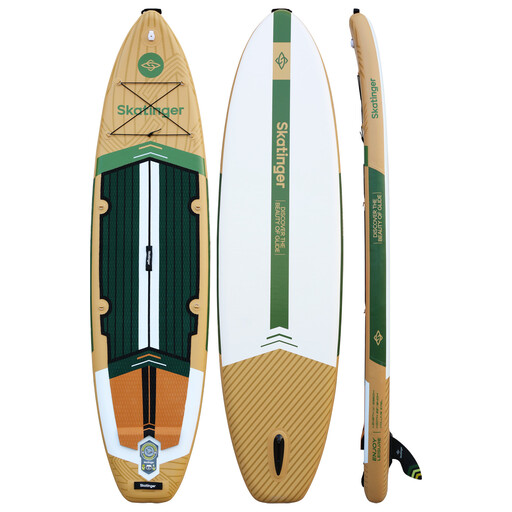
Why This Fits Their Persona: The 33-inch width provides a stable platform for adults starting with leisure paddling on suitable UK lakes, canals or sheltered coastal water.
Its 11 ft length is paired with a clearly stated 33-inch width and 375 lb maximum weight recommendation, making the comparison more transparent than length-only listings.
Includes a fibreglass paddle, hand pump, fin, leash, repair kit, backpack and 5L waterproof bag. The board is rated up to 15 PSI.
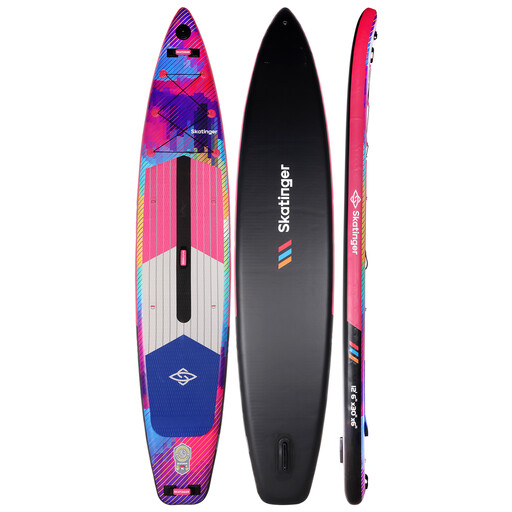
Why This Fits Their Persona: Its 12 ft 6 in length and 30-inch width suit solo paddlers who want a narrower touring paddle board format for cruising and longer routes.
The specification states the 330 lb capacity, 18 PSI maximum pressure, six-point bungee and high-performance fin, so key performance-related details are not left vague.
Includes a fibreglass paddle, hand pump, leash, fin, repair kit, backpack and 10L waterproof bag.
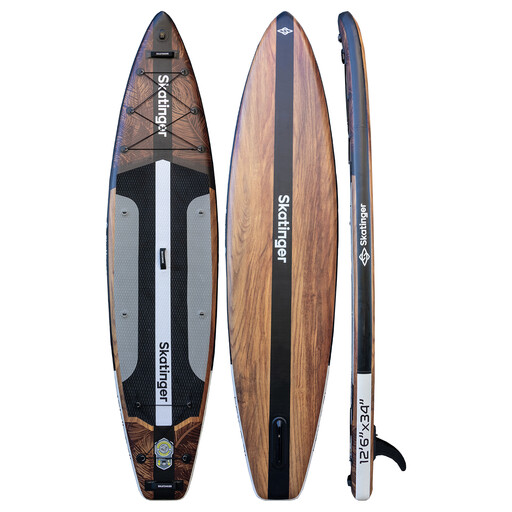
Why This Fits Their Persona: The 34-inch platform and 450 lb maximum weight recommendation are suited to family outings, shared paddling, yoga or carrying additional light equipment.
The broad deck, dual bungee system and four central D-rings address stability, storage and accessory flexibility rather than relying on appearance-led features.
Includes a 10L waterproof bag, shoulder strap, hand pump, paddle, leash, fin, repair kit and backpack. Maximum pressure is 15 PSI.
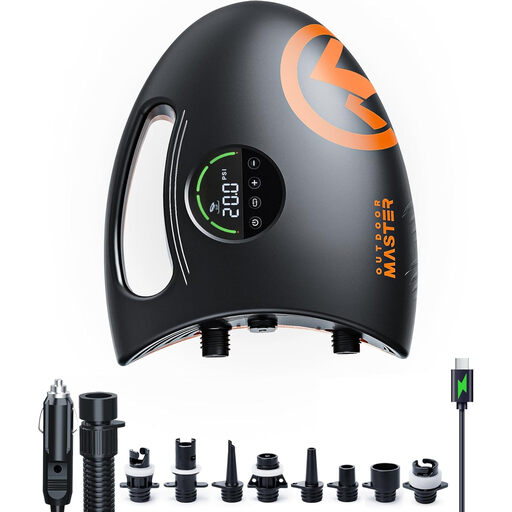
Why This Fits Their Persona: A rechargeable pump is practical for regular paddlers or households inflating several boards without relying solely on a manual SUP air pump.
It has a digital pressure setting and auto-shutoff, while its 20 PSI maximum is clearly stated. The board’s own recommended pressure must still take priority.
The 88.8Wh battery is specified for up to six SUP boards per charge, with Type-C and 12V/15.8V DC input options, plus inflation and deflation functions.
If you are shopping for a paddle serving board rather than water sports equipment, material and maintenance become the key considerations.
An olive wood serving board has distinctive natural grain and is suited to bread, cheese, fruit and appetisers. The Maison by Premier Kora model measures 45 x 10cm and has a handle with a hanging loop. Hand wash it and apply food-safe mineral oil occasionally.
A mango wood chopping and serving board offers a broader 75 x 20cm surface for light to medium preparation and presentation. It should be hand washed, dried immediately and kept away from prolonged soaking.
A marble paddle board provides a smooth, non-porous surface that is easy to wipe clean and suitable for serving cheese or charcuterie. Marble is heavy: the Maison by Premier Kindia model weighs 4.5kg, so check that the handle and storage location are practical for your kitchen.
We have compiled a complete, real-time list of products that fully satisfy these strict selection criteria and UK safety regulations.
A manual pump generally requires more physical effort and time, particularly for longer boards at 15–18 PSI. An electric high-pressure paddle board pump can reduce setup time; published figures vary by board, pressure and pump. Always select the correct nozzle and remain nearby while the pump operates.
Rinse the board with fresh water, remove sand and grit, dry it completely and store it deflated in a cool, dry place away from sharp objects and prolonged direct sunlight. Keep the fin, leash and repair kit together so they are ready for the next outing.
Width generally provides a broader standing area, which can feel more stable for beginners and shared activities. It may also be less efficient for fast, narrow touring routes. Compare width, rider load, fin design and intended water conditions rather than choosing by length alone.