
24/7 Customer Support

Free returns

Same-day & Next-day Delivery

Quality Guaranteed

Unlock Your Welcome Offers: FREE Delivery | Up to 80% OFF | Free 30-day JoyPlus trial
Download the APP
Headaches, period cramps, toothache, backache and fever can make ordinary UK routines difficult. The challenge is choosing suitable pain relief tablets without being distracted by oversized claims, confusing formulations or an attractive multi-pack that is not appropriate for your household.
This guide explains what to check before buying over-the-counter painkillers in the UK, including ibuprofen tablets, paracetamol tablets, liquid capsules and dual-action products.
A liquid-filled capsule, soluble tablet and standard tablet may have different absorption characteristics. However, the time taken to feel relief can vary between people and depends on factors such as whether the medicine is taken with food. Look for the active ingredient and dosage instructions, rather than relying only on phrases such as “rapid” or “express”.
For example, some liquid ibuprofen capsules are marketed around faster absorption than standard ibuprofen tablets. This may be useful when speed is a priority, but it does not remove the usual NSAID precautions.
A product labelled for migraine, period pain or back pain may still contain a familiar active ingredient such as ibuprofen or paracetamol. The important distinction is often the formulation, dose and additional ingredients.
Caffeine-containing products, for instance, may not suit people who are sensitive to caffeine or who are taking other medicines containing it. Similarly, a combination product may be unsuitable if you have already taken one of its ingredients separately.
Do not assume that adult pain relief tablets are suitable for children. Many products in this category are intended for adults and adolescents aged 12 and over, while aspirin products commonly have a higher age restriction. Children’s products require careful attention to age, strength and dose.
Avoid taking more than one product containing paracetamol. It is found in some standalone painkillers and combination cold and flu medicines. Taking too much can cause serious liver damage, even if you initially feel well.
The two most common options are:
Aspirin is another NSAID option, but the supplied product information states that Aspar Aspirin 300mg is for adults and children over 16 years. It should not be used by people with certain bleeding conditions or stomach ulcers unless advised by a healthcare professional.
Check the amount of active ingredient per tablet or capsule, how often it can be taken and the maximum in 24 hours. For example, the listed 200mg ibuprofen products generally specify a maximum of six tablets or capsules in 24 hours for adults and adolescents, while standard 500mg paracetamol products commonly specify a maximum of eight tablets or capsules for adults.
These limits are not interchangeable. Always follow the packaging supplied with your particular product, leave the stated interval between doses and use the lowest effective dose for the shortest necessary time.
Check whether the product is for:
Ibuprofen may not be suitable if you have or have had a stomach ulcer, an allergy to NSAIDs, severe kidney, liver or heart failure, or are in the last three months of pregnancy. Ask a pharmacist or doctor before use if you have asthma, high blood pressure, cardiovascular concerns or take anticoagulants or other regular medicines.
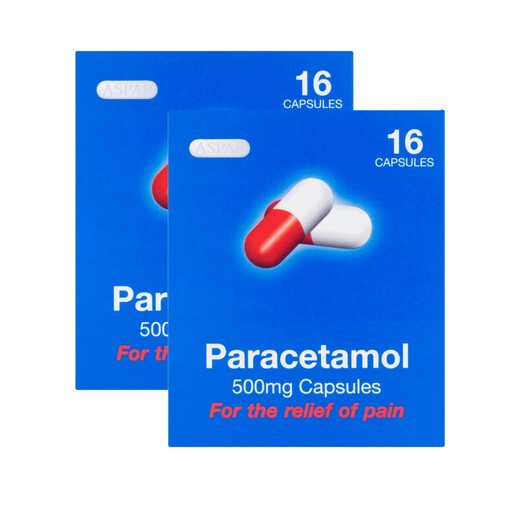
Why This Fits Their Persona: A straightforward paracetamol option for households needing short-term relief from headaches, toothache, period pain, muscular aches or fever.
The active ingredient and 500mg strength are clearly stated, making it easier to compare with other paracetamol products and avoid paying for unnecessary extras.
500mg paracetamol capsules; suitable for adults, older people and adolescents aged 12 and over, subject to the label directions.
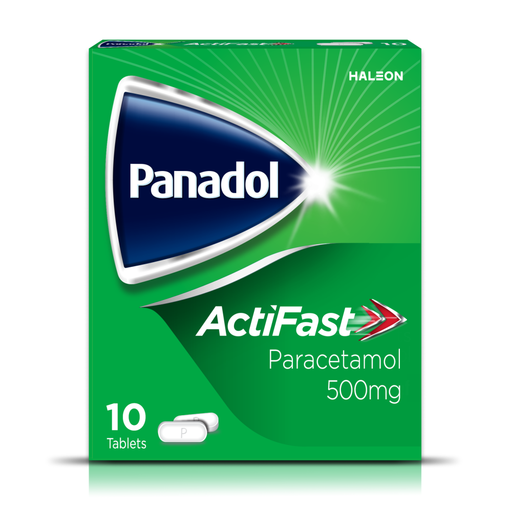
Why This Fits Their Persona: Suitable for shoppers who prioritise a film-coated tablet and a formulation positioned for fast-acting pain relief from common aches and fever.
The product specifies 500mg paracetamol per tablet and a maximum of eight tablets in 24 hours, helping buyers assess the dose rather than the advertising language alone.
Paracetamol 500mg; listed for adults and children aged 12 and over; intended for short-term pain and fever relief.
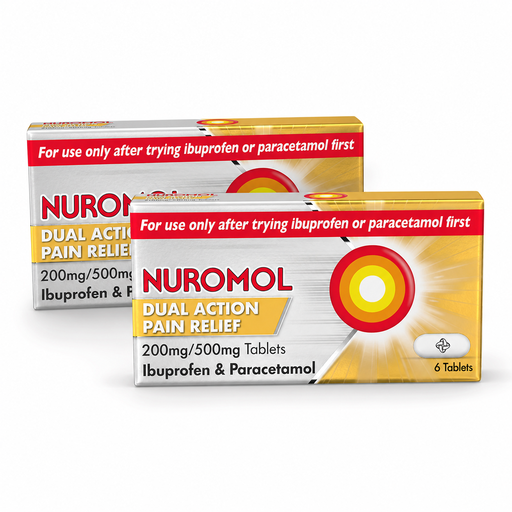
Why This Fits Their Persona: Intended for adults aged 18 and over whose moderate pain has not been adequately relieved by ibuprofen or paracetamol alone.
Its fixed combination is clearly declared, reducing the risk of accidentally combining separate ibuprofen and paracetamol products.
Contains ibuprofen and paracetamol in one tablet; maximum three tablets in 24 hours according to the supplied product information.
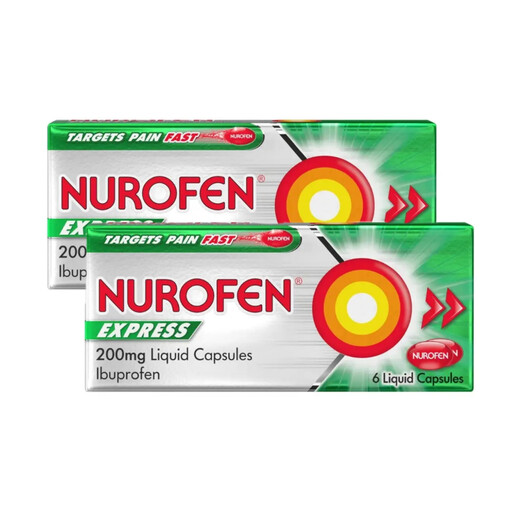
Why This Fits Their Persona: A compact option for adults and those aged 12 and over who prefer liquid ibuprofen capsules for headaches, dental pain, period pain or muscular aches.
The 200mg strength and maximum six capsules per day are stated clearly, so the faster-format appeal does not obscure ordinary ibuprofen dose limits.
Liquid-filled capsule format; contains 200mg ibuprofen; listed for pain, inflammation and fever relief.
We have compiled a complete, real-time list of products that fully satisfy these strict selection criteria and UK safety regulations.
Seek medical advice if pain is severe, unusual, keeps returning, worsens or does not improve within the period stated on the label. Suspected paracetamol overdose requires immediate medical advice, even when no symptoms are present.
Paracetamol and ibuprofen products are both commonly labelled for headache relief. The suitable choice depends on your health, other medicines and the product warnings. For inflammation-related discomfort, an ibuprofen product may be listed as suitable; paracetamol may be preferable for people who should avoid NSAIDs. Check the label or speak to a pharmacist.
Do not automatically add another painkiller. A dual-action product such as Nuromol already contains both ibuprofen and paracetamol, so taking either ingredient separately could result in an unsafe total dose. Always check the active ingredients before combining medicines.
Use pain relief tablets for the shortest time necessary and follow the product-specific limits. Several listed products advise seeking medical advice if symptoms persist beyond three days for adolescents or beyond ten days for adult pain. If you need painkillers repeatedly, consult a pharmacist or doctor rather than continuing to self-treat.