
24/7 Customer Support

Free returns

Same-day & Next-day Delivery

Quality Guaranteed

Unlock Your Welcome Offers: FREE Delivery | Up to 80% OFF | Free 30-day JoyPlus trial
Download the APP
Finding the right tool for a project can be the difference between a professional finish and a frustrating experience. This is especially true with paint markers, where the variety of types, tips and ink formulas can be overwhelming. Whether you are an artist adding detail to a canvas, a café owner creating a vibrant chalkboard menu, or a fabricator marking steel components, the marker you choose matters.
This guide is designed to help you navigate the options. We will break down the key considerations for selecting a paint marker and offer some recommendations to help you find a reliable tool for your specific task.
Before you make a choice, consider these three factors. They will help you narrow down the options and find a marker that performs exactly as you need it to.
The first question to ask is: what will you be writing on? The effectiveness of a paint marker is highly dependent on the surface.
The ink formula determines the marker's characteristics, from its opacity to its permanence.
The marker's tip, or nib, dictates the kind of line you can create.
Based on their features and suitability for common tasks, here are a few standout options to consider.
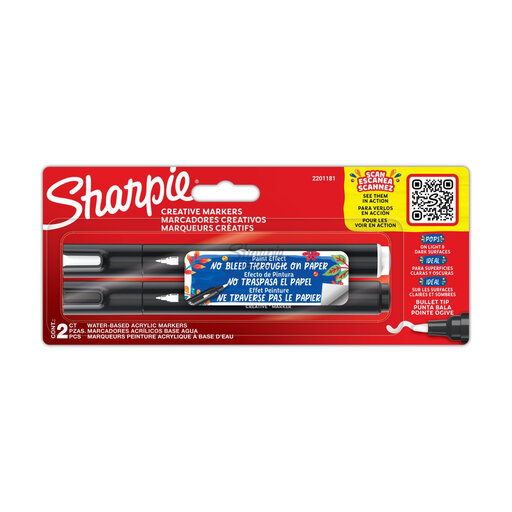
Why It Stands Out: These acrylic paint pens combine the rich, opaque colour of paint with the simple control of a marker. The water-based ink is formulated to not bleed through paper, making it a clean choice for artists and crafters. A key feature is its versatility; it performs well on a wide range of surfaces including paper, metal, wood, ceramic and glass. The markers are ready to use without shaking.
Pros:
Who is it for? Artists, crafters and hobbyists looking for a versatile and easy-to-use paint marker for mixed media projects, rock painting, or customising objects. The black and white paint marker set is fundamental for outlining and highlighting.
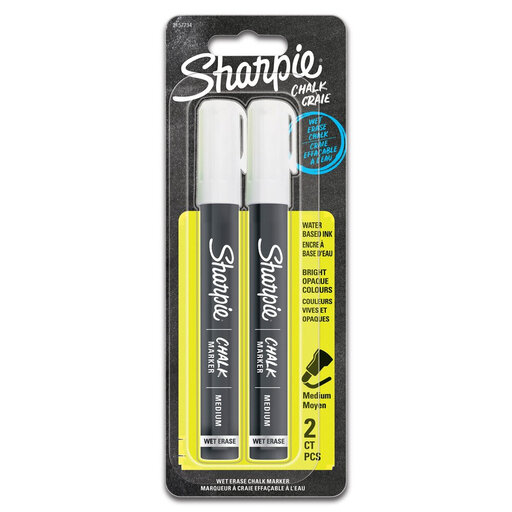
Why It Stands Out: These chalk markers are designed for creating bright, eye-catching displays that can be changed easily. The vivid white ink stands out on blackboards, windows and other non-porous surfaces. Their main advantage is the simple, clean removal—the ink wipes away with just a damp cloth, leaving no residue.
Pros:
Who is it for? Business owners, café managers, teachers and families who need a reliable marker for creating temporary and dynamic messages on non-porous surfaces. They are perfect as glass paint pens for seasonal decorations.
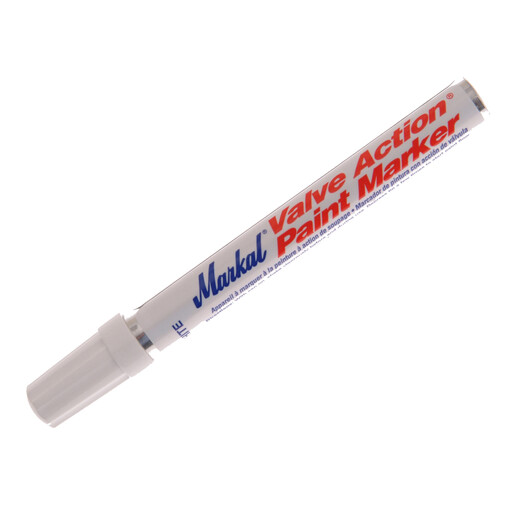
Why It Stands Out: This is a purpose-built industrial paint marker. It features a durable metal barrel designed to withstand tough workshop environments. The spirit-based paint is fast-drying and formulated to be resistant to UV light and fading, ensuring marks remain visible over time. The valve-action tip controls paint flow for consistent, clear marking on demanding surfaces like steel, rubber and plastic.
Pros:
Who is it for? Professionals in fabrication, construction, logistics and automotive maintenance who require a tough, reliable marker for identifying parts, quality control and layout work. Its performance on metal, plastic and textiles makes it exceptionally versatile.
If our recommendations don't quite match what you're looking for, or if you are specifically searching for a high-contrast marking tool, you can explore a wider variety of pens for different applications.
Explore our full range of white pen and marker options to find the perfect tool for your project.Browse More White Pens
1. What is the difference between a paint marker and a permanent marker? A standard permanent marker typically uses a dye-based ink that soaks into surfaces, which can make it appear less vibrant on dark or non-porous materials. A paint marker, on the other hand, uses pigmented ink (like acrylic or oil-based paint) that sits on top of the surface, resulting in a more opaque, vibrant and paint-like finish.
2. Can you use paint markers on fabric? Yes, many paint markers, especially water-based acrylic ones, work well on fabric. For a permanent result, the marking usually needs to be heat-set after it has fully dried. This can be done by ironing the fabric (with a protective cloth over the design) according to the marker manufacturer's instructions. The Markal marker listed above is also suitable for textiles.
3. How do you make paint markers permanent on glass or ceramic? To make markings from acrylic paint pens permanent on surfaces like glass or ceramic, the item typically needs to be cured. After the paint is completely dry, place the item in a cool oven, heat it to the temperature recommended by the marker's manufacturer (often around 160-180°C) and bake for a set amount of time (e.g., 30-40 minutes). Always let it cool down completely in the oven to prevent cracking. This process makes the design more durable and often dishwasher-safe (top rack recommended). Always check the specific instructions for your markers.