
24/7 全天候客户支持

免费退货

当日/次日达

品质保障

开启新人专享福利: 全场免邮 | 低至 2 折 | 免费试用 30 天 JoyPlus 会员
下载 Joybuy
Paint markers can be useful for everything from decorating ceramics and greeting cards to labelling tools, marking metalwork and creating temporary shop displays. However, the term covers several different ink types, tip designs and durability levels. Choosing by colour or pack size alone can leave you with ink that smears, a nib that is too broad or markings that cannot be removed when needed.
This guide explains the practical specifications to check before buying paint markers in the UK, followed by recommendations for different types of users.
A waterproof formula may resist water after drying, but that does not mean it will bond equally well to glass, plastic, fabric, metal, wood and porous card. Surface preparation also matters. Dust, grease and moisture can affect adhesion, even when the marker is described as permanent.
Check the product’s listed surfaces and decide whether you need multi-surface markers for creative projects, permanent paint markers for durable labelling or a specialist industrial marking pen for demanding materials.
Chalk markers and wet-erase markers are designed for non-porous surfaces such as glass, mirrors, whiteboards and menu boards. They can usually be removed with a damp cloth, but may be difficult to clean from porous materials.
By contrast, pigment-based or oil-based paint markers are intended to leave a lasting mark. Using the wrong type can result in a display that will not clean away or a label that disappears during handling.
A large colour set is not automatically more useful. A fine-tip paint marker is better for lettering, outlines and small details, while a medium or round tip covers larger areas more quickly. Dual-tip art markers offer flexibility, but water-based art pens are not the same as acrylic paint pens: they are generally intended for paper and blending rather than opaque coverage on hard surfaces.
Choose the formula around the job:
Use markers in a ventilated area where product guidance advises it. Keep caps securely fitted, store products as instructed and check warnings before use, particularly for children’s activities or nail applications.
Tip measurements are often more important than the number of colours. A 0.5 mm tip can create delicate nail art lines, while a 2.9 mm bullet tip provides a balance between controlled writing and visible marking. Medium taper tips can support both broader strokes and narrower lines.
For large lettering, a chisel tip may be more efficient. For small labels, diagrams and outlines, choose a fine bullet or fineliner. If you need both coverage and detail, a dual-tip design can reduce the need to buy separate pens.
Test a small hidden area first, especially on painted furniture, coated plastics, textiles or finished ceramics. Quick-drying markers can reduce smudging, but a fast-drying formula may also give you less time to correct an error.
For nail art pens, apply to clean, dry nails and let the design dry completely. A top coat may help protect the design, but follow the product’s instructions and discontinue use if irritation occurs. Nail polish pens are intended for external use only and should not be applied to broken or damaged nails.
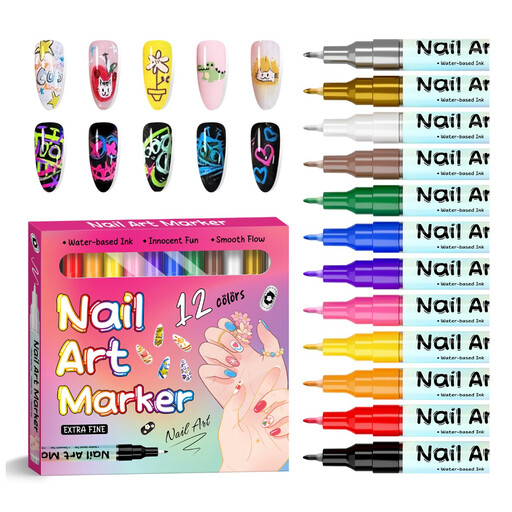
Why This Fits Their Persona: A compact 12-colour set gives beginners a practical starting palette for home manicures, seasonal designs and simple detailing without committing to a larger collection.
The 0.5 mm fine tips are specified for detailed lines and patterns, while the acrylic-based ink is described as quick-drying and waterproof once set.
12 colours, 0.5 mm tips and dotting tools are included; the formula is designed for raised 3D effects when layered.
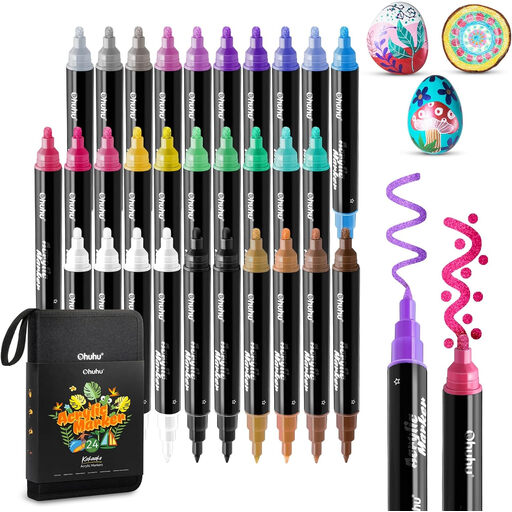
Why This Fits Their Persona: Artists and regular crafters who work across paper, wood, ceramics, glass, rocks, canvas and plastic may value the broad colour selection and replaceable nibs.
The product specifies both fine and medium round tips, avoiding the limitation of a single nib size. It also includes replacement nibs and swatch cards.
The 30-marker set contains metallic, white and black shades; water-based, odourless ink and a storage case are specified.
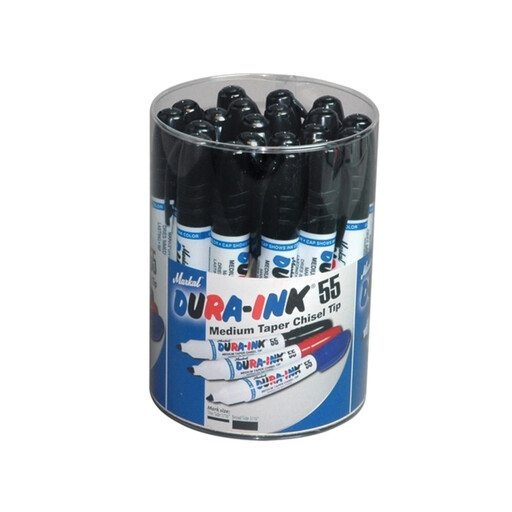
Why This Fits Their Persona: Workshops, construction teams and businesses needing a regular supply may benefit from a 20-pack and a tip suited to both broad strokes and narrower marks.
The listing identifies the ink as permanent, waterproof and quick-drying, with a medium taper tip rather than an unspecified point.
The pack contains 20 black markers; the stated applications include paper, plastic and metal, with smudge resistance listed.
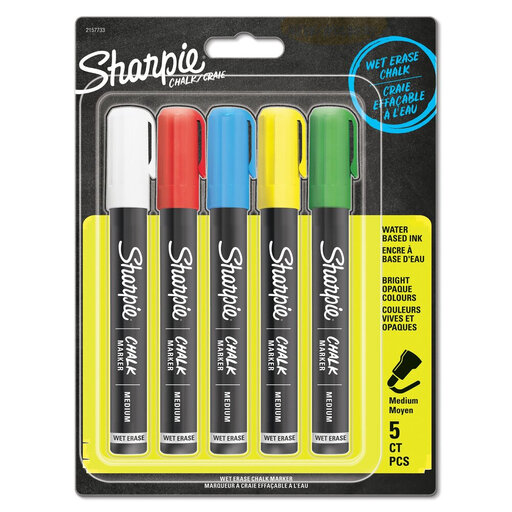
Why This Fits Their Persona: Teachers, cafés, retailers and home users changing messages on boards, windows or glass can use a bright assorted set for temporary displays.
The ink is identified as wet-erase and intended for non-porous surfaces, making its removable function clearer than a generic permanent marker.
Five assorted colours are included, and the product guidance specifies removal with a damp cloth.
We have compiled a complete, real-time list of products that fully satisfy these strict selection criteria and UK safety regulations.
Some are. Permanent paint markers and acrylic paint pens can mark glass, while chalk and wet-erase markers are generally more suitable when you want to remove the design. Clean and dry the glass first, and test a small area before creating the finished design.
Drying time depends on the ink, surface, humidity and thickness of the application. Quick-drying markers may feel dry sooner, but allow extra time before stacking, washing or handling the item. Layered 3D nail art should be left to set fully before applying a top coat.
Check the individual product warnings and intended use. Keep markers away from young children, avoid eye contact and use solvent-based products in a ventilated area. Nail art pens should be used only as directed on clean, intact nails and are not cosmetic substitutes unless the product information specifically states otherwise.