
24/7 Customer Support

Free returns

Same-day & Next-day Delivery

Quality Guaranteed

Unlock Your Welcome Offers: FREE Delivery | Up to 80% OFF | Free 30-day JoyPlus trial
Download the APP
Finding the right tools can transform a creative idea into a finished piece of art. When it comes to adding vibrant, opaque colour to your projects, paint markers are an indispensable part of any crafter's toolkit. Yet, with so many options available—from acrylic to metallic, fine tip to broad—choosing the correct pen for your specific needs can feel overwhelming. Whether you are personalising a ceramic mug, designing intricate cards or bringing life to a smooth stone, the marker you select makes all the difference.
This guide is designed to cut through the clutter. We will walk you through the key features to consider when selecting paint markers for crafts, offer some practical guidance and present a few carefully chosen recommendations to help you find the perfect match for your next creative endeavour.
Before you add a set of markers to your basket, consider these three factors. Getting this right will ensure your tools work with you, not against you.
The ink is the heart of the marker. The most common types you will encounter are acrylic, oil-based and water-based.
Not all markers work on all materials. A pen that glides beautifully on paper might bead up on glass. Look for multi-surface markers if your work spans various materials. For specific projects like decorating ceramics or glassware, you will need a marker formulated to adhere to non-porous surfaces. For outdoor art, such as rock painting markers, look for ink that is both lightfast (resistant to fading) and water-resistant once cured.
The tip, or nib, determines the kind of line you can create.
Here are a few options that stand out for their specific features and suitability for common crafting projects.
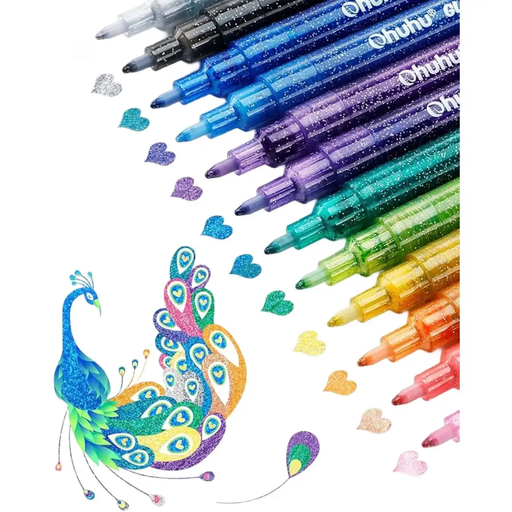
Why It Stands Out: These metallic marker pens are designed for adding a touch of sparkle and fine detail. The water-based gel ink is highly pigmented, providing excellent opacity that shows up brilliantly on dark and coloured paper. The extra-fine tip allows for a high degree of control.
Pros:
Who is it for?: Card makers, scrapbookers and artists who need to add fine, glittering highlights or detailed lettering to their paper-based projects.
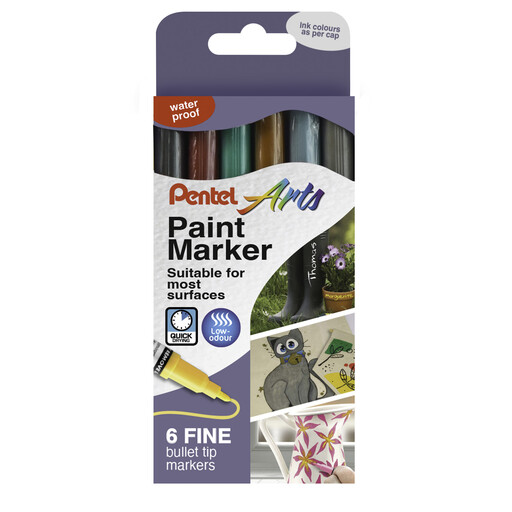
Why It Stands Out: Built for durability, these Pentel markers feature a robust aluminium barrel and permanent, pigment-based ink. They are true multi-surface markers, delivering opaque metallic colour on everything from thick card and metal to glass and plastic.
Pros:
Who is it for?: DIY enthusiasts and hobbyists who need a reliable and permanent art marker for personalising objects, labelling or creating art on non-porous materials.
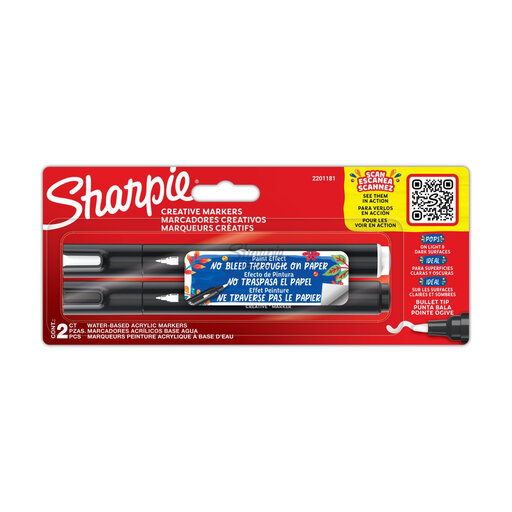
Why It Stands Out: These acrylic paint pens offer the rich, smooth finish of paint with the convenience of a marker. The water-based acrylic ink is designed not to bleed through paper, yet it provides bold coverage on a multitude of surfaces, including canvas, wood and ceramic. A key feature is their readiness—no shaking is required to get the ink flowing.
Pros:
Who is it for?: Artists and crafters looking for versatile craft pens that deliver paint-like results without the mess or preparation. Ideal for mixed-media work and general creative projects.
The world of markers is vast, and your project might call for a very specific tool. If you are focused on creating high-contrast designs or need a reliable way to write on dark backgrounds, a specialised pen might be the answer.
For those projects that need a bright, clean line, explore our range of white highlighter pens to find more options.
1. Can you use paint markers on glass? Yes, many paint markers work well on glass. For best results, choose markers with acrylic or oil-based ink, as these are formulated to adhere to non-porous surfaces. Always ensure the glass is clean and free of grease before you begin. For a more permanent finish, some projects may require heat-setting or sealing with a clear varnish after the ink has fully dried.
2. How do you make paint markers permanent on rocks? To ensure your painted rock art lasts, preparation and sealing are key. First, wash and thoroughly dry the rock. Once you have finished your design with rock painting markers, allow the paint to cure completely (this can take up to 24 hours). Finally, apply two to three thin coats of a clear acrylic spray sealant or brush-on varnish. This will protect your artwork from moisture, UV rays and general wear.
3. What is the difference between a paint marker and a regular marker? The main difference lies in the ink. Regular markers (like felt-tips) use translucent, dye-based inks that soak into porous surfaces like paper. Paint markers contain opaque, pigment-based ink, similar to liquid paint. This ink sits on top of the surface rather than soaking in, which is why paint markers are so effective on a wider variety of materials, including dark, non-porous and textured surfaces.