
24/7 Customer Support

Free returns

Same-day & Next-day Delivery

Quality Guaranteed

Unlock Your Welcome Offers: FREE Delivery | Up to 80% OFF | Free 30-day JoyPlus trial
Download the APP
Choosing a new paint colour can feel like a huge commitment. That shade you loved on a small colour card can look entirely different once it’s covering a whole wall, influenced by your home's unique lighting and furnishings. This is where a simple paint tester pot becomes an indispensable tool for any decorating project.
Using paint sample pots allows you to try a paint colour on your wall with minimal cost and effort, ensuring you make a decision you’ll be happy with for years to come. This guide is designed to help you navigate the options and use emulsion tester pots effectively, so you can move forward with your project confidently.
Making the most of your samples goes beyond just picking a colour. Here are a few practical points to keep in mind to ensure your test is as accurate as possible.
The sheen of a paint dramatically affects its final appearance. A matt finish diffuses light for a modern, flat look that hides imperfections, while a silk or mid-sheen finish has a subtle lustre that reflects light and is often more durable. When selecting matt paint samples, ensure you plan to use a matt emulsion for the final coat. Testing with the correct finish gives you the most accurate preview of how the colour will behave in your space.
For an effective test, avoid painting a small, isolated square in the middle of a wall. Instead, apply the paint to a patch at least 30cm x 30cm. Paint two coats to achieve the true colour depth. A helpful technique is to paint your sample onto a large piece of white card or lining paper. This allows you to move the sample around the room, checking it against different walls, next to furniture and in both natural and artificial light throughout the day.
To guarantee the colour you test is the colour you get, it's always advisable to buy a tester from the same brand and range you intend to purchase for the full job. While many colours look similar, slight variations in formulation between brands can lead to a different final shade. Using Dulux tester pots, for example, ensures a precise match to a full-sized tin of Dulux paint.
Here are a few options to help you start your colour-testing journey, selected for their practical features and quality.
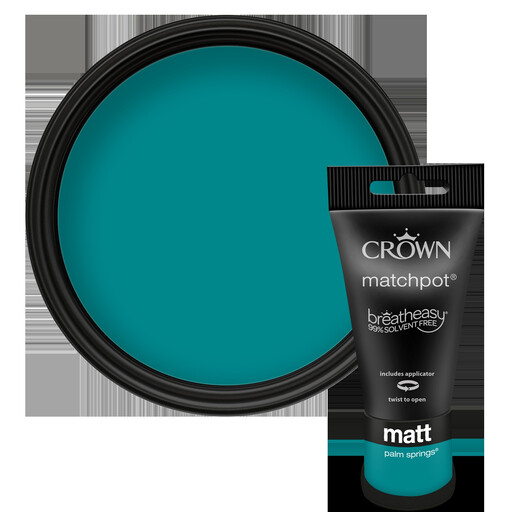
Why It Stands Out: This Crown tester pot offers a modern, non-reflective matt finish. The brand highlights its unique Breatheasy 99% solvent free formulation, making it a considerate choice for home environments. The thick and creamy consistency is designed for easy application and good coverage. Crown also notes its use of 100% recycled plastic for its packaging.
Pros:
Who is it for? This is a great option for anyone seeking a high-quality matt finish, particularly those who prioritise using products with a lower solvent content in their home.
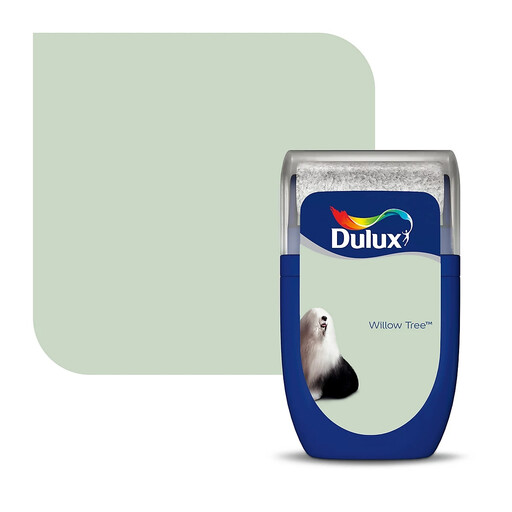
Why It Stands Out: Convenience is the key feature of this Dulux tester. It comes with an integrated mini roller tool, which makes applying the paint directly to your wall a clean and simple process. This design removes the need for extra brushes or trays for a small test patch. It provides a true preview of the flat matt finish and the soft green "Willow Tree" shade.
Pros:
Who is it for? Perfect for the practical decorator who wants a quick, no-fuss way to test a colour with minimal cleanup.
Once you've tested "Willow Tree" and decided it's the perfect shade for your room, the next step is the full-sized tin.
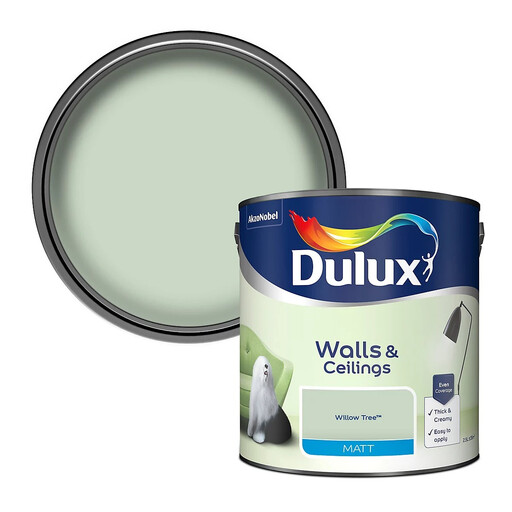
Why It Stands Out: This 2.5L tin of Dulux Matt emulsion provides excellent value and performance for decorating medium to large rooms. Its formulation is designed to actively minimise minor surface imperfections, helping you achieve a smoother result. The high coverage rate of up to 14 square metres per litre means you can complete your project efficiently.
Pros:
Who is it for? For those who have used the tester pot and are now ready to transform an entire room with the calming, natural tone of "Willow Tree".
If you haven't found the exact shade you're looking for, don't worry. There is a wide world of colour waiting to be discovered.
Explore our full range of paint options in the Tree Base collection to find your perfect match.
Coverage varies by brand and pot size. Most paint sample pots (typically 30-50ml) will cover an area of around 0.25 to 0.5 square metres. For instance, the Dulux 30ml tester pot covers up to 0.42 square metres, which is more than enough to create a substantial test patch on your wall.
While you can paint directly onto a clean, dry wall, a more flexible method is to paint onto a large piece of white card or leftover lining paper. After applying two coats and letting it dry, you can move the sample around the room to see how the colour looks in different lighting and against your furniture and flooring.
For an accurate representation of the final colour, you should always apply at least two coats. The first coat acts as a base, and the second coat reveals the true depth and hue of the paint. This is especially important if you are painting over a wall with a strong or dark existing colour.