
24/7 Customer Support

Free returns

Same-day & Next-day Delivery

Quality Guaranteed

Unlock Your Welcome Offers: FREE Delivery | Up to 80% OFF | Free 30-day JoyPlus trial
Download the APP
Choosing between paint and permanent markers is less straightforward than it appears. A fine tip that works neatly on paper may struggle on rough timber, while a paint marker suitable for metal can be unsuitable for a reusable display board. Tradespeople, warehouse teams, teachers, artists and DIY users all need to consider the surface, the required lifespan of the mark and the level of precision before buying.
The wrong choice can lead to faded labels, smudged writing or a marker that dries out before the job is complete. Use the following guide to compare marker formats and select a product that matches the work.
“Permanent” generally describes the intended durability of the ink, but it does not mean every marker will withstand rain, sunlight, abrasion or changing temperatures equally. Standard permanent marker pens are often suitable for paper, cardboard, plastic and everyday labelling. Outdoor or industrial work may require waterproof markers or weather-resistant markers specifically described for those conditions.
Always check whether the product is intended for indoor use, outdoor use or both. A marker that performs well on a parcel label may not remain clear on building materials exposed to the British weather.
Paint marker pens and permanent ink markers behave differently on porous and non-porous materials. Paint-based ink can create opaque, highly visible marks on dark surfaces, metal, glass, plastic, rubber and thick card. Wet-erase chalk markers, by contrast, are designed for non-porous surfaces such as glass, mirrors, windows and boards.
Using wet-erase chalk markers on porous wood or unsealed concrete can make removal difficult. Conversely, a standard alcohol-based marker may appear faint on a dark surface where an opaque paint marker would be more suitable.
A fine tip is useful for small labels, handwriting and detailed drawings, but it is slower for large signs or timber identification. Chisel tip markers can produce both broad and narrow lines depending on the angle, while a medium taper tip offers a compromise between coverage and control.
Buying a large assorted colour marker pack can reduce the cost per pen for schools, offices or busy workshops. For occasional DIY use, however, a smaller pack may prevent unused markers from drying out in storage.
Do not assume “permanent” means indestructible. Check descriptions for features such as quick drying, resistance to water, fading or weather exposure, and follow the manufacturer’s surface guidance.
Fine tip markers are appropriate for small components, narrow labels, classroom notes and detailed artwork. A 2.9 mm bullet tip, for example, offers controlled lines without being excessively delicate.
Chisel tip markers are more adaptable for signage, parcel marking and bold lettering. A stated range such as 1.5–5 mm indicates that line width changes with the writing angle. For deep holes and narrow gaps, a deep-hole marker with an extended or specialist tip can reach areas ordinary pens cannot.
Look for an explicit list of compatible surfaces rather than relying on general phrases such as “multi-surface”. Metal, wood, plastic, concrete, glass, rubber and card each have different textures and absorbency.
Before applying any marker to a visible area:
For solvent-based or oil-based products, use adequate ventilation and follow the packaging warnings. Keep markers away from young children, eyes, skin, heat sources and open flames where applicable.
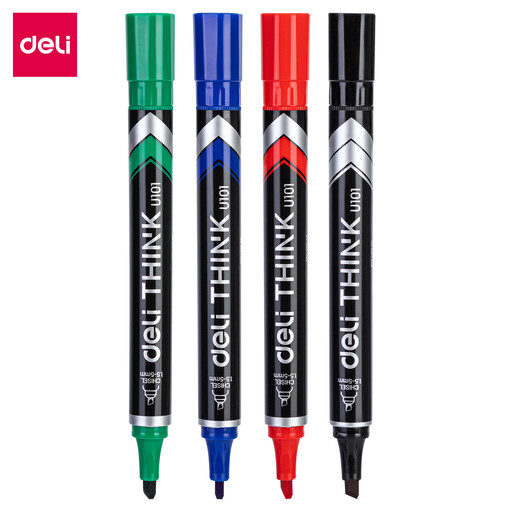
Why This Fits Their Persona: A practical option for home organisation, parcels, office labelling, posters and craft projects where several colours and line widths are useful.
The chisel tip provides a stated 1.5–5 mm range, helping one marker handle detail work and broader writing instead of requiring separate tip styles.
Assorted colours; quick-drying, water-resistant ink for paper, cardboard, plastic, glass and metal.
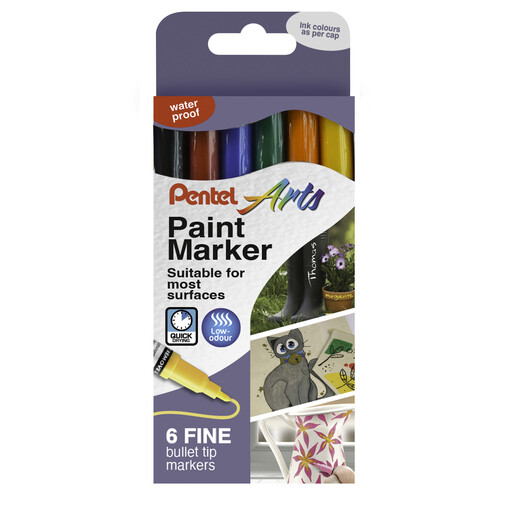
Why This Fits Their Persona: Suitable for users who want controlled, opaque colour for creative projects, detailed labelling or selected industrial applications.
The product description specifies a fine 2.9 mm bullet tip and lists compatible materials, making the choice more transparent than a generic all-surface claim.
Low-odour, pigment-based opaque ink; aluminium barrel; suitable for thick card, metal, glass, plastic and rubber.
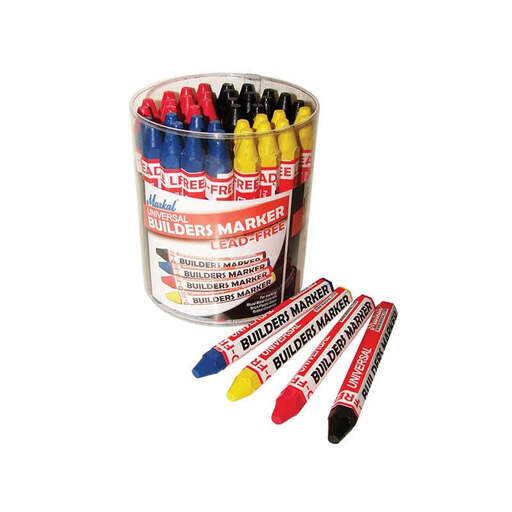
Why This Fits Their Persona: Designed for construction teams, workshops and businesses that need multiple colours available across large or continuing projects.
The pack is specifically described for wood, metal, plastic and concrete, with weather-resistant ink for indoor and outdoor marking.
48-marker quantity; blue, black, red and yellow options; weather-resistant ink and construction-focused surface coverage.
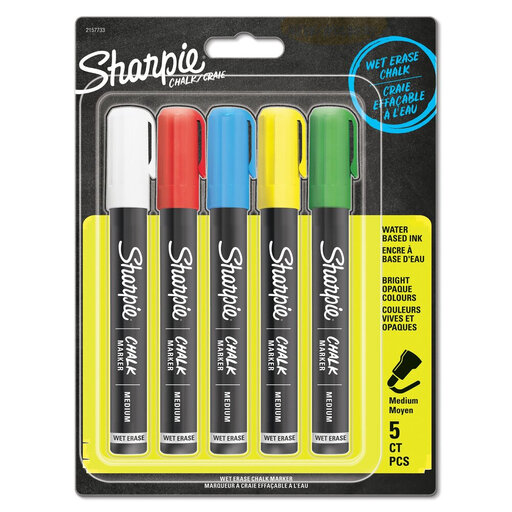
Why This Fits Their Persona: Useful for classrooms, cafés, shop windows, events and home displays that need bright writing which can be changed regularly.
The product is clearly identified as wet-erase and intended for boards, windows, glass and similar non-porous surfaces, rather than permanent labelling.
Pack of five assorted colours; bright writing; removable with a damp cloth when used on suitable non-porous surfaces.
We have compiled a complete, real-time list of products that fully satisfy these strict selection criteria and UK safety regulations.
Marker lifespan depends heavily on storage and use. Replace caps firmly, keep pens horizontal where the instructions recommend it, and store them in a cool, dry place away from direct sunlight. Paint markers usually need shaking and priming before use; press the nib down on scrap material until the ink flows evenly.
For industrial markers used on dusty or oily surfaces, clean the area first and avoid pressing excessively hard, as this can damage the tip. Keep separate markers for permanent and temporary work to prevent accidental use on reusable boards or stock that may later need relabelling.
Many are, but suitability varies by formulation. Check the listed surface guidance before buying. Pigment-based paint markers and solid paint sticks are commonly described for metal and plastic, while the finished mark may vary according to surface preparation and texture.
The mark’s lifespan depends on the ink, surface, handling, sunlight and moisture. Waterproof or weather-resistant specifications can indicate greater suitability for demanding conditions, but no marker should be assumed to remain unchanged indefinitely outdoors. The pen itself lasts longer when capped promptly and stored correctly.
They are intended to be wiped from suitable non-porous surfaces with a damp cloth. Test first, particularly on coated boards or glass with textured finishes. Avoid porous surfaces, where the ink may be absorbed and become difficult to remove.