Cooks controlling the salt in pancakes
If you are adding butter to batter or a pan but want to season the finished pancakes separately, start by comparing unsalted blocks. Lurpak lists 0.01g salt per 100g for its Unsalted Butter.


Choose unsalted block butter for pancake batter or pan use when you want the butter to contribute little salt; choose salted block butter if its seasoning suits the finished dish. A spreadable blend is a separate choice for serving with finished pancakes: Anchor recommends its regular block butter instead of Anchor Spreadable for cooking. Check milk ingredients and saturated fat per 100g where those details matter to your household.
If you are adding butter to batter or a pan but want to season the finished pancakes separately, start by comparing unsalted blocks. Lurpak lists 0.01g salt per 100g for its Unsalted Butter.
A block and a fridge-ready spread do different jobs. Anchor recommends its regular block butter for cooking, while its Spreadable is a butter-and-rapeseed-oil blend for spreading.
Unsalted does not mean milk-free or lower in saturated fat. Check the ingredient list and per-100g nutrition panel for the particular product you plan to serve.
Decide whether the butter is going into the batter, onto the pan or onto finished pancakes, then compare the relevant pack labels.
| Priority | What to check | Your needs |
|---|---|---|
| Salt and seasoning | Compare salt per 100g and check whether salt appears in the ingredients. Lurpak lists 0.01g salt per 100g for its Unsalted Butter; Anchor lists 1.7g per 100g for its Original Block Butter. | I want the butter to add little salt to pancake batter, or I would rather season the finished pancakes myself. |
| Cooking or spreading | Check whether you are buying a block or a spreadable blend. Anchor Spreadable contains 54% butter, 33% rapeseed oil and water; Anchor recommends its regular Original Block Butter for cooking. | For batter or pan use, I am shopping for a cooking butter. If I mainly want something to spread on finished pancakes straight from the fridge, a spreadable blend serves that different purpose. |
| Milk and saturates | Read the milk allergen information and compare saturates per 100g. Lurpak Unsalted lists milk-derived ingredients and 53g saturates per 100g. | Someone eating the pancakes needs the milk ingredients checked, or I am comparing saturated-fat figures between products. |
| Storage and dates | Follow the pack’s storage instructions and distinguish its use-by date from its best-before date. GOV.UK says use-by concerns safety and best-before concerns quality. | I may keep the butter after Pancake Day, so I want to know how its pack says to store it after opening. |
Unsalted describes the salt, not the allergen or fat content. Lurpak Unsalted lists milk-derived ingredients, 82g fat and 53g saturates per 100g.
Check the ingredients and per-100g nutrition panel of the butter you will use, particularly when cooking for someone who needs to avoid milk.
Anchor Spreadable contains butter, rapeseed oil and water, so it is not the same product as Anchor’s block butter. Anchor recommends its regular Original Block Butter for cooking.
If the butter is mainly for batter or pan use, compare blocks first. Consider a spreadable blend when spreading on finished pancakes is the main job.
GOV.UK distinguishes use-by dates, which concern safety, from best-before dates, which concern quality. The pack may also give instructions for storage after opening.
Keep the instructions available while you use the butter and follow the stated storage conditions.
These brand examples illustrate the differences between unsalted blocks, salted blocks and a spreadable blend; check the current pack for the product you buy.
Lurpak’s Unsalted Butter is a block-butter reference when salt per 100g matters.
Anchor offers block butter and a separate spreadable blend, making the intended use worth checking.
Kerrygold describes its 200g Unsalted Butter as an option for baking and cooking.
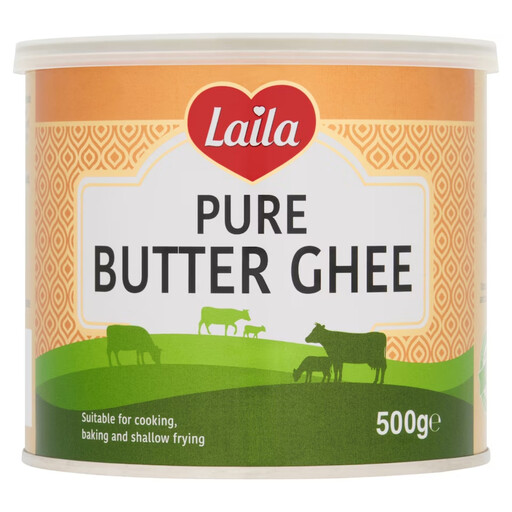
This Joybuy option is ghee for pan cooking, rather than one of the block-butter or spreadable formats compared above.
 No image available
For cooking pancakes in a pan, this 500g ghee is a different format from block butter. Check its current pack for salt, milk ingredients and saturates if those affect your choice; do not assume it can be substituted for block butter in batter.
Yes, a spreadable blend is an option for spreading on finished pancakes. It is not compositionally the same as block butter: Anchor Spreadable contains butter, rapeseed oil and water, and Anchor recommends its regular block butter for cooking.
It can: unsalted refers to salt, not dairy. Lurpak Unsalted lists milk-derived ingredients, and the Food Standards Agency identifies milk as a common ingredient in butter. Check the particular pack’s allergen information before serving it to someone who needs to avoid milk.
Compare the saturates figure per 100g on the products’ nutrition panels. Lurpak Unsalted lists 53g saturates per 100g; the NHS identifies more than 5g per 100g as high on its saturated-fat labelling scale.
Follow the instructions on its pack. GOV.UK explains that a use-by date concerns safety, while a best-before date concerns quality; where packaging instructs you to refrigerate after opening, it says to keep the food at 5°C or below.