Carers starting finger foods
Check readiness before choosing a pancake. NHS Best Start in Life advises considering the food’s size, shape and texture, and keeping the baby seated upright and supervised while eating.


For a baby who is ready for finger foods, a small homemade batch lets you decide what sugar and salt to add; a small ready-made pack avoids preparation but calls for a check of its ingredients and nutrition label. With either option, make sure the pancake’s shape and texture are manageable while the baby eats seated upright and supervised, and follow the storage directions for anything left over.
Check readiness before choosing a pancake. NHS Best Start in Life advises considering the food’s size, shape and texture, and keeping the baby seated upright and supervised while eating.
Compare four- and six-pancake packs by how many you expect to use, then read the instructions for storing the opened pack or freezing the rest.
Read the exact product’s ingredients and allergen information. NHS advice identifies egg, cows’ milk and foods containing gluten among foods that can trigger allergic reactions; a gluten-free label does not rule out other allergens.
Consider it when: You want only a few portions and want to decide what sugar or salt, if any, to add.
Allow for: Preparation, cooking and safe storage; homemade pancakes still need ingredient and serving checks.
Consider it when: Avoiding preparation matters and a particular pack’s ingredients suit the child.
Allow for: The pack’s sugar, salt and allergen information, as well as its instructions after opening.
| Priority | What to check | Your needs |
|---|---|---|
| Readiness and serving | Check for the signs of readiness for solids described by NHS Best Start in Life. Assess the prepared pancake’s texture and whether it can be offered in a manageable, narrow shape; keep the baby upright and supervised. | I need finger food the baby is ready to handle, not just a pancake described as soft or fluffy. |
| Ingredients and allergens | Read the complete label for the exact pack, including wheat or other gluten-containing ingredients, milk and egg. If avoiding gluten, check other allergens separately: the Genius gluten-free pancakes listed by Waitrose contain egg. | If I’m introducing an allergenic food or managing an established allergy, I need to know what is in this particular pancake. |
| Sugar and salt | Compare labels on the same per-100g basis when pancake sizes differ. Check ingredients for added sugar or syrup; NHS advice says not to add salt to a baby’s food and that babies do not need sugar or sweeteners. | A small pack or an adult serving size does not answer my questions about what the baby will be offered. |
| Pack size and storage | Count the pancakes you are likely to use. Read the chosen pack’s opened-pack and freezing directions rather than assuming all four- or six-packs keep for the same time. | In a smaller household, I want to know what I can use or store after the pack is opened. |
‘Half loaf’ describes bread packaging, not the size of the four- and six-pancake packs in these listings.
Search by pancake count, then check the particular product’s storage directions.
Buying more than you can use after opening leaves more pancakes to store within those directions.
Pack count does not establish ingredient or serving suitability. The Genius gluten-free pancakes listed by Waitrose contain egg, sugar and salt.
Check the baby’s readiness, the complete label and the prepared pancake’s texture as separate questions.
Ocado lists the M&S buttermilk pancake as 70g; a per-pancake figure from another pack need not represent the same amount of food.
Use the per-100g figures for a like-for-like label comparison, then consider the amount actually offered.
These listings illustrate differences in pack count, ingredients, nutrition labelling and storage instructions; a brand name alone cannot settle whether a pancake suits a baby.
Waitrose lists a four-pack of buttermilk pancakes as one smaller ready-made format.
Ocado lists M&S buttermilk pancakes in a four-pack.
Sainsbury’s lists Scotch pancakes in a six-pack.
Asda Groceries lists a six-pack of Scotch pancakes.
Waitrose lists a six-pack of Genius pancakes labelled gluten-free and milk-free.
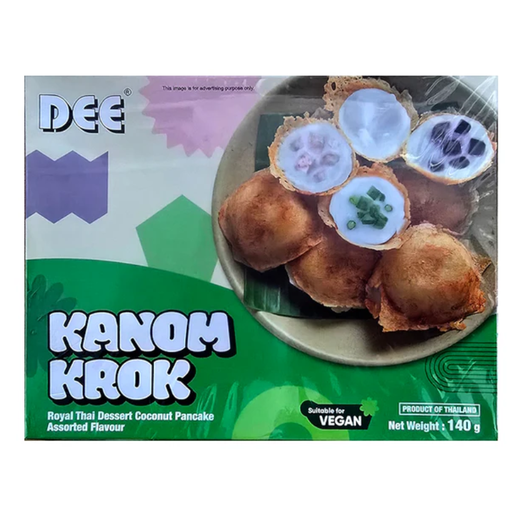
This Joybuy option is a frozen coconut pancake rather than a Scotch or buttermilk pancake. Assess its prepared texture, ingredients and storage instructions for the child and household.
 No image available
For finger food, check whether the prepared pancake’s shape and texture can be made manageable for the baby. Read the pack’s ingredients and preparation and storage directions rather than assuming a coconut pancake is free from particular allergens.
Offer finger food only when the baby shows signs of readiness for solids. NHS Best Start in Life advises considering its size, shape and texture, offering a manageable narrow shape, and keeping the baby alert, seated upright and supervised while eating.
Check the exact pancake’s ingredients before serving it. NHS advice is to introduce foods that can trigger allergic reactions one at a time so that a reaction can be spotted; wheat, milk and egg are among the ingredients to look for.
Do not give honey to a child under one year old. NHS advice also says babies do not need sugar or sweeteners, so check toppings as well as any sugar or syrup already in the pancake.
Follow the chosen pack’s instructions for storage after opening and for freezing, if permitted. For homemade food, NHS guidance advises cooling it promptly before refrigeration or freezing; do not save food left on the baby’s plate.
Check the particular setting’s allergy arrangements and the child’s needs rather than assuming a universal rule. For schools in England, Department for Education guidance says schools must publish an allergy safety policy; its early-years guidance says providers must manage food allergies and intolerances. Neither establishes one packed-lunch rule for every UK setting.