What should you check before buying?
Start with the individual allergy and the current label. Then use pancake count and storage instructions to decide whether the pack suits your household.
| Priority |
What to check |
Your needs |
| Exact allergens |
Read the full ingredients and allergen information for the specific pack. Check what a free-from claim covers and whether other relevant ingredients remain. |
I need to know whether the pancakes contain my particular allergen, not just whether they carry a gluten-free claim. Sainsbury’s lists egg ingredients in Genius Scotch Pancakes despite its gluten-, wheat- and milk-free description. |
| Precautionary statements |
Look for statements such as ‘may contain’ alongside the ingredients. Anaphylaxis UK explains that these warn of an allergen that might be present even though it is not an ingredient. |
A declared ingredient is not my only concern; I also need to consider any precautionary statement relevant to the allergy. |
| Preparation setting |
Distinguish a labelled prepacked product from food prepared or served in an open setting. Check the retailer’s information for the particular counter or department. |
If I need product-specific allergen information, a prepacked pancake gives me a label to inspect. Sainsbury’s advises allergy shoppers to avoid its in-store bakery, while Waitrose warns that fresh service-counter items may be affected by traces of allergens. |
| Pack size |
Compare pancake counts after checking allergens: the cited product listings include four-, six- and eight-pancake formats. Decide how many you expect to use. |
For my smaller household, a four-pack could mean fewer leftovers, but only if that product’s ingredients and allergen information fit our needs. |
| Storage |
Check the date, whether the exact pack permits freezing, and its defrosting instructions. Tesco lists its four-pack as suitable for freezing and says not to refreeze it once defrosted. |
I can consider a larger suitable pack if I have a way to use or store the remaining pancakes within that pack’s instructions. |
Brand and retailer references
These examples show why a named pancake and its current label matter more than a retailer’s range as a whole.
Genius
Genius Scotch Pancakes are described by the brand as gluten-, wheat- and milk-free; Sainsbury’s lists the six-pack with those claims.
- A named option to inspect when avoiding gluten, wheat or milk.
- Sainsbury’s lists dried egg white and dried whole egg in this product.
Tesco
The cited Tesco pancake listings include four- and eight-pancake standard packs.
- The four-pack offers a smaller count and is listed as suitable for freezing.
- The cited packs list wheat, milk and egg; check the current pack before choosing either.
Sainsbury’s
Its cited listings include Genius gluten-free Scotch Pancakes and standard buttermilk pancakes.
- Product listings allow the ingredients of these distinct options to be compared.
- Sainsbury’s advises shoppers with allergies to avoid products from its in-store bakery and other named open-preparation areas.
Waitrose
Waitrose advises shoppers affected by allergies or intolerances to consider prepacked ranges with allergen information on the packaging.
- Its guidance distinguishes prepacked products from fresh service-counter food.
- Waitrose says fresh service-counter items may be affected by traces of allergens; any prepacked choice still needs its own label checked.
M&S
M&S lists pancakes in its wider food range and provides separate information about allergens in its in-store preparation areas.
- Its range includes different pancake styles to assess product by product.
- M&S says its in-store kitchens, bakeries, cafés and coffee shops handle major allergens and cannot guarantee food is allergen-free.
Joybuy pancake options
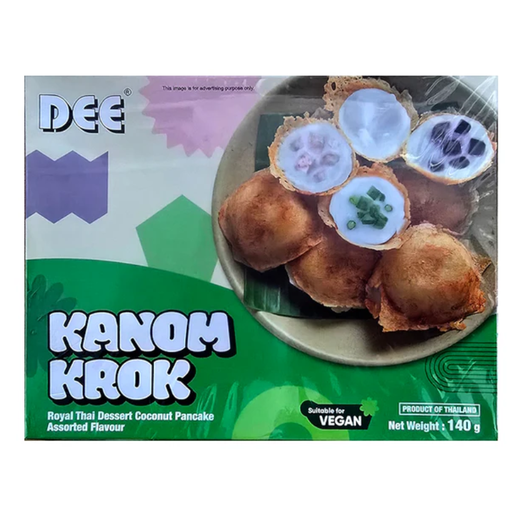
The option shown here is a frozen Thai-style coconut pancake, rather than a ready-to-eat Scotch pancake. Check its current pack against the allergens you need to avoid before using its size or frozen format to plan portions.
 No image available
Dee Frozen Royal Thai Coconut Pancake Assorted 140g
The 140g frozen format is an option to assess when planning portions for a smaller household. It is a Thai-style coconut pancake, not a Scotch pancake. Its product description warns that it is made in a facility handling other allergens; check the current pack for ingredients and precautionary information relevant to you.
View on Joybuy
Pancake shopping questions
Are standard ready-to-eat pancakes suitable if I avoid wheat, milk or egg?
The cited standard Tesco and Sainsbury’s pancakes list wheat, milk and egg, so those particular products do not fit an avoidance of those ingredients. Check each different product’s current physical pack rather than assuming all pancakes have the same recipe.
Does ‘gluten free’ mean a pancake is free from other allergens?
No. Genius and Sainsbury’s describe Genius Scotch Pancakes as gluten-, wheat- and milk-free, but Sainsbury’s ingredient list includes dried egg white and dried whole egg. Read the complete label for the allergen that matters to you.
Is a four-pack a better choice for a smaller household?
A four-pack may leave fewer pancakes unused, but check allergen suitability first. Tesco’s four-pack, for example, lists buttermilk, wheat flour and egg; a larger suitable pack may also be workable if its storage instructions fit your plans.
Can ready-to-eat pancakes be frozen?
Some can, but follow the exact product’s instructions. Tesco lists its four- and eight-pancake packs as suitable for freezing, says its eight-pack should be frozen by the use-by date, and says its four-pack should not be refrozen after defrosting.
What should I consider when buying pancakes from an in-store bakery?
Consider how you will obtain product-specific allergen information and account for the retailer’s preparation setting. Sainsbury’s advises shoppers with allergies to avoid its in-store bakery products, while Waitrose warns that fresh service-counter items may be affected by traces of allergens and suggests prepacked ranges with information on the packaging.


