Small-buffet operators
Ready-to-eat small packs can keep preparation simple when guest numbers vary. Compare how many packs you would open during service with how many pancakes you expect to serve.


Choose pancakes for a hotel breakfast buffet by the cost and work involved in each usable serving, rather than pack size alone. A ready-to-eat six-pack can suit variable demand with little preparation; a large catering case calls for enough demand, storage and heating capacity; and mix suits a kitchen that can cook during service. Check the selected product’s instructions and allow for added ingredients, toppings, unused portions and allergen controls before ordering.
Ready-to-eat small packs can keep preparation simple when guest numbers vary. Compare how many packs you would open during service with how many pancakes you expect to serve.
A catering case is worth considering when expected demand, storage space and heating capacity are sufficient for its portion count. Mason Foodservice lists an example containing 120 pancakes of 32 g each.
Mix gives staff a cook-on-site option if they can prepare batter and cook batches during breakfast. Include the required additions and the finished recipe when planning portions and allergen information.
Start with the number of pancakes likely to be served, then compare preparation, storage and service requirements on the same finished-portion basis.
| Priority | What to check | Your needs |
|---|---|---|
| Usable cost per serving | Compare finished portion sizes and expected uptake, not just purchase units. Allow for additions to mix, toppings and unused pancakes; Mason Foodservice lists a 120 × 32 g case, while the cited retail packs contain six. | I need to know how many portions guests are likely to take before deciding whether a small pack or catering case fits the breakfast budget. |
| Preparation and replenishment | Sainsbury’s describes its cited Scotch pancakes as ready to eat or suitable for warming. Mason Foodservice specifies oven or microwave heating for its case; Aunt Bessie’s mix requires batter preparation with water and eggs. | Breakfast staff must be able to serve and replenish pancakes alongside their other tasks. Cooking batches during service is an option only if there is time and equipment for it. |
| Storage and waste | Check the delivered product’s storage, opening and date instructions. Asda lists its cited six-pack as ambient and typically fresh for two days; Waitrose says its cited buttermilk pancakes must be refrigerated and used within two days of opening, without exceeding the use-by date. | If guest numbers change from day to day, I want a pack size and storage method that let the team use what it opens. |
| Allergens at self-service | Check the current product label and every ingredient added during preparation or service. The Food Standards Agency and Food Standards Scotland say food businesses must provide allergen information for non-prepacked food and manage allergens when preparing and serving it. | Guests need accurate information about the pancake as served, including toppings or ingredients added to a mix. Staff also need a way to manage cross-contact at the buffet. |
A six-pack, a 120-piece case and a dry mix are different purchase units with different preparation requirements. A pack comparison alone cannot show the cost of a finished buffet portion.
Estimate guest uptake and compare the same finished-portion basis before ordering.
Include ingredients added to a mix, toppings, heating or cooking work, storage and unused portions in the calculation.
Mason Foodservice lists a 120-pancake case, while the cited Waitrose six-pack has refrigerated-storage, opening and use-by instructions. Neither purchase size removes the need to plan how the product will be stored and used.
Match the portion count to forecast breakfast covers, available storage and the instructions on the delivered product.
A mix may need added ingredients, and guests encounter the finished pancake and its buffet accompaniments. The Food Standards Agency and Food Standards Scotland require food businesses to provide allergen information for the food served and manage allergens during preparation and service.
Record the complete served recipe, check current labels and plan how staff will manage preparation and serving utensils.
Asda lists a six-pack of ready-made Scotch pancakes for a small-pack, low-preparation approach.
Sainsbury’s lists a six-pack of Scotch pancakes that can be served ready to eat or warmed.
Waitrose lists a six-pack of chilled buttermilk pancakes that may be eaten warm or cold.
Aunt Bessie’s lists an American Style Pancake & Waffle Mix for preparing batter on site.
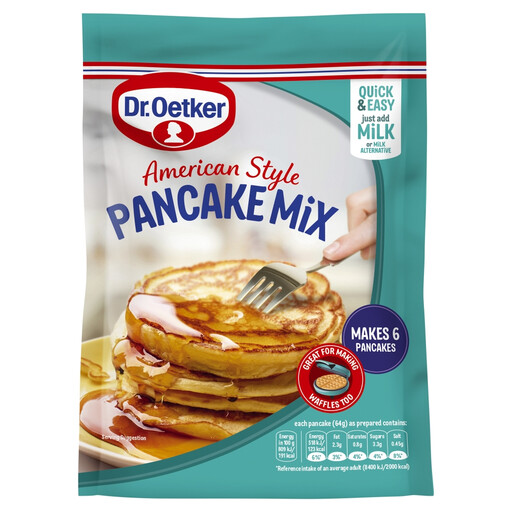
Dr. Oetker lists a 170 g American Style Pancake Mix as another cook-on-site option.
This mix is an option for a hotel kitchen preparing pancakes during breakfast service. Compare its finished portions and preparation work with ready-made formats before choosing a supplier.
 No image available
This 170 g mix suits a kitchen with staff and equipment to cook pancakes during service. Dr. Oetker says the mix needs milk; include that addition and the cooking work when comparing finished portions, and check the current label and complete served recipe for allergens.
Follow the instructions for the exact product. Sainsbury’s says its cited Scotch pancakes are ready to eat and can alternatively be warmed; that does not make a catering product that requires heating, or a dry mix, ready to serve.
Provide accurate allergen information for the pancake as served, including added ingredients, and manage cross-contact during preparation and service. Food Standards Scotland’s buffet guidance advises labelling foods to show allergenic ingredients and using separate serving utensils.
Do not assume that warming a pancake, or that it is ready to eat, permits unrestricted display. Apply the hotel’s food-safety procedure to the actual product and service method; UK temperature-control guidance distinguishes between foods needing control, applicable jurisdictions and exceptions.
Compare likely usable portions, ingredients added to a mix, preparation and heating work, storage, toppings and expected waste. The cited six-packs, catering case and mixes differ in size and preparation, so calculate a finished-serving comparison for the products and supplier terms you are considering.