Shared-kitchen clean-up prioritiser
You make chicken paninis where other people also prepare food. Access to the plates, edges and hinges matters when cheese, sauces or crumbs need clearing before the next person uses the appliance.


For cooked chicken sandwiches in a shared kitchen, choose a press whose cooking surfaces everyone can clean properly between uses. Removable plates or washable cooking parts are worth considering when fillings leave residue; a fixed-plate press can also work if users can follow its cleaning instructions thoroughly. Check sandwich capacity, room for thicker fillings and storage space separately, and do not rely on toasted bread to tell you whether the chicken is hot throughout.
You make chicken paninis where other people also prepare food. Access to the plates, edges and hinges matters when cheese, sauces or crumbs need clearing before the next person uses the appliance.
You mainly toast already-cooked chicken sandwiches or wraps for a small group and want to check that the stated capacity fits your usual lunchtime batch.
You make generously filled sandwiches or want to use the appliance for other foods. Plate shape, space beneath the lid and whether you will use additional plates all affect the choice.
Consider it: When you mainly toast straightforward sandwiches and can reach and clean the cooking surfaces as the manual directs.
Trade-off: You will need to clean around fixed plate edges and hinges without removing the plates.
Consider it: When several people use the appliance or you want to take the plates out to clean them after messy fillings.
Trade-off: Spare plate sets need storing and cleaning; check which parts may go in a dishwasher.
Consider it: When easy access to cooking parts between users matters more than a sealed toastie shape. George Foreman says the Immersa Medium 28310 cooking parts can be washed after its control panel is removed.
Trade-off: Check that the grill surface produces the sandwich shape you want and that the appliance fits its storage space.
In a shared kitchen, start with cleaning access, then match capacity, filling height and storage to the way you make lunch.
| Concern | What to check | Who this matters to |
|---|---|---|
| Cleaning between users | Check which cooking parts are removable or washable and follow the exact model’s cleaning instructions. A non-stick surface alone does not establish cleaning access. | If other people use the press after my cheese or sauce-filled sandwich, I need to reach the surfaces where residue collects. Around 39% of consumers put cleaning access first. |
| Lunch-time capacity | Compare the manufacturer’s stated sandwich capacity with your usual batch; check that the bread fits beneath the lid. | When several of us make lunch together, I want fewer separate rounds at the press. Around 23% of consumers prioritise batch capacity. |
| Thick fillings and other uses | Look for a stated floating hinge or suitable plate shape, and confirm that any panini plate you need comes with the appliance. | I make thick chicken sandwiches or want to grill other foods, so the appliance needs to suit more than a thin panini. About 23% of consumers make filling room and versatility their main concern. |
| Storage | Measure the cupboard space for the appliance, cable and any additional plates; confirm whether upright storage is permitted. | I share limited cupboard space and want a machine everyone can put away without loose parts getting misplaced. Roughly 15% of consumers put straightforward storage first. |
A coating may make a plate easier to wipe, but crumbs and fillings can also reach edges and hinges. Food Standards Agency guidance for food settings highlights the importance of cleaning equipment and controlling contamination.
Compare the parts you can actually reach or remove. Follow the appliance manual rather than immersing a fixed electrical unit.
A sandwich can brown before a thick, cold filling is hot at its centre.
Use chicken that was cooked and stored safely, and make sure the filling is steaming hot all the way through. If the press cannot heat the centre adequately, use another reheating method before toasting.
Interchangeable plates add formats, but each set also needs a place to be stored and cleaned.
Check that the panini surface is included with the exact model, and measure space for every plate set you expect to use.
Keeping additional plates together and ready for the next user adds a shared-kitchen storage task.
Shared use can make damage to a plug, cable or housing easier to overlook. The Health and Safety Executive advises checking that electrical equipment used for work is suitable and in good condition.
Check the appliance before use. Take it out of use if you notice exposed wires, taped repairs, burn marks or other damage, and arrange assessment by a competent person.
These product lines illustrate different press and grill formats; compare the instructions and included parts for the exact model you intend to buy.
A reference point for dedicated panini presses. Breville UK says its VST025 makes three paninis, toasted sandwiches or wraps at once.
An option for people who want both grill and sandwich plates. Cuisinart describes the GRSM4U as having interchangeable plates and a floating hinge.
A contact-grill format to consider when washing access is central. George Foreman says the Immersa Medium 28310 has a removable control panel so its cooking parts can be washed in a sink or dishwasher.
A multi-plate option for households that will use more than a panini surface. Russell Hobbs says its Creations 3 in 1 Sandwich Maker 26810 has removable plates that can be washed in a sink or dishwasher.
An interchangeable-plate option. Tefal says the Snack Time SW343D40 includes removable panini and waffle plates.
These contact grills are options for toasting cooked-chicken sandwiches. For shared use, compare how you will clean their plates as well as whether their cooking area fits your usual sandwiches.
 No image available
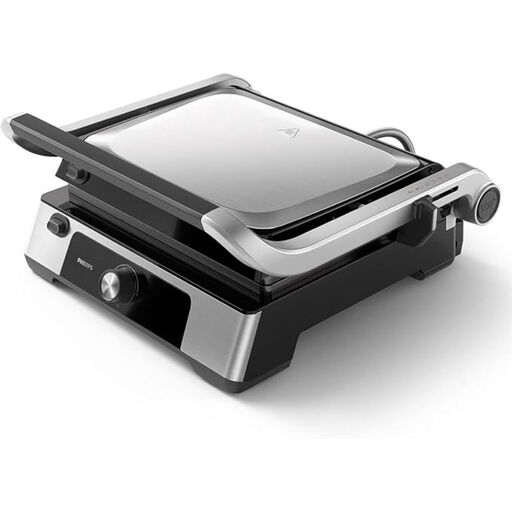
Consider this model when access to the plates for cleaning matters in your shared kitchen. Its removable plates require manual cleaning; they are not dishwasher-safe. If you make thick sandwiches or several lunches at once, check that the plate adjustment and cooking area suit them. Confirm the supplied plug and electrical requirements before buying.
 No image available
Consider this panini-press format if its stated 28 × 22 cm plate size suits the sandwiches you make. The product name also states 2000W and double-sided heating; neither figure establishes how many filled sandwiches will fit. For frequent shared use, check the permitted plate-cleaning method, lid clearance, storage dimensions and supplied plug before choosing it.
Yes, if the chicken was cooked and stored safely and the filling becomes steaming hot all the way through. Toasted bread alone does not show that the centre of a thick sandwich is hot; if necessary, reheat the filling by another method before pressing the sandwich.
Not necessarily: a fixed-plate press can work if everyone cleans its food-contact surfaces properly after use. Removable plates or washable cooking parts may make that task more practical when fillings leave cheese, sauce or other residue.
No. Follow the instructions for the named washable parts of the exact appliance. Russell Hobbs says the removable plates on its 26810 can be washed in a dishwasher or sink; George Foreman says the Immersa Medium 28310 cooking parts can be washed after removing its control panel. Do not immerse an electrical control section unless its manufacturer explicitly permits it.
Before buying, check that the supplied version’s plug and electrical requirements suit where it will be used; before use, inspect the plug, cable and appliance for damage. For equipment used at work, the Health and Safety Executive advises checking that it is suitable for the task and in good condition. Take an appliance with exposed wires, burn marks or other damage out of use.