Who is each format for?
The useful distinction is not whether a machine can make two sandwiches, but whether its plate shape, cleaning routine and storage needs fit the one sandwich you usually make.
Solo cheese-toastie regulars
If you normally make one toastie, consider a compact two-portion press or toastie maker without treating its stated capacity as a target to fill. Check where it will live and whether you can comfortably wipe the plates after use.
Thick-filling panini users
If your cheese sandwiches use ciabatta, wraps or fillings of varying height, check for a floating or adjustable hinge on the exact press. That feature does not establish that every sandwich will fit.
Low-clutter multipurpose buyers
If you also expect to make waffles or other snacks, removable plate sets may justify the accessories you need to store. If cheese toasties are the only planned use, a simpler format may be easier to live with.
What matters when buying for one?
Choose the cooking format around your usual bread and filling first, then check storage and clean-up. Extra cooking functions matter only if you expect to use them.
Flat-plate panini press
Choose it when: You switch between sliced bread, paninis and wraps, particularly if sandwich thickness varies.
Bear in mind: Flat plates do not seal the bread edges, and a two-portion machine has more stated capacity than one person normally needs.
Deep-fill toastie maker
Choose it when: Your usual sandwich uses sliced bread and you prefer a shaped toastie format for the cheese filling.
Bear in mind: Its shaped plates are less adaptable to irregular panini breads such as ciabatta.
Multi-plate snack maker
Choose it when: You expect to use the additional plates for foods such as waffles or paninis, not just cheese toasties.
Bear in mind: The extra plate sets need storage and may go unused if you only make one type of sandwich.
Manual sandwich shaper
Choose it when: Avoiding another heated appliance matters more than having a dedicated electric press.
Bear in mind: A tool such as Lakeland’s Crimpit shapes the sandwich but does not heat it; remove the sandwich from the tool before cooking it as directed.
| Concern |
What to check |
Who this matters to |
| Storage and capacity |
Check stated sandwich capacity and published dimensions or storage features. |
I usually make one sandwich and want to put the appliance away without giving it too much cupboard space. Around 31% of consumers would put compact storage and sensible capacity first. |
| Bread and filling fit |
Check for a floating or adjustable hinge, or a shaped deep-fill plate, according to your usual bread. |
My bread and filling thickness vary, or I want a sliced-bread toastie that holds its cheese more neatly. Around 31% of consumers would make bread and filling fit their primary concern. |
| Cleaning after cheese |
Check whether the cooking plates are fixed or removable and what the cleaning instructions permit. |
I want the clean-up after melted cheese to suit my daily routine. For around 23% of consumers, cleaning effort would be the deciding need. |
| Other uses |
Check which plate sets are included and which foods the exact model is intended to make. |
I would use the same appliance for snacks besides cheese toasties, so the additional plates need a purpose in my kitchen. Around 15% of consumers would put those extra uses first. |
Brands to consider by format
These examples show different appliance formats, not a ranking of whole brands. Check the features of the particular model you are considering.
Cookworks
A straightforward two-portion panini-press option, represented here by the Cookworks 2 Portion Panini Press.
- The manufacturer lists non-stick plates, an adjustable handle with a locking clip and capacity for two sandwiches.
- For one-person use, check its storage fit and plate-cleaning instructions rather than assuming that two-portion capacity is an advantage.
Breville
A flat-plate sandwich and panini option, represented by the VST025.
- The manufacturer lists the VST025 for up to two sandwiches or three paninis, with non-stick plates and cord storage.
- Its broader stated capacity is useful only if it fits what you cook and the space you have for storage.
Salter
Relevant to two different choices: a deep-fill toastie format and a snack maker with interchangeable plates.
- Salter describes a two-toastie deep-fill format and an XL 3-in-1 maker with removable plate sets for toasties, waffles and paninis.
- Choose the plate format for the bread and foods you will use; the additional sets also need storage.
Tefal
A grill-oriented alternative, represented by the Inicio GC241D40 rather than a compact, toastie-only maker.
- Tefal describes a floating hinged lid, fixed non-stick plates and a removable dishwasher-safe drip tray for this model.
- Tefal lists it as a six-portion grill, so consider that format if broader grilling is a real requirement, not simply for one cheese toastie.
Joybuy choices for one-person toasties
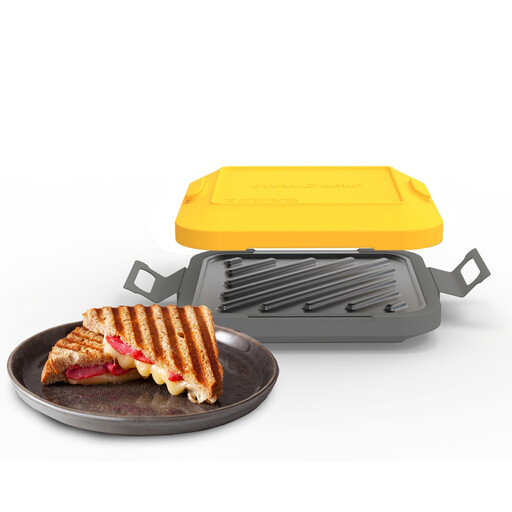
This choice is a microwave toastie maker for someone who already has a suitable microwave. It is an alternative way to make a cheese toastie, not a plug-in panini press or a shaped deep-fill electric maker.
 No image available
Drew & Cole Clever Micro Toastie Maker
Consider this for a one-person cheese toastie if you want to use a microwave rather than buy a plug-in panini press.
It requires a microwave. Check the product instructions and its stated maximum microwave wattage of 1200W against your appliance before use.
Check which components can go in a dishwasher before relying on dishwasher cleaning.
Joybuy
Questions about choosing and using a toastie maker
Is a two-portion press too large if I make only one sandwich?
Not necessarily: two portions describe stated capacity, not how many sandwiches you must make. The manufacturer lists two-sandwich capacity for the Cookworks press and Breville VST025, while Salter describes a two-toastie deep-fill maker. Compare their storage needs and plate formats for your usual single sandwich.
Should I choose an adjustable hinge or a deep-fill toastie maker?
Choose a press with a floating or adjustable hinge if your bread or filling height varies; choose a shaped deep-fill maker if you usually make sliced-bread cheese toasties and prefer that format. Check the exact model’s stated hinge or plate design rather than assuming the two features do the same job.
How should I clean a cheese-toastie press?
Follow the instructions for the exact model, switching it off, unplugging it and allowing it to cool before cleaning, as Breville’s appliance guidance advises. When choosing a press, check whether its cooking plates are fixed or removable; a removable drip tray does not mean the plates can be taken out.
What safety habits matter when using a press in a small kitchen?
Keep your hands dry when handling electrical equipment and do not leave an appliance on unattended, in line with Electrical Safety First’s kitchen advice. Let the press cool before cleaning or storing it, and follow the instructions supplied with your model.


