
24/7 Customer Support

Free returns

Same-day & Next-day Delivery

Quality Guaranteed

Unlock Your Welcome Offers: FREE Delivery | Up to 80% OFF | Free 30-day JoyPlus trial
Download the APP
Panty liners can be useful for vaginal discharge, spotting, light period days and everyday freshness. However, choosing the wrong type may lead to discomfort, shifting, poor coverage or unnecessary spending. Product descriptions often focus on softness, odour control or “ultra-thin” construction without making it clear whether the liner is suitable for your actual needs.
This guide explains the practical specifications to check before buying panty liners, followed by product recommendations matched to different lifestyles and usage requirements.
Standard daily panty liners are generally intended for light moisture and discharge. They may not be suitable for heavier menstrual flow, postpartum bleeding or light bladder leakage. Using a daily liner for the wrong purpose can result in leaks and repeated changes.
For period flow, consider sanitary pads. After childbirth, maternity towels are usually designed for higher absorbency and wider coverage. For urine leakage, choose products specifically labelled as light bladder leakage liners, as these are designed around different fluid characteristics.
Ultra-thin panty liners can feel discreet, but a shorter or narrower shape may not provide enough coverage during movement. If you need protection towards the front or back of your underwear, look for long panty liners or an extra-long design.
Length is not the only consideration. Check whether the product has side barriers, a secure adhesive area and a shape that suits your underwear. A liner that moves during the day can be less useful than a slightly thicker product with better stability.
Scented products are not automatically more hygienic. Fragrance may be unsuitable for people who experience skin sensitivity or irritation. If this is a concern, compare unscented panty liners, and review the ingredient information on the packaging.
Odour-control panty liners may include odour-neutralising materials or specific odour-control systems. These features can be useful for discretion, but they do not replace regular changing or good personal hygiene.
Start with the type of fluid and likely volume. For daily discharge or very light spotting, daily panty liners may be appropriate. For more moisture, select a longer liner with an absorbent core. Products made for bladder weakness should be used according to their instructions and should not automatically be treated as menstrual protection.
If you experience persistent, unusual or bothersome discharge, irritation or unexpected bleeding, consider seeking medical advice rather than relying on absorbent products to manage the symptom.
Product length is a useful comparison point:
The liner should sit centrally on the gusset, with the adhesive firmly attached to clean, dry underwear. Replace it when damp, soiled or uncomfortable rather than wearing one for an unnecessarily long period.
For sensitive skin, look for breathable panty liners, soft topsheets and products that are fragrance-free or dye-free where appropriate. “Cotton-like” does not necessarily mean the product is made from cotton, so check the material information.
Individually wrapped panty liners are convenient for handbags, work drawers and travel. They also keep unused products contained, although packaging size and waste may be greater than with loose-packed liners.
Sustainability also varies. Some eco-friendly panty liners use renewable-fibre packaging, responsibly managed forest materials, bamboo or paper packaging. Check whether the sustainability statement refers to the wrapper, packaging or the liner itself.
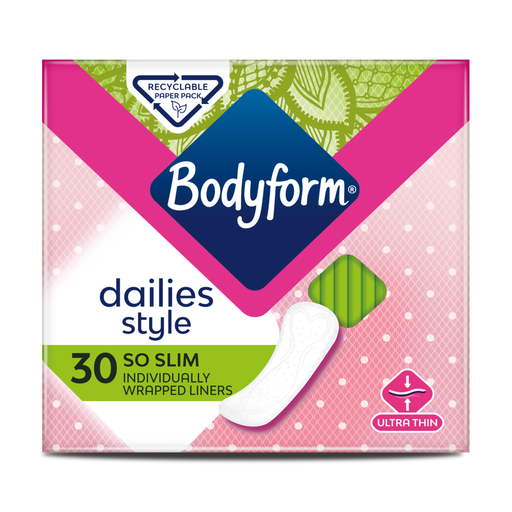
Why This Fits Their Persona: A practical option for people starting with daily liners, particularly those who value a slim profile and portable individual wrapping for work, commuting or university.
Its ultra-thin design is clearly paired with a 30-pack and individually wrapped format, making the intended daily-use convenience easier to assess.
Ultra-thin V-Slim design; individual wrappers; outer packaging described as 100% renewable.
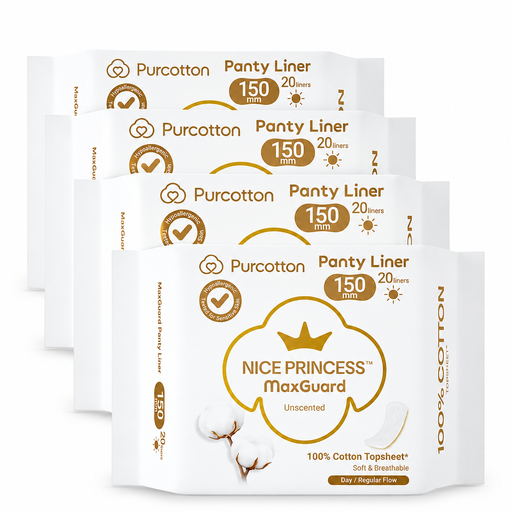
Why This Fits Their Persona: Suitable for shoppers prioritising a generous pack size, cotton topsheet and a 150mm format for routine daily use, discharge or light spotting.
The listed 150mm length and 80-pad quantity make coverage and ongoing usage clearer than relying on vague comfort language alone.
100% cotton topsheet and wings are listed; ultra-thin, breathable and unscented design.
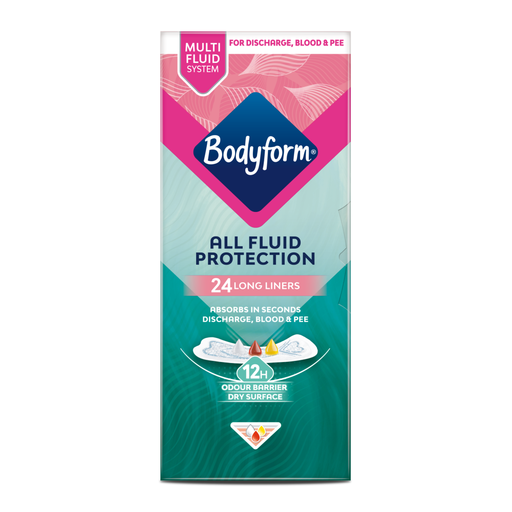
Why This Fits Their Persona: A longer option for people managing discharge, spotting and occasional light moisture who prefer additional coverage during busy days.
It is stated to be 2.5cm longer than regular liners and identifies three responsive zones, giving useful detail beyond a general “all-day” promise.
Longer coverage; absorbent core; listed odour-resistance barrier and recyclable paper packaging.
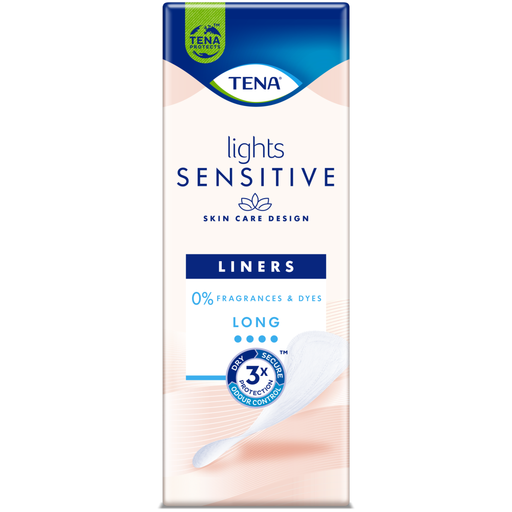
Why This Fits Their Persona: Designed for very light bladder leakage, including occasional leaks when coughing, sneezing or laughing, while offering extended coverage for everyday movement.
It is clearly positioned for bladder leakage rather than menstrual protection, and specifies a 21cm length and 3mm thickness for comparison.
Fragrance- and dye-free; breathable topsheet and backsheet; extra-long format with 40 pads per pack.
We have compiled a complete, real-time list of products that fully satisfy these strict selection criteria and UK safety regulations.
Apply a liner to clean, dry underwear with the adhesive side facing down. Change it whenever it feels damp or uncomfortable. Always follow the product packaging, particularly for bladder-leakage products, sanitary pads and maternity towels.
Used liners should be wrapped and placed in a household waste bin. Do not flush panty liners, sanitary pads or maternity products, as they can contribute to blocked plumbing and environmental problems.
Change them when they become damp, soiled or uncomfortable. As a general practical routine, many daily-use products may need changing every four to six hours, but usage depends on moisture levels, activity and the product instructions.
They can be useful for very light spotting or as backup protection, but standard panty liners are not intended for regular or heavy menstrual flow. Choose sanitary pads or another menstrual product when greater absorbency is required.
Unscented products may be preferable if you are sensitive to fragrance, but check the full materials list and stop using the product if irritation occurs. A breathable surface and regular changing may also improve comfort. Persistent irritation should be discussed with a healthcare professional.