
24/7 全天候客户支持

免费退货

当日/次日达

品质保障

开启新人专享福利: 全场免邮 | 低至 2 折 | 免费试用 30 天 JoyPlus 会员
下载 Joybuy
Buying paper products and home improvement supplies often looks straightforward until you compare roll coverage, paper weight, application method and pack size. A low-priced option can become costly if it needs replacing quickly, covers less area than expected or is unsuitable for the job.
This guide helps UK households, DIY renovators, artists, students and crafters compare the specifications that genuinely affect everyday use.
A larger-looking pack does not always provide better value. Check the number of sheets, roll length, sheet dimensions and total coverage. For example, kitchen rolls may be sold by roll count, but the sheet count per roll can vary considerably.
For wallpaper and lining paper, calculate the wall area and allow extra material for trimming, pattern alignment and installation mistakes. A 20-metre roll may be more suitable for a renovation project than several shorter rolls, even if its purchase price is higher.
Paper weight and surface finish matter. A lightweight sketch pad may work for pencil but buckle with wet media. Similarly, thermal sticker paper requires a compatible printer and the correct roll width. A product designed for labels may not be suitable for prolonged outdoor exposure or high-temperature environments.
For household cleaning, kitchen rolls, reusable kitchen wipes and facial tissues serve different purposes. Kitchen paper is intended for spills and food-preparation tasks; facial tissues are designed for personal use; reusable-style wipes may be used damp or dry but should still be disposed of according to their instructions.
Wallpaper descriptions should clearly state whether the product is self-adhesive or non-adhesive. Peel-and-stick wallpaper requires a smooth, clean and dry surface, while non-adhesive wallpaper requires wallpaper paste and more preparation.
Lining paper is not a substitute for repairing unstable plaster. Dust, loose particles, damp and crumbling areas should be addressed before application. If a wall has persistent damp, identify and resolve the cause before decorating.
Paper weight is measured in gsm, or grams per square metre. A 160gsm sketch pad is a practical medium-weight option for graphite, coloured pencils, charcoal, watercolour pencils and light mixed-media work. It may still show bleed-through with heavily saturated markers or wet washes, so test a spare sheet first.
For long-term storage of drawings, look for acid-free drawing paper. Acid-free paper is designed to reduce deterioration associated with acidic materials, although finished work should still be stored away from direct sunlight, moisture and excessive heat.
Common formats include:
Self-adhesive wallpaper has a peel-off backing and does not require separate paste. It is convenient for smaller decorative projects, but the wall must be smooth and properly cleaned. Non-adhesive wallpaper requires suitable paste and careful alignment, which can provide a more traditional installation process.
For lining paper, grades such as 1400, 1700 and Supercover 2500 indicate different levels of thickness and intended surface coverage. Heavier lining paper may be more appropriate for older or visibly damaged plaster, while a smooth fibreliner can provide a cleaner base before painting.
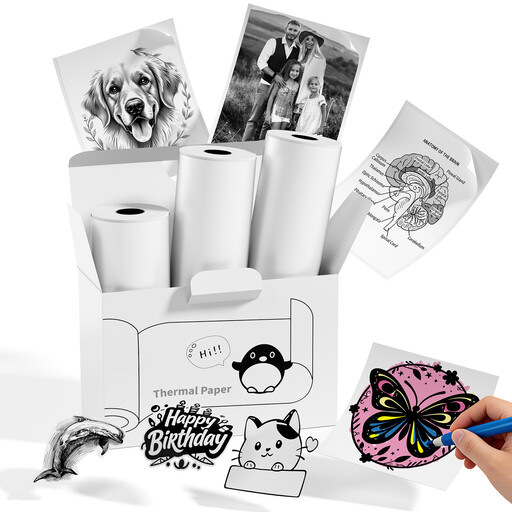
Why This Fits Their Persona: The three-roll pack suits students, home organisers and crafters who want a compact way to print notes, labels and small scrapbook details.
The 50mm width and 3.5m length per roll are stated clearly, helping buyers check compatibility before ordering.
Self-adhesive format; supplied as three rolls; designed for compatible T02, Q02E, M02X and M02L mini printers.
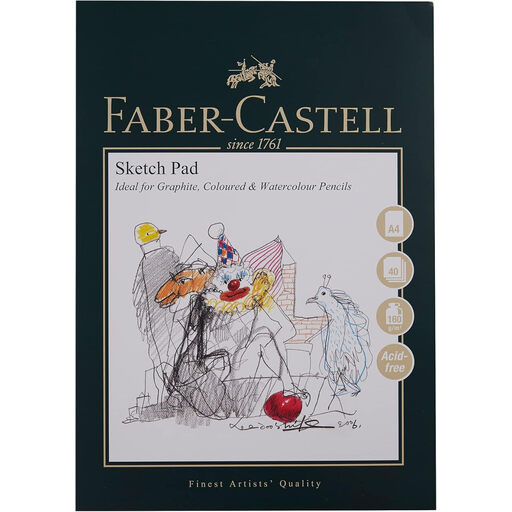
Why This Fits Their Persona: A4 gives artists, students and illustrators more room for studies, layouts and presentation work.
The 160gsm weight and acid-free specification provide more useful information than vague claims about paper quality.
40 sheets; gummed top binding; suitable for graphite, coloured pencils, charcoal and light washes.
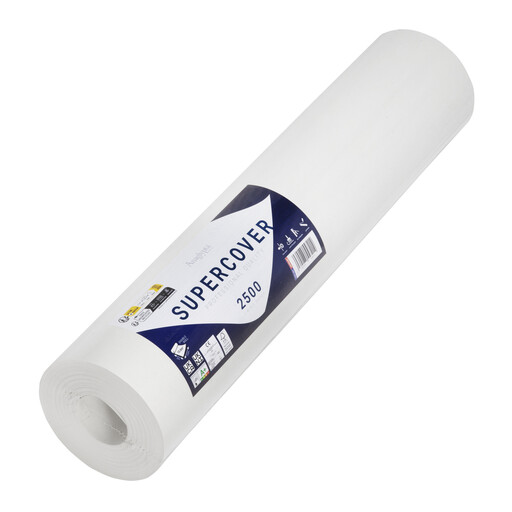
Why This Fits Their Persona: DIY renovators working on older or damaged plaster can use the thicker grade as a preparation layer before painting or wallpapering.
Its intended use for damaged and crumbling surfaces is clearly stated, while preparation and adhesive requirements remain the buyer's responsibility.
2500 grade; 20m × 53cm roll; designed for use with ready-mixed adhesive.
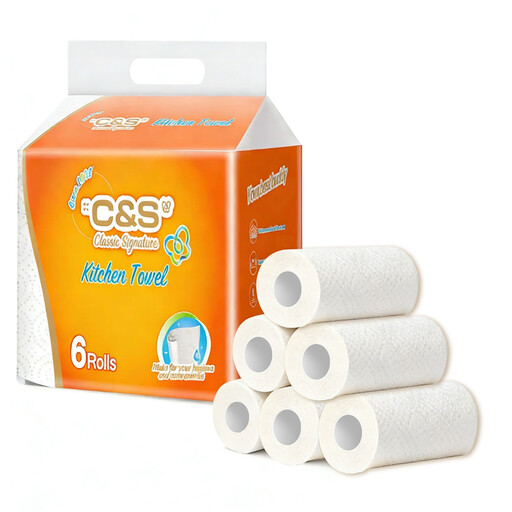
Why This Fits Their Persona: The six-roll pack is suited to busy UK kitchens that need paper for spills, drying dishes and wiping cooking surfaces.
The pack states its 2-ply construction, 65 sheets per roll and 390-sheet total, making quantity easier to compare.
Unscented; 2-ply construction; perforated rolls; intended for oil and water absorption.
We have compiled a complete, real-time list of products that fully satisfy these strict selection criteria and UK safety regulations.
For smaller creative projects, an A5 sketch pad is easier to store and carry than A4. The Faber-Castell A5 option also uses 160gsm acid-free paper and has 40 gummed sheets.
For wall preparation, standard lining paper such as 1400 grade may suit sound older plaster, while 1700 grade offers a heavier alternative. Wallrock Fibreliner Smooth has a 150gsm specification and a 20m × 55cm roll. For decorative changes, compare self-adhesive wallpaper with non-adhesive wallpaper based on wall condition, paste requirements and the size of the area.
Everyday household options include large facial tissue packs, reusable kitchen wipes and toilet tissue. Facial tissues should not be flushed, and kitchen rolls should never be placed in the toilet. Store all paper goods in a cool, dry area away from sinks, radiators and direct sunlight.
It is suitable for watercolour pencils and light washes, but heavily saturated wet media may cause warping or bleed-through. Test the paper first and allow each layer to dry.
Measure each wall's width and height, then account for the roll width, cutting waste and pattern positioning. A 20m × 53cm roll covers a substantial area, but the actual usable coverage depends on wall height and installation technique.
Product descriptions may use “reusable” to describe wet-and-dry versatility. Check the specific instructions: some thickened wipes can be dampened for cleaning but are intended to be discarded after use. They should not be flushed.