For a birthday party, start with the labelled servings you need: choose several 400g cans if the custard must be tinned, or check a larger ready-to-serve pack if opening fewer packs matters more. Bird's custard powder offers control over the batch but requires preparation; whichever format you choose, check the exact pack for allergens, serving instructions and storage after opening.
Who each format suits
Hosts serving a larger guest list
If several guests want custard with cake, crumble, fruit or trifle, compare portions per pack before deciding how many to buy. Tesco Groceries lists 400g tinned custards alongside larger products in its wider custard range; check the packaging when a tin is essential.
Hosts with little preparation time
Ready-to-serve custard avoids making a batch during the party. Sainsbury's lists its 500g Ready To Eat Custard for hot or cold serving, while its Ambrosia Low Fat 400g can can also be served hot or cold. Follow the heating instructions on the pack you choose.
Hosts checking guests' allergies
Read the current label of every custard you plan to serve. The Ambrosia Low Fat can contains milk ingredients, Bird's powder may contain milk, and the M&S chilled custard contains milk and egg, according to their respective product information.
What matters when buying
Decide whether a tin is required, then plan quantities from the exact product's serving declaration rather than the phrase “family pack”.
| Concern |
What to check |
Who this matters to |
| Enough portions |
Count guests likely to take custard and compare the labelled servings per pack. Check the packaging separately if you need tins. |
If I'm serving custard with a birthday dessert, I need enough portions without opening unnecessary packs. About 36% of consumers put portion coverage first. |
| Serving on the day |
Check whether the exact product can be served cold or needs heating, and follow its container and heating instructions. |
When kitchen space and time are tight, I want custard I can serve without making it from scratch. Low-preparation serving is the primary need for about 29% of consumers. |
| Lower-fat ready-made choice |
Compare the nutrition declaration per 100g and per serving; check ingredients and allergens separately. |
If I'm choosing a lower-fat ready-made custard, I still need to read its milk-allergen information. This is the leading consideration for about 14% of consumers. |
| Recipe and ingredient checks |
For powder, check the ingredients, preparation directions and storage instructions once made. |
When I want to adjust a prepared batch or check its ingredients for guests, those decisions come before convenience. About 21% of consumers give recipe control and ingredient checks priority. |
Tesco Groceries lists 400g products on its tinned-custard shelf and Ambrosia products in 500g, 750g and 1kg sizes in its wider range; those larger sizes should not be assumed to be tins. For a serving-count comparison, Sainsbury's labels Ambrosia Low Fat Custard Can 400g as three 130g portions and its own Ready To Eat Custard 500g as four 125g servings. Use the declaration on the pack you buy.
Planning mistakes to avoid
-
Assuming “family pack” means a large tin
Tesco Groceries lists 400g products on its tinned-custard shelf, while larger sizes appear in its wider custard range. Weight alone does not tell you the packaging format.
If tins are part of your serving plan, check the pack description and use its labelled servings to work out how many cans you need.
-
Planning only by pack weight
Different products can declare different serving sizes. Sainsbury's lists three 130g portions for the Ambrosia Low Fat 400g can and four 125g servings for its own 500g custard.
Start with the exact pack's serving count, then consider how much custard guests will have with the dessert.
-
Taking a lower-fat description as an allergy check
Ambrosia Low Fat Custard contains milk ingredients. Bird's says its Original Custard Powder may contain milk, while the M&S chilled custard contains milk and egg.
Check each current pack's ingredients, allergen information and precautionary wording before serving a guest with an allergy.
-
Waiting until after serving to plan leftovers
Storage directions vary by product. Sainsbury's says its 500g Ready To Eat Custard must be refrigerated after opening and consumed within three days and by the date shown; Bird's says prepared custard should be refrigerated and treated as fresh food.
Check the directions before opening or preparing a large quantity, and follow the exact product's reheating instructions.
Brands and ranges to consider
Ambrosia
A range to compare if you are weighing 400g tinned custard against larger ready-to-serve products.
- Tesco Groceries lists several Ambrosia 400g custards on its tinned shelf and 500g, 750g and 1kg Ambrosia products in its wider custard range.
- Confirm the packaging of each larger product separately. Sainsbury's lists the Ambrosia Low Fat 400g can as three portions and identifies milk ingredients.
Tesco
An own-label ready-to-serve option to compare with the branded 400g tins on Tesco Groceries' tinned-custard shelf.
- Tesco Groceries lists Tesco Ready To Serve Custard 400g in its tinned-custard range.
- Check the exact pack's serving declaration and instructions before including it in a party quantity plan.
Sainsbury's
An own-label 500g ready-to-eat option when a labelled four-serving pack matters more than a tin.
- Sainsbury's lists its Ready To Eat Custard 500g as four servings and says it can be served hot or cold.
- The product directions call for refrigeration after opening and consumption within three days and by the date shown; do not assume the pack is a tin.
Bird's
A make-it-yourself alternative when you can prepare custard for the party rather than serve it straight from a pack.
- Bird's labels its Original Custard Powder 350g as 40 portions and gives directions for adjusting the milk quantity and sugar.
- The powder requires preparation, may contain milk, and must be refrigerated once made, according to Bird's.
M&S
A chilled-custard comparison rather than a tinned or ambient party format.
- M&S lists its Collection Madagascan Vanilla Luxury Custard as a 500g product made with Channel Island milk, cream and egg yolks.
- It contains milk and egg and must be kept refrigerated at 0°C to +5°C, according to M&S.
Joybuy custard selections
These Joybuy selections include ready-to-serve custards for a party dessert—both 400g tins and a larger pack—plus custard powder for hosts planning to make a batch. Check each pack's serving and preparation directions against your guest list.
 No image available
Ambrosia Light Devon Custard 1kg
Consider this larger ready-to-serve pack when reducing the number of packs to open matters more than buying a tin.
- 1kg pack; this is a carton, not a tin.
- Check the current pack's serving declaration when planning quantities and its milk-allergen information before serving.
- Follow the pack's refrigeration and use-by directions after opening.
View on Joybuy
 No image available
Ambrosia Low Fat Custard 400g
This ready-to-serve can suits a tinned-custard plan; allow for multiple cans if the guest count calls for them.
- Sainsbury's labels the matching 400g can as three 130g portions and says it can be served hot or cold.
- Contains milk ingredients. Lower-fat wording does not establish allergy suitability.
- Check the current can's directions for heating and storage after opening.
View on Joybuy
 No image available
Ambrosia Devon Custard 400g
Choose this ready-to-serve can if the party plan specifically calls for tinned custard.
- 400g can; check its labelled servings before deciding how many to buy.
- Can be served hot or cold. Check the current label for milk-allergen, heating and opened-pack storage directions.
View on Joybuy
 No image available
Ambrosia Strawberry Flavour Devon Custard 400g
This strawberry-flavour can is another ready-to-serve choice for a tinned-custard party plan.
- 400g pack; use its current serving declaration to plan the number of cans.
- Check its milk-allergen information and instructions for hot or cold serving and storage after opening.
View on Joybuy
 No image available
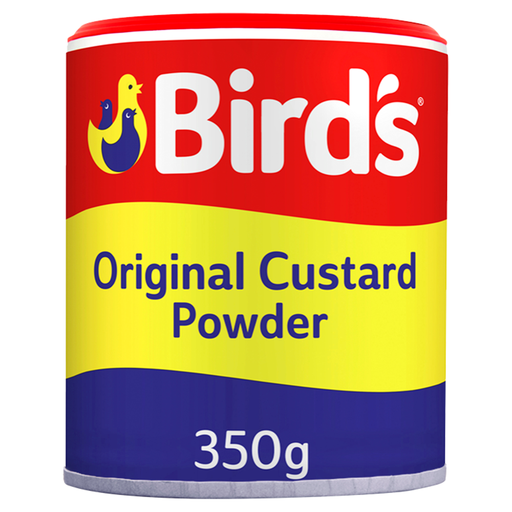
Bird's Custard Powder 350g
Consider powder when you have time and equipment to prepare a batch rather than serving ready-made tinned custard.
- Bird's labels the matching 350g Original Custard Powder as 40 portions for the full pack; its basic preparation uses milk and sugar.
- Bird's says the powder may contain milk and that custard should be refrigerated once made.
View on Joybuy
Party custard questions
Is a family-size custard pack necessarily a tin?
No. Tesco Groceries lists 400g products on its tinned-custard shelf and larger sizes in its wider custard range. Check the packaging description as well as the weight if you specifically need tins.
How many packs of custard should I buy for a birthday party?
Count the guests likely to have custard and compare that number with the labelled servings on the exact pack, allowing for how you intend to serve it with dessert. Sainsbury's lists three 130g portions for Ambrosia Low Fat Custard Can 400g and four 125g servings for its own Ready To Eat Custard 500g; do not apply either count to a different product.
Can I serve ready-to-serve custard cold?
Yes, when the chosen pack says it can be served cold. Sainsbury's gives hot-or-cold serving options for Ambrosia Low Fat Custard Can 400g and its own Ready To Eat Custard 500g. Follow the exact product's directions if you decide to heat it.
What should I do with custard left after the party?
Follow the directions for the product you opened or made. Sainsbury's says its Ready To Eat Custard 500g should be refrigerated after opening and consumed within three days and by the date shown. Bird's says prepared custard should be refrigerated and treated as fresh food.
Which allergen information should I check before serving guests?
Read the current pack's ingredients, allergen declaration and any precautionary wording for each guest's needs. The Food Standards Agency's UK guidance says food businesses must provide allergen information and identifies milk and egg among the regulated allergens. The custards discussed here have different milk and egg declarations, so do not infer suitability from the format or a lower-fat description.


