Hosts planning a shared fruit bowl
When serving several children, compare how much fruit a tin provides after draining. Total tin weight includes the packing liquid, so it does not tell you on its own how much will go into the bowl.


For a shared party fruit bowl, check the drained weight and serving count rather than relying on the tin’s total weight, which includes liquid. Choose fruit in juice or water if you want to follow NHS advice on canned fruit with no added sugar or salt; smaller pots suit individual servings, while syrup is a separate choice to make after checking the ingredients. Whatever the format, read the exact pack for stone warnings and instructions for storing leftovers.
When serving several children, compare how much fruit a tin provides after draining. Total tin weight includes the packing liquid, so it does not tell you on its own how much will go into the bowl.
For bowls, yoghurt toppings or desserts, these hosts want to distinguish juice- or water-packed fruit from syrup. The NHS advises choosing canned fruit in natural juice or water with no added sugar or salt.
Smaller packs may suit individual portions or a party with several fruit choices. Check each pack’s serving information, warnings and instructions for storing fruit after opening.
Decide whether the fruit is for a shared bowl or separate servings, then check the usable quantity, packing liquid and handling instructions.
| Concern | What to check | Who this matters to |
|---|---|---|
| Usable fruit | Check drained weight where stated, then work out how many tins the serving plan calls for. | I need enough fruit for a shared bowl without counting the packing liquid as part of the serving; about 29% of consumers put usable fruit first. |
| Juice or syrup | Read the packing medium and ingredient list on the exact product. | If I want fruit in juice or water rather than syrup for the party menu, that choice determines which tins I consider; it is the primary need for about 29% of consumers. |
| Serving format | Compare pack size and stated servings with a shared bowl or individual portions. | I may serve several fruits and would rather open only what the children will use; roughly 24% of consumers prioritise manageable servings and leftovers. |
| Pack-specific handling | Check ingredients, any stone warning and the opened-storage instructions. | Before serving peach slices to children, I need to know whether the pack warns about stones and how to keep leftovers; these label checks come first for about 18% of consumers. |
A tin’s stated total weight includes liquid. Two similarly sized tins may therefore leave different amounts of fruit once drained.
Look for the drained weight on the pack when planning a shared bowl, and check how many servings you need.
The NHS advises choosing canned fruit in natural juice or water with no added sugar or salt. Princes lists sugar among the ingredients of its separate light-syrup peach product.
Read the packing medium and ingredients on the exact tin. Choose syrup deliberately if it fits the dessert you plan to serve, rather than assuming it matches fruit in juice.
Instructions after opening vary by product. Sainsbury’s says to transfer its 213g peach slices to a non-metallic container, refrigerate and use within one day.
Plan which tins to open for each serving round and follow the instructions on those packs for any leftovers.
Sainsbury’s warns that some stones may remain in its peach slices despite care during processing. Sliced fruit should not be assumed to be stone-free.
Check the exact pack’s warning and take care when serving peach slices to children.
Princes lists peach slices with juice in 410g and 220g sizes, alongside a separate light-syrup peach product.
Tesco and Sainsbury’s list Del Monte peach slices in juice in a 415g format; their tinned-fruit listings also include other Del Monte fruit types.
Tesco’s own-label listings include peaches, apricots, mandarins, pears and pineapple in juice, as well as light-syrup peach options.
Sainsbury’s own-label listings include several fruits in juice, with peach slices available in different tin sizes.
These juice-packed peach and pineapple options cover both smaller servings and tins for a shared party bowl. Compare the drained quantity and pack instructions for the way you intend to serve them.
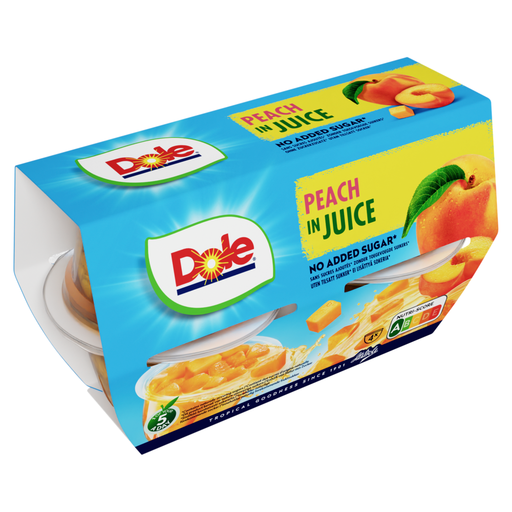 Image unavailable
Four separate pots suit individual servings or a choice of fruits at the party. Check the current ingredients if sweeteners are a consideration for your guests.
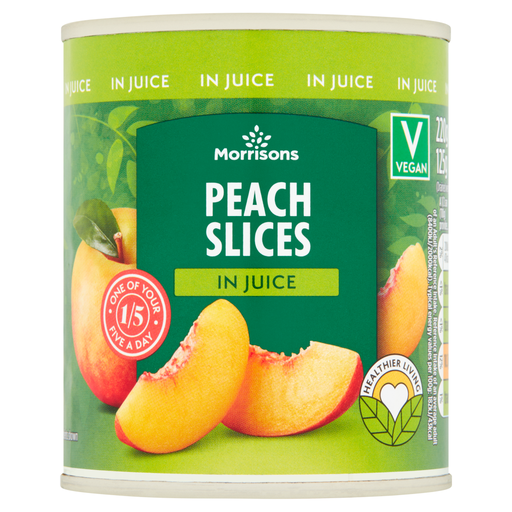 Image unavailable
This smaller tin suits a limited serving or a bowl containing several fruit types. Check its peach-stone warning before serving children.
 Image unavailable
Pineapple chunks can go into a shared fruit bowl or dessert. Check the pack’s drained weight when deciding how many tins to open.
 Image unavailable
Pineapple slices offer another format for a shared bowl or dessert. Use the pack’s drained weight, rather than its total weight, to plan the quantity to serve.
 Image unavailable
Peach halves suit a shared fruit bowl or dessert when that shape works for your serving plan. Check the current pack for stone warnings before serving children.
Choose fruit in natural juice or water with no added sugar or salt if you are following NHS advice on canned fruit. Light syrup is a different packing medium: check the exact ingredients and nutrition label before choosing it for a dessert.
Follow the instructions on that product rather than applying another tin’s storage period. Sainsbury’s says to transfer its 213g peach slices to a non-metallic container, refrigerate and use within one day of opening.
Read the current pack’s ingredients, allergen information and any stone warning. Sainsbury’s warns that some stones may remain in its peach slices despite care during processing.
Yes. The NHS says 80g of fresh, canned or frozen fruit and vegetables counts as one 5 A Day portion, and advises choosing canned fruit in natural juice or water with no added sugar or salt.