Students preparing lunch in advance
If you can cook before leaving, passata lets you choose the seasoning and portion size of your pasta sauce. Check the ingredients you add as well as the passata label when salt is your priority.


If keeping sauce salt low is your main concern and you can prepare lunch before lectures, choose a passata base: Napolina Tomato Passata declares 0.12g salt per 100g, within the NHS guide of 0.3g or less per 100g for a low-salt food. A ready-made sauce needs less preparation, but compare its salt per 100g and the amount you plan to eat. A microwave pasta meal solves a different problem—it includes the pasta as well as the sauce—so check its full-portion label rather than comparing it as sauce alone.
If you can cook before leaving, passata lets you choose the seasoning and portion size of your pasta sauce. Check the ingredients you add as well as the passata label when salt is your priority.
If preparation time and access to heating are limited, distinguish a sauce to stir through cooked pasta from a complete microwave meal. Compare salt per 100g and per intended portion before choosing the quicker format.
If an allergen or a vegan choice determines what you can use, check the current pack’s ingredients and allergen statement. Salt content and any need for chilled storage are separate parts of the lunch decision.
Start with the salt figure and the portion you intend to eat, then check whether the format fits your preparation time and available facilities. The NHS guide describes 0.3g salt or less per 100g as low salt; being lower than another sauce does not, by itself, meet that guide.
| Concern | What to check | Who this matters to |
|---|---|---|
| Salt control | Compare salt per 100g, then work out the amount in the portion you will use. Account for salty additions to the finished meal. | If I prepare pasta before leaving, I want to decide how much seasoning goes into the sauce. About 42% of consumers put that salt control first. |
| Time and equipment | Check whether you are buying a sauce base, a finished sauce or a complete meal, and what cooking or heating it requires. | With only a short break and limited heating facilities, I need lunch that fits the time available; this is the main concern for about 33% of consumers. |
| Dietary fit and storage | Read the current allergen statement and storage instructions, particularly for chilled products or food opened before lunch. | If I need to avoid a particular ingredient or carry lunch until later, suitability and storage come first. About 25% of consumers make that their primary concern. |
A sauce can contain less salt than another jar yet remain above the NHS low-salt guide of 0.3g per 100g.
Use the per-100g line to compare products. If you make sauce from passata, remember that added ingredients change the salt content of the finished meal.
Manufacturers’ stated portions differ, while a complete pasta meal is not the same format as a jar of sauce.
Compare sauces per 100g first, then use the label to calculate the salt in the amount you expect to eat.
Asda Groceries specifies a 40–45 minute oven method for its Free From Tomato & Herb Pasta Bake Sauce. That method requires more time and equipment than a brief break may allow.
Check the preparation method before packing lunch. If you will not have an oven, prepare pasta in advance or choose a product with instructions that match the facilities available to you.
A vegan description and an allergen statement answer different questions, especially if you need to avoid milk or egg.
Read the current pack’s full ingredients and precautionary allergen wording before choosing a sauce for an allergy.
Napolina Tomato Passata is a tomato base for making pasta sauce, rather than a finished seasoned sauce.
Its Tomato and Herb Pasta Sauce is a finished jarred option to heat and stir through pasta.
Its Tomato & Herb Pasta Sauce is another finished jarred sauce for cooked pasta.
Asda Free From Tomato & Herb Pasta Bake Sauce serves a specific free-from need and is intended for an oven pasta bake.
M&S Tomato & Basil Pasta Sauce is a chilled option where refrigerated storage is available.
Dolmio offers both jarred Bolognese sauce and a complete microwaveable Rigatoni Bolognese meal; they answer different lunch needs.
These passata products suit lunches where you can prepare pasta and decide how to season the sauce. Neither is a complete pasta meal; check the current pack and plan for any preparation needed before lectures.
 No image available
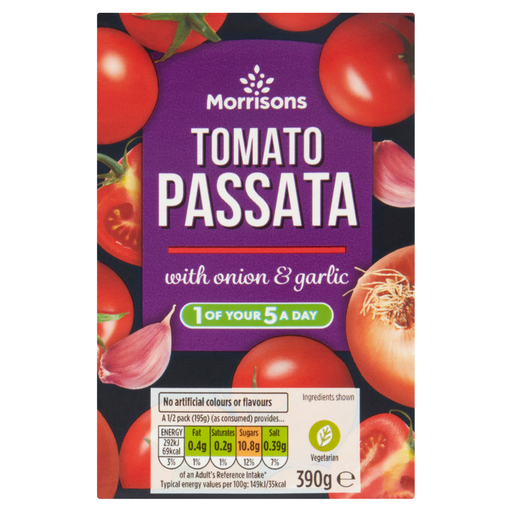
A passata option when you are making sauce to take with prepared pasta. The 390g product includes onion and garlic; check its current salt label, heating instructions and storage directions against your lunch plans.
 No image available
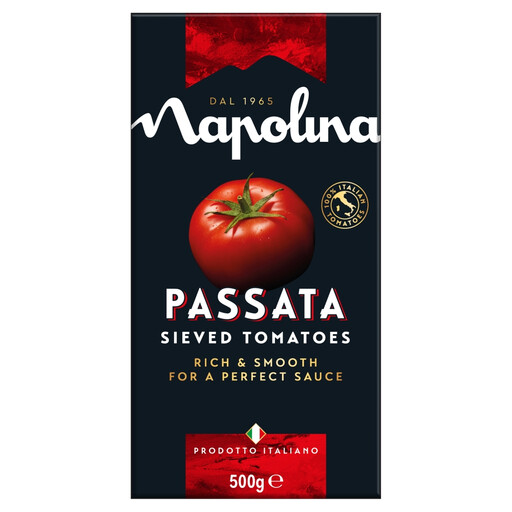
A tomato base for sauce you can prepare before lectures. Napolina declares 0.12g salt per 100g for this 500g passata, within the NHS low-salt guide for food; seasoning and other ingredients will change the salt content of the finished lunch.
The NHS food-label guide describes 0.3g salt or less per 100g as low salt. Use that per-100g figure to compare sauce products, then check the salt in the amount you will actually eat.
No. A lower figure can still exceed the NHS low-salt guide. For example, Sainsbury's lists 0.66g salt per 100g for its Tomato & Herb Pasta Sauce, compared with Tesco Groceries’ 0.69g per 100g for its Tomato and Herb Pasta Sauce; both figures exceed 0.3g per 100g.
You can choose herbs, garlic, chilli, black pepper or lemon juice when making the sauce. Napolina describes its passata as a base for pasta sauce, so prepare the finished recipe before lectures if you will not have time or equipment to cook at lunch.
Check whether the product is a cooking base, a finished sauce or a complete meal, then read its heating and storage instructions. Dolmio UK states a two-minute microwave method for its complete Rigatoni Bolognese meal, while Asda Groceries specifies 40–45 minutes in an oven for its Free From pasta-bake sauce.