Who each approach suits

Salt-conscious BBQ cooks

If meat, cheese, marinades or table sauces are also on the menu, a plain tomato base lets you decide what seasoning to add. Napolina describes its passata as a base for pasta sauce; the NHS notes that salt added during cooking counts alongside salt already in food.

Fast outdoor-meal planners

A finished sauce can simplify a pasta or grilled-vegetable accompaniment. Compare the current pack’s salt figures before choosing: ready-made examples from Marks & Spencer, Dolmio and ASDA have different values.

Flavour-first cooks reducing added salt

Starting with passata leaves you free to choose additions such as garlic, basil or chilli rather than relying on the seasoning in a finished sauce. The salt in anything you add still counts towards the dish.

What to check when choosing

Decide whether you want to prepare a tomato sauce or serve a finished one, then compare salt on the same per-100g basis and check the portion you expect to use.

Concern What to check Who this matters to
Salt in the sauce Compare salt per 100g on current packs, then consider how much sauce you will use. If other salty foods are part of my BBQ meal, I want the tomato sauce to leave room for them. For about 36% of consumers, limiting the sauce’s salt contribution is the primary need.
Control over flavour Check whether the product is plain passata for cooking or a seasoned, ready-made sauce. When I am serving grilled vegetables or pasta, I want to choose the garlic, herbs or chilli myself. Flavour control comes first for about 29% of consumers.
Preparation time Read the heating or serving directions and the salt figure; a stir-in sauce may be intended specifically for hot pasta. With the grill already taking my attention, I want an accompaniment that needs little preparation. That convenience is the primary concern for about 21% of consumers.
Pack suitability Read the exact pack’s ingredients, allergen statement and instructions for storage after opening. If the sauce must meet a dietary requirement or last beyond one meal, I need to check the pack before using it. For about 14% of consumers, label and storage details take priority.

Common buying mistakes

  • Reading a flavour or fat description as a salt claim

    Those descriptions refer to different attributes. Dolmio lists 0.67g salt per 100g for its Low Fat Bolognese Sauce, while Marks & Spencer lists 0.60g per 100g for its Tomato & Basil Pasta Sauce.

    Use the salt line on the current pack to compare products per 100g and for the amount you intend to serve.

  • Choosing a jar size without planning the leftovers

    Instructions after opening differ. Marks & Spencer states three days refrigerated for its Tomato & Basil Pasta Sauce; ASDA states seven days refrigerated for its Tomato & Garlic Pasta Sauce.

    Choose a pack size that fits your planned portions and follow that product’s storage instructions.

    A jar left unfinished beyond its stated period can mean discarded sauce.

  • Counting only the salt in the tomato base

    The NHS says salt already in food and salt added during and after cooking both count. Meat, cheese, marinades and condiments can change the salt content of the finished meal.

    Consider the whole plate and taste the sauce before adding salty seasoning or condiments.

  • Relying on an older product listing instead of the pack

    The pack you use is the place to check its ingredients, allergen information, nutrition and storage directions, particularly if a recipe has changed.

    Read the label before serving, especially where an allergy or dietary requirement affects the choice.

Brands to consider

Napolina

Its Tomato Passata is a base for cooks who want to make and season their own sauce.

  • Napolina lists 0.12g salt per 100g for Tomato Passata.
  • Passata is not a finished, seasoned pasta sauce; preparation and flavouring are still needed.

Dolmio

Its cited bolognese and stir-in products illustrate two ready-made pasta-sauce formats.

  • The Tomato & Basil Stir In product is directed to be stirred through hot cooked pasta.
  • Dolmio lists 0.67g salt per 100g for Low Fat Bolognese; ASDA’s listing gives 1.3g per 100g for Dolmio Tomato & Basil Stir In. Neither description establishes that the product is reduced-salt.

ASDA

Its cited Tomato & Garlic and Bolognese jars are finished pasta-sauce options.

  • ASDA lists 0.58g salt per 100g for Tomato & Garlic Pasta Sauce and 0.68g per 100g for Bolognese Pasta Sauce.
  • Check the intended portion and current pack; these examples are not established here as reduced-salt products.

M&S

Its Tomato & Basil Pasta Sauce offers a stated flavour profile and product-specific dietary information.

  • Marks & Spencer lists 0.60g salt per 100g and identifies olive oil and basil in this sauce.
  • Although listed as vegan and vegetarian, the product page says it is not suitable for people with milk or egg allergy. Its tomato base does not establish a reduced-salt claim.

Joybuy products for a homemade sauce

For a BBQ pasta or grilled-vegetable accompaniment you plan to cook and season yourself, this passata offers a tomato base rather than a finished sauce.
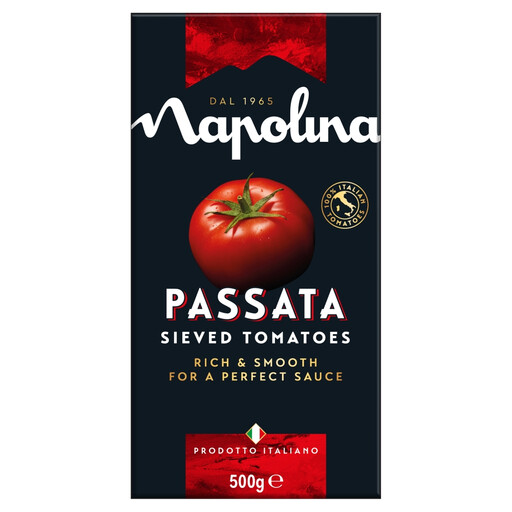
Napolina Tomato Passata 500g

Napolina Tomato Passata 500g

Consider this if you are willing to cook and season a tomato sauce for pasta or grilled vegetables. Napolina lists 0.12g salt per 100g for its passata. It is a base, not a finished seasoned sauce; any ingredients you add will affect the finished dish.

View on Joybuy

Questions about salt and BBQ meals

Does “low fat” mean a pasta sauce is lower in salt?

No: a fat description does not tell you the salt value. Dolmio lists 0.67g salt per 100g and 0.75g per 112g serving for its Low Fat Bolognese Sauce, so read the separate salt line.

How should I compare salt in a passata and a ready-made sauce?

Start with salt per 100g, then consider the quantity you will actually use and any seasoning added to the passata. The NHS advises adults to have no more than 6g of salt a day, including salt already in food and salt added during cooking.

Can I use pasta sauce with a BBQ meal?

You can plan a cooked tomato accompaniment for pasta or grilled vegetables, following the product’s preparation directions. Napolina presents passata as a pasta-sauce base, while the cited ready-made sauces give pasta-focused directions; do not assume they are intended for use as a barbecue glaze or raw-meat marinade.

How long will an opened pasta sauce keep?

Follow the instructions on the exact pack. Marks & Spencer states refrigeration and use within three days after opening for its Tomato & Basil Pasta Sauce, while ASDA states refrigeration and use within seven days for its cited Tomato & Garlic jar.

Does a vegan tomato sauce rule out milk or egg allergy concerns?

No; check the product’s allergen statement separately from its dietary description. Marks & Spencer lists its Tomato & Basil Pasta Sauce as vegan and vegetarian but says it is not suitable for people with milk or egg allergy.