
24/7 Customer Support

Free returns

Same-day & Next-day Delivery

Quality Guaranteed

Unlock Your Welcome Offers: FREE Delivery | Up to 80% OFF | Free 30-day JoyPlus trial
Download the APP
Passion fruit drinks can range from lightly flavoured water and juice blends to kombucha, smoothies, frozen treats and ready-to-serve cocktails. That variety is useful, but it also makes shopping more complicated. A bright tropical image on the front of a pack does not always tell you how much passion fruit it contains, how sweet it is or whether it suits the occasion.
As the Joybuy Product Recommendation Officer, I focus on the details that help UK shoppers avoid paying for the wrong format.
A product labelled as a passion fruit flavoured drink may contain flavourings with little or no juice. That is not automatically a problem, but it will taste different from a drink made with real fruit juice or purée.
Check the ingredients and look for a percentage, such as passion fruit juice 25% in FOCO Passion Fruit Juice or passion fruit juice 1% in Ribena Pineapple and Passion Fruit drinks. The percentage gives you a clearer picture than tropical imagery or phrases such as “vibrant flavour”.
“No added sugar” means that sugar has not been added during production. It does not necessarily mean the drink contains no sugars, particularly where fruit juice is used. Some no added sugar fruit drinks use sweeteners such as aspartame, acesulfame K or sucralose.
If you are avoiding particular sweeteners or need to check for phenylalanine, read the full label. Ribena’s no-added-sugar drinks, for example, identify a source of phenylalanine from aspartame.
A single 350ml can may suit a lunch, while a multipack soft drinks format is more practical for a barbecue or family gathering. A squash needs dilution and storage space; a ready-to-drink cocktail needs chilling and responsible serving; frozen passion fruit ice bars require freezer capacity.
Before purchasing, consider serving size, storage instructions, pack quantity and intended use, rather than selecting solely by flavour.
Ingredients are listed by weight, with the largest quantities appearing first. Water is common in passion fruit juice drinks, but the fruit percentage helps you compare products.
For a more concentrated fruit profile, look for a stated juice or purée percentage. For a lighter everyday drink, flavoured water or a low-calorie squash may be more suitable.
Compare nutrition per 100ml, then calculate the amount you are likely to drink. A 500ml bottle contains five times the per-100ml quantity. With squash, check whether the nutrition panel refers to the undiluted product or the prepared drink.
Highland Spring Orange & Passionfruit Flavoured Still Water is made with sweeteners and has no added sugar. Ribena Pineapple and Passion Fruit Squash also has no added sugar and provides 2 kcal per 100ml undiluted, but it must be diluted with water. These formats may work when you want a longer-lasting bottle for the fridge, provided you are comfortable with the listed sweeteners.
Passion fruit cocktails are available as alcoholic and alcohol-free options. Always check ABV and UK units before serving:
“Alcohol-free” products can still be marketed as adult-style beverages, so check the product information and age requirements. Store alcoholic drinks responsibly and follow UK drinking guidance.
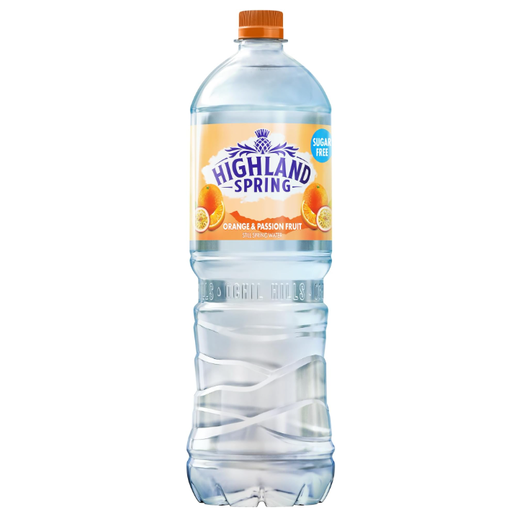
Why This Fits Their Persona: A 1.25-litre bottle is convenient for keeping at home and sharing with meals, without committing to a large multipack.
The product description clearly identifies it as flavoured still water with sweeteners and no added sugar, rather than presenting it as a high-juice drink.
Still format; 1.25L bottle; no added sugar listed.
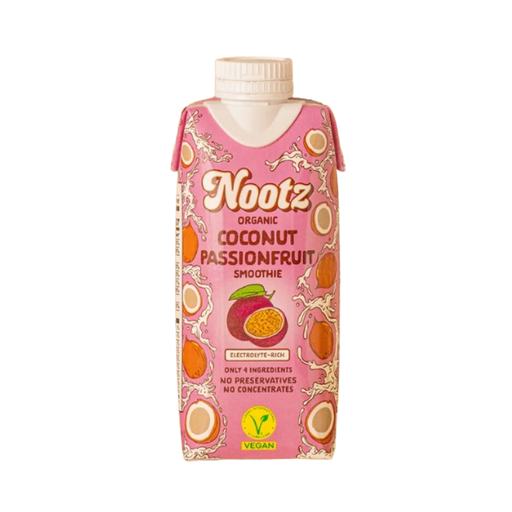
Why This Fits Their Persona: A 325ml shelf-stable coconut smoothie offers a richer, more substantial alternative to a clear soft drink for a warm afternoon or a creative serve.
Its ingredient list identifies organic coconut milk, coconut water, passionfruit and coconut sugar, making the drink’s base clear.
Shelf-stable before opening; shake-well instruction; coconut-based texture.
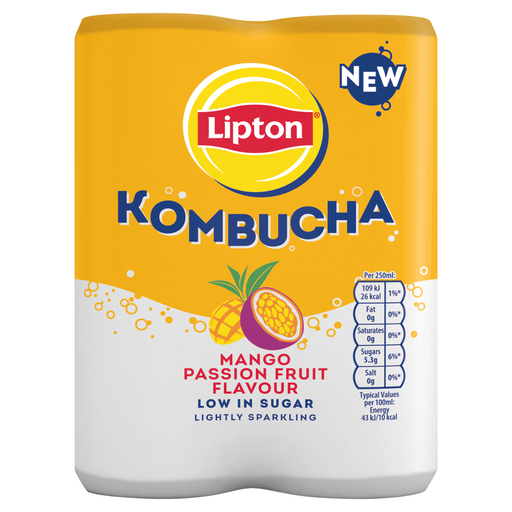
Why This Fits Their Persona: Four 250ml cans suit lunchboxes, fridge stocking and small gatherings where individual servings are useful.
The can size and nutrition panel make portion comparison straightforward: 50 kcal and 11g sugars per 250ml can.
Lightly sparkling format; mango and passion fruit flavour; four individual cans.
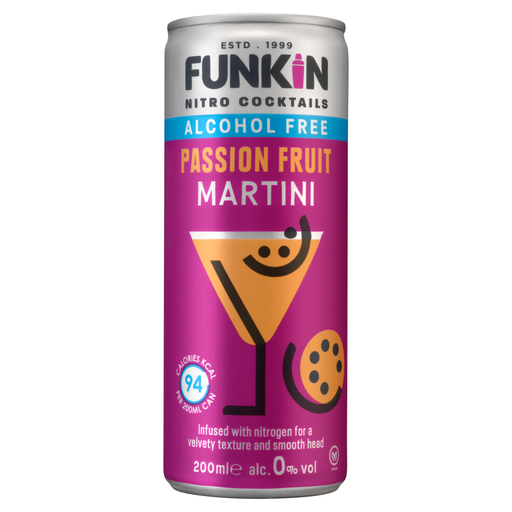
Why This Fits Their Persona: A ready-to-serve alcohol-free passion fruit martini is suited to dinner parties, celebrations and evenings when you want a cocktail-style drink without alcohol.
The listing specifies 0.0% ABV and 0.0 UK units per 200ml can, removing uncertainty about alcohol content.
Nitro-infused texture; 200ml single-serve can; suitable for vegetarian and vegan diets.
We have compiled a complete, real-time list of products that fully satisfy these strict selection criteria and UK safety regulations.
It depends on the format. FOCO Passion Fruit Juice lists 11g sugars per 100ml, while Lipton Kombucha Mango & Passionfruit lists 4.5g per 100ml. No added sugar products may still contain fruit sugars or sweeteners, so compare the nutrition table and your actual serving size.
Follow the label, but opened squash commonly needs refrigeration. Ribena Pineapple and Passion Fruit Squash states that it should be refrigerated after opening and consumed within 21 days. Always check the current packaging because formulations and storage instructions can change.
A 0.0% ABV ready-to-serve drink such as Funkin’s alcohol-free passion fruit martini can be chilled and poured directly, or served in a glass with a garnish. Keep it separate from alcoholic products and check the label before serving, particularly where guests have specific dietary or alcohol-related requirements.