Home cooks checking the whole bake
If you want to reduce salt in a pasta bake, the dry pasta is only one part to check. Look at the sauce, cooking salt and additions such as cheese or processed meat too.


For a lower-salt home pasta bake, check the sauce and salt added during cooking rather than judging the dish by its dry pasta alone. Compare similar sauces by salt per 100g, then consider how much sauce, cheese and other additions go into each serving. If you prefer to keep your usual pasta, you can still change how you season the bake.
If you want to reduce salt in a pasta bake, the dry pasta is only one part to check. Look at the sauce, cooking salt and additions such as cheese or processed meat too.
If a jar makes a weeknight bake easier, compare salt per 100g between similar sauces and check how much you will use. Flavour names and unrelated front-of-pack claims do not tell you the salt content.
If pasta shape or a family recipe matters to you, check the dry pasta label but consider changing the sauce and seasoning before replacing the pasta itself.
| Concern | What to check | Who this matters to |
|---|---|---|
| Salt in the finished bake | Check the dry pasta, sauce and main additions; work out how much of each goes into a serving. | If I am trying to reduce salt in the meal I serve, a low figure on the pasta pack cannot settle the question on its own. About 42% of consumers put the finished bake’s salt content first. |
| Convenient sauce choices | Compare similar sauces by salt per 100g, then check the stated portion against the amount your recipe uses. | A jar saves preparation, but I still want to distinguish sauces by their salt declarations rather than packaging cues. Comparing convenient sauces is the primary need for about 33% of consumers. |
| Keeping the preferred pasta | Check the exact pasta’s label and whether its shape fits the recipe; decide separately how much salt to add while cooking. | When I want to keep a familiar pasta shape, changing the seasoning may be more practical than changing every ingredient. About 25% of consumers put preserving their pasta or recipe first. |
A dry pasta’s salt declaration does not include sauce, cheese, processed toppings or salt added during cooking. Dolmio states 0.75g of salt per 112g portion for its Original Bolognese sauce alone.
Check the amounts of pasta, sauce and major additions in the serving you plan to make before deciding what to change.
A claim about fat, sugar or vegetables does not give the product’s salt value. UK government guidance describes front-of-pack traffic-light nutrition labelling as voluntary, so it will not appear on every pack.
Use the numeric salt declaration to compare similar sauces per 100g and per stated portion; treat a traffic-light label as an additional visual aid where present.
Salt listed for dry pasta and salt added to the pan are different things. Barilla’s cooking directions for Spaghetti N°5 suggest 7g of salt per 100g of pasta, while NHS advice on cutting down salt includes limiting what is added during cooking.
If you are reducing added salt, decide how to season the sauce and taste it before adding more.
A reference point when checking the dry pasta separately from the sauce and cooking method.
A sauce example for cooks comparing ready-made ingredients for a pasta dish.
An own-label sauce range to consider alongside branded pasta-bake sauces.
These spaghetti options cover the dry-pasta part of a home bake. Check that the shape works for your recipe, and assess the sauce and added salt separately.
 No image available
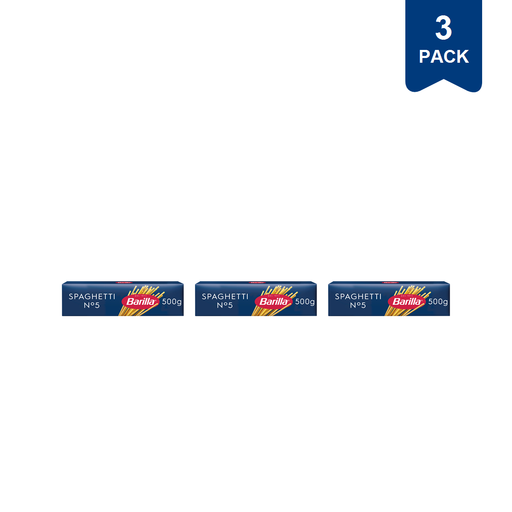
For a bake using spaghetti, this three-pack supplies the dry pasta while leaving the sauce and seasoning for you to choose. The listing declares 0.01g salt per 100g and lists durum wheat semolina and water as ingredients. It gives a 9-minute cooking time; check that the shape and preparation suit your bake recipe.
 No image available
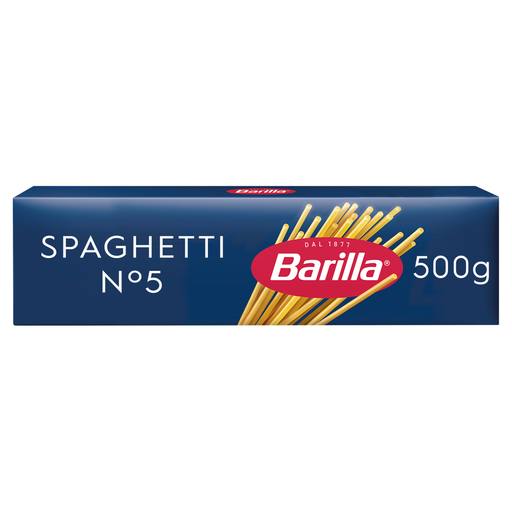
For cooks keeping spaghetti as the pasta base, this is the single 500g pack. The listing declares 0.01g salt per 100g, lists durum wheat semolina and water as ingredients, and gives a 9-minute cooking time. The finished bake’s salt content will also depend on the sauce, additions and seasoning; check the shape against your recipe.
Not necessarily. Barilla declares 0.013g salt per 100g for its dry Spaghetti N°5, but that figure excludes sauce, toppings and salt added during cooking. Check the ingredients and amounts in the finished serving.
Compare similar sauces by salt per 100g first, then check the stated portion and the amount your bake will use. A smaller stated portion may not reflect how much sauce you serve.
You can choose how much salt to add during preparation. Barilla suggests 7g salt per 100g pasta in its Spaghetti N°5 cooking directions, but NHS advice for cutting down salt includes limiting salt added while cooking. Season and taste the sauce before adding more.
No. UK government guidance describes front-of-pack traffic-light nutrition labelling as voluntary. Where a sauce has one, use it as a quick visual cue and check the numeric salt declaration for a comparison with another sauce.
The NHS advises no more than 6g of salt a day for adults and children aged 11 and over. That includes salt already in food and salt added during cooking or at the table; it is a whole-day figure, not an allowance for one pasta bake.