Choose pasta by the total carbohydrate in the portion you intend to eat, checking whether the label describes dry or cooked pasta. Wholewheat is an option if fibre matters to you, but it still contains carbohydrate; pack size, ingredients and any sauce also affect which purchase works for your meals.
Who is this for?
Consumers counting carbohydrate
If you calculate carbohydrate for pasta meals, the amount you serve matters more than the pack’s suggested serving alone. University Hospitals Coventry and Warwickshire NHS Trust advises using total carbohydrate rather than the “of which sugars” figure and checking whether values refer to cooked or uncooked pasta.
Wholegrain shoppers
If you want wholewheat pasta as part of a regular shop, Tesco and Sainsbury’s list own-brand shapes alongside branded options. Compare fibre and carbohydrate figures on the same dry or cooked basis, and choose a pack size you can use.
Pasta-and-sauce meal planners
If you usually serve pasta with jarred sauce, read both labels. A sauce contributes its own carbohydrate, sugars and salt to the meal; the pasta label does not describe the finished plate.
What matters when choosing pasta?
Start with the portion and the label’s dry or cooked basis, then compare the ingredients and other parts of the meal.
| Concern |
What to check |
Who this matters to |
| Carbohydrate per portion |
Use total carbohydrate and check whether the stated weight is for dry or cooked pasta. |
When I serve pasta, I need a figure that matches the amount I will eat. About 36% of consumers make accurate portion calculations their main concern. |
| Wholewheat and fibre |
Compare fibre and total carbohydrate on an equivalent preparation basis; check the pack size. |
I want a wholewheat shape I will use regularly, without treating fibre as a substitute for checking carbohydrate. For about 29% of consumers, that is the primary buying need. |
| The complete meal |
Read the sauce’s carbohydrate, sugars and salt per serving alongside the pasta label. |
If I am making pasta with jarred sauce, I need to account for both parts of the plate. Meal-and-sauce planning comes first for about 21% of consumers. |
| Ingredients and allergens |
Check the exact pasta and sauce packs for wheat and other relevant ingredients. |
Where I need to avoid wheat or gluten, a wholewheat label cannot answer my ingredient question. About 14% of consumers put ingredient and allergen checks first. |
Common buying mistakes
-
Assuming wholewheat means little carbohydrate
Wholewheat pasta still contains carbohydrate. For example, Barilla lists 64g carbohydrate per 100g dry for its Whole Wheat Spaghetti; that figure cannot describe a cooked serving of a different weight.
Use the total-carbohydrate figure for the amount and preparation basis relevant to your meal, and consider fibre separately.
-
Comparing dry and cooked figures directly
Pasta absorbs water during cooking, changing its weight. University Hospitals Coventry and Warwickshire NHS Trust notes that pasta labels may give cooked or uncooked values.
Identify the basis on each label before comparing figures or calculating a serving.
-
Choosing sauce by its fat claim alone
Dolmio lists 7.5g carbohydrate and 0.75g salt per 112g serving of its Low Fat Bolognese sauce. A fat description does not replace those label figures.
Check the sauce serving you intend to use alongside the pasta portion.
Brands to consider
Tesco
Tesco lists own-brand wholewheat dried pasta, including spaghetti, for shoppers comparing familiar shapes and pack sizes.
- Its wholewheat range includes several shapes.
- Check the exact pack’s nutrition label and local availability; a wholewheat name alone does not establish suitability for a particular meal.
Sainsbury’s
Sainsbury’s wholewheat pasta range includes penne, fusilli and spaghetti.
- Its Wholewheat Penne lists 33.6g carbohydrate and 4.5g fibre per 100g cooked.
- The cited penne contains wheat. Compare its cooked-basis figures only with values on the same basis.
Barilla
Barilla offers a branded wholewheat pasta line, including Whole Wheat Spaghetti.
- Barilla lists 64g carbohydrate and 8g fibre per 100g dry for its Whole Wheat Spaghetti.
- Those manufacturer figures use a dry basis, so they are not directly comparable with cooked-basis figures.
Dolmio
Dolmio is relevant when choosing a sauce for a pasta meal, rather than a dried pasta shape.
- Dolmio lists carbohydrate and salt per serving for its Low Fat Bolognese sauce.
- Include the sauce serving when reviewing the meal; a low-fat description does not describe its carbohydrate or salt content.
Wholewheat fusilli on Joybuy
These Morrisons wholewheat fusilli listings offer a single 500g pack and a six-pack bundle. Choose the pack format that fits how often you use pasta, and check the exact label when planning a serving.
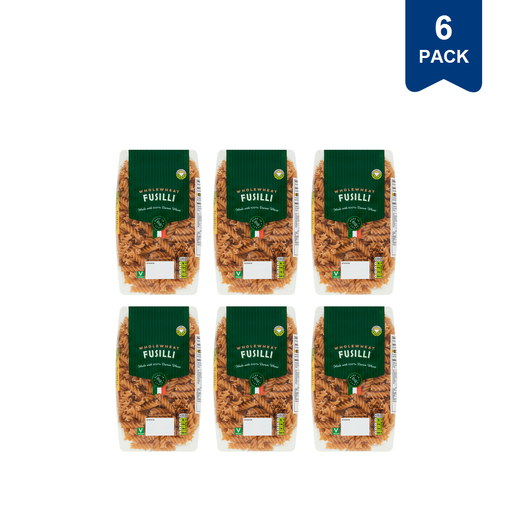 Image unavailable
Morrisons Wholewheat Fusilli, 500g × 6
The six-pack format is worth considering if wholewheat fusilli is a regular part of your meals. Each pack is labelled 500g; check the nutrition panel’s serving and preparation basis when calculating a portion.
View on Joybuy
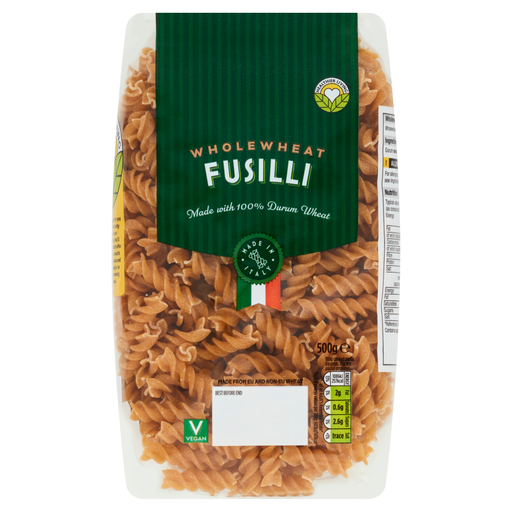 Image unavailable
Morrisons Wholewheat Fusilli, 500g
The single pack suits a smaller planned purchase or a first look at this wholewheat shape. It is labelled 500g; use the exact pack’s carbohydrate figure and its stated dry or cooked basis for the portion you serve.
View on Joybuy
Frequently asked questions
Is any pasta automatically suitable when managing diabetes?
No single label establishes that. Diabetes UK says there is no specific diabetes diet; use the product’s carbohydrate information, the intended portion and the rest of the meal rather than relying on “diabetic friendly” wording.
Should I count total carbohydrate or “of which sugars”?
Use total carbohydrate when calculating carbohydrate from a pasta label. University Hospitals Coventry and Warwickshire NHS Trust specifically advises against substituting the “of which sugars” line.
Why do pasta packs show different carbohydrate figures?
Check whether each figure is for dry or cooked pasta before comparing them. Cooking adds water and changes the weight basis, so figures per 100g are not directly comparable across those two bases.
Does wholewheat pasta make portion size irrelevant?
No. Wholewheat pasta still contains carbohydrate. Diabetes UK notes that portion size matters when considering a food’s glycaemic index, so check the amount you plan to serve as well as its fibre figure.
Is ordinary wholewheat pasta gluten-free?
Do not assume so: Sainsbury’s Wholewheat Penne contains wheat. The Food Standards Agency identifies wheat as a cereal containing gluten; check the allergen declaration on the exact pasta and any sauce if you need to avoid it.


