Batch-lunch portion planners
You prepare several office lunches from cupboard staples. Pack size and dry-pasta portion guidance help you work out how many lunches a pack will cover.


For regular office lunches, start with dried pasta you can cook ahead and portion across several meals. Choose wholewheat when its fibre content matters and wheat is suitable for you; choose a clearly labelled gluten-free product when you need to avoid gluten. A distinctive shape or stir-in sauce is worth considering for a particular meal, but check the ingredients and storage needs of the complete lunch.
You prepare several office lunches from cupboard staples. Pack size and dry-pasta portion guidance help you work out how many lunches a pack will cover.
You need to distinguish wholewheat pasta from gluten-free pasta. Wholewheat still contains wheat; a gluten-free product may use a different ingredient base.
You want a lunch that is straightforward to prepare, carry and eat at work. Sauce choice and a suitable place to store the prepared meal matter alongside the pasta itself.
Start with the requirement that could rule a product out, particularly an ingredient restriction or the way you will store lunch. Then consider portions, shape and preparation.
| Concern | What to check | Who this matters to |
|---|---|---|
| Portions for repeat lunches | Compare pack sizes and the stated dry portion guidance with the number of lunches you plan to make. | If you prepare several lunches at once, you want a pack you can divide into usable portions without cooking more than you need. About 33% of consumers put portion planning first. |
| Ingredients and dietary fit | Check the current pasta label and the ingredients in sauces and toppings. Wholewheat is not a gluten-free substitute. | When wheat or gluten must be avoided, the exact product and the rest of the meal matter more than the pasta shape. For about 25% of consumers, dietary or nutrition fit is the primary concern. |
| Practicality at work | Choose a shape for the intended sauce or salad, and plan suitable storage for the prepared lunch. | If lunch has to travel and wait until your break, you need a meal you can carry, store and eat as intended. Practicality comes first for about 25% of consumers. |
| Texture or quicker preparation | Decide whether a particular pasta style or a stir-in sauce changes how you will prepare the meal; check each product’s ingredients. | When you would rather use a preferred pasta style or shorten the sauce-preparation step, those details drive the choice. About 17% of consumers prioritise texture or convenience. |
A pack’s size alone does not tell you how many prepared lunches it will make. Asda’s guidance for its penne says 75 g dry pasta typically produces 180 g cooked pasta; use the guidance for the product you choose when planning portions.
Check the pack size and its stated dry portion before deciding how much to cook.
Wholewheat pasta contains wheat. It cannot take the place of a gluten-free product for someone avoiding gluten.
Choose pasta clearly labelled gluten-free when that is the requirement, and check sauces and toppings separately.
M&S Italian Single Grain Pache is described as bronze-die pasta, but its product information also lists gluten and says it is not suitable for people with an egg allergy.
Read the ingredient and allergen information for the exact pasta you intend to use.
A sauce and other additions can change the meal’s ingredients and storage needs. A stir-in sauce also has its own preparation instructions.
Check the complete meal’s labels and arrange suitable storage from preparation until lunchtime.
Tesco’s own-label dried pasta includes the Hearty Food Co. spaghetti listed by Tesco Groceries in a 500 g pack.
Sainsbury’s lists own-label pasta, including Stamford Street Co. spaghetti, alongside other pasta choices.
Asda lists standard and wholewheat penne as distinct dried-pasta products.
Barilla offers classic fusilli and a separate gluten-free fusilli made with corn and brown-rice flours.
M&S offers several pasta styles, including bronze-die Italian pasta.
Dolmio is a sauce option to pair with pasta, not a substitute for dried pasta.
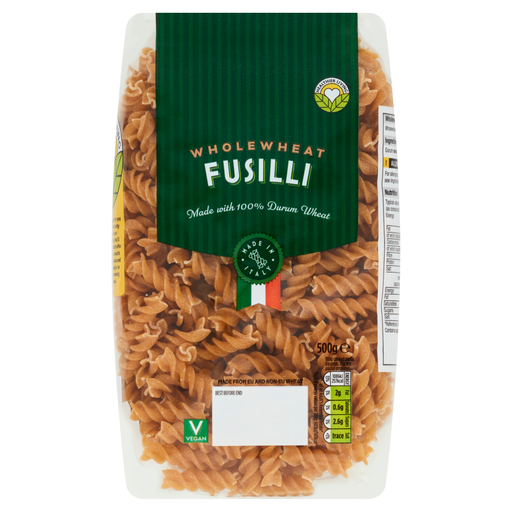
These two 500 g Morrisons fusilli packs offer wholewheat and regular dried-pasta choices for lunches you plan to prepare ahead. Check the exact pack when choosing for an ingredient restriction.
 No image available
Consider this for planned lunches when you want wholewheat pasta and can eat wheat. It is a 500 g pack of fusilli; wholewheat is not a gluten-free alternative.
 No image available
Consider this dried fusilli for lunches prepared in advance when you want to portion a 500 g pack across meals. Check the pack’s ingredients and cooking instructions for your recipe.
Use the dry portion guidance on the pasta you buy, then compare it with the pack size. Asda says 75 g of its dry penne typically produces 180 g cooked pasta; treat that as guidance for that product, not a fixed yield for every pasta.
No. The cited Asda wholewheat penne contains wheat. If you need to avoid gluten, choose a clearly labelled gluten-free pasta and check the sauce and toppings too.
Choose a shape that suits the sauce you intend to use. Barilla describes its fusilli spirals as holding sauce, but that product description does not establish how a prepared lunch will eat after storage.
Plan how you will store the complete prepared meal until you eat it, including any sauce or other additions that need chilling. Check the relevant product instructions and the storage facilities available at work.