One- or two-person meal planners
You want a cupboard pack for several meals and would rather measure dry pasta than cook the full 500g at once. If you do cook extra, you need a plan for the leftovers.


A standard 500g dried pasta pack can work for one or two people if you cook measured portions rather than the whole pack at once. Choose wholewheat when its ingredients and fibre information suit your priorities, or an explicitly labelled gluten-free pack when gluten avoidance is necessary. Let your usual sauces guide the shape, and plan how you will store any cooked leftovers.
You want a cupboard pack for several meals and would rather measure dry pasta than cook the full 500g at once. If you do cook extra, you need a plan for the leftovers.
You want to compare wholewheat and standard pasta using the fibre information on their packs, while keeping the same 500g format.
You need to distinguish ordinary wheat pasta from a pack explicitly labelled for your requirement, and check its current ingredients and allergen information.
For a one- or two-person household, start with how much pasta you will cook at a time. Then compare ingredients and shape against the meals you actually make.
| Concern | What to check | Who this matters to |
|---|---|---|
| Portions and leftovers | Check the pack’s serving guidance and decide how much dry pasta to cook. Plan prompt refrigeration or freezing if you cook extra. | Cooking for one or two, I want the pack to last across meals without leaving more cooked pasta than I can use; about 40% of consumers put portion and leftover planning first. |
| Fibre | Compare fibre per 100g on the exact packs, using the same basis for each figure. Check the ingredients if wheat is a concern. | If fibre is my priority, I want to compare a wholewheat pack with a standard one before choosing; roughly 30% of consumers make fibre their primary concern. |
| Dietary requirements | Read the current ingredients and allergen statement. For gluten avoidance, look for an explicit gluten-free label. | When an ingredient must be avoided, I need the individual pack to meet that requirement rather than relying on the pasta type; about 20% of consumers put dietary suitability first. |
| Shape and sauce | Compare spaghetti with tubes or shaped pasta according to your usual sauces and bakes. | For the dishes I cook most often, I want a shape that works with the sauce; approximately 10% of consumers make that match their main concern. |
A cupboard pack can cover several meals, but cooking it all at once creates leftovers that need prompt storage.
Measure the dry pasta needed for this meal. Refrigerate cooked surplus promptly; GOV.UK advises eating leftovers within 48 hours or freezing them if that will not be possible.
Barilla describes its Whole Wheat Spaghetti as made with whole-wheat semolina. Wholewheat pasta is not a substitute for a product labelled gluten-free.
If gluten avoidance applies, check the gluten-free label and current allergen information on the exact pack.
Sainsbury’s describes its Gigli as shaped to capture sauce, while the Napolina Rigatoni listing describes ridged tubes for thicker sauces.
Think about the dishes you repeat: compare shaped pasta or rigatoni for sauce-heavy meals, and spaghetti or penne for other planned dishes.
Dolmio Pasta Pronto is a 200g cooked-pasta pouch, not a 500g dried pack to portion across meals.
Consider a pouch when a single quick meal is the priority; choose dried pasta when you want to decide how much to cook on each occasion. Check the pouch’s ingredients if allergens matter.
Barilla lists 500g standard Spaghetti N°5 and 500g Whole Wheat Spaghetti.
The M&S range includes 500g penne and lists 500g Made Without spaghetti and penne.
Sainsbury’s lists a 500g Taste the Difference Gigli for sauce-focused dishes.
Dolmio is relevant to quick pasta meals and sauces, rather than as a like-for-like 500g dried-pasta choice here.
These 500g dried-pasta options include standard spaghetti, wholewheat fusilli and fusilli for households planning portions across meals. Check each pack’s current label for dietary requirements.
 Image unavailable
Consider this 500g fusilli for meals where you prefer a shaped pasta. Measure the dry amount needed each time rather than treating the pack as one portion; check the current label if wheat or gluten avoidance applies.
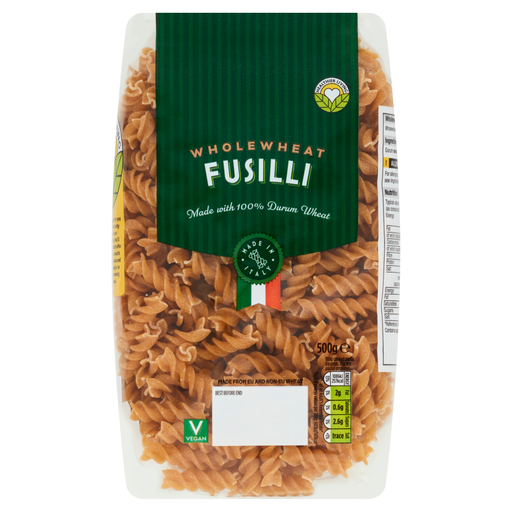 Image unavailable
This 500g wholewheat fusilli is an option if you prefer wholewheat pasta across several meals. Compare the pack’s fibre information on a like-for-like basis with other products; wholewheat is not gluten-free.
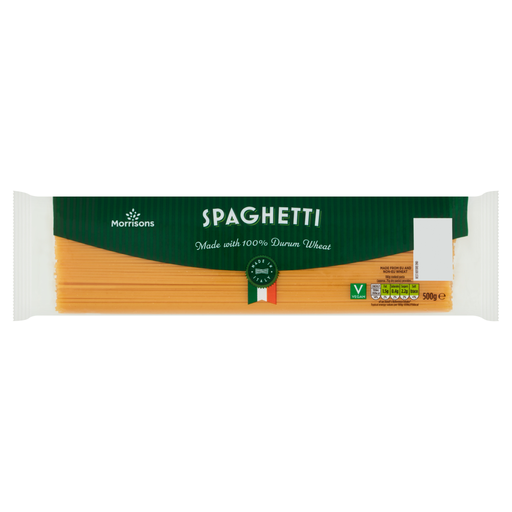 Image unavailable
For households planning several spaghetti meals, this 500g pack can be portioned as needed. Check its serving guidance before cooking and its current ingredients if wheat or gluten avoidance applies.
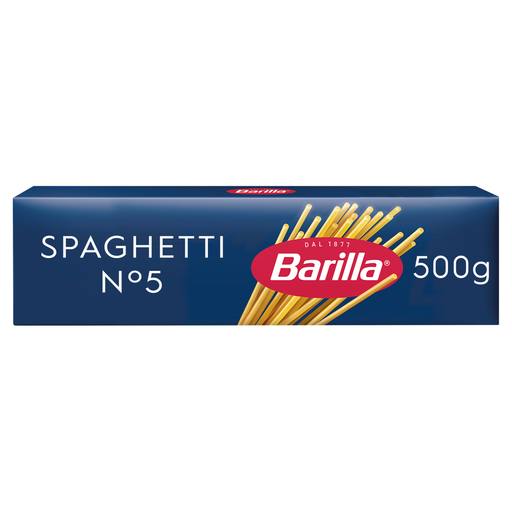 Image unavailable
This 500g spaghetti is a standard dried-pasta option for meals planned across the week. Check the individual pack for portion guidance and current allergen information before buying.
 Image unavailable
Consider this 500g spaghetti if your usual meals call for a standard long pasta. Use the current pack guidance to plan portions, and check its ingredients when dietary restrictions apply.
Not if you expect to cook from it more than once. Check the individual pack’s serving guidance and measure the dry pasta needed for each meal instead of cooking all 500g.
Cool and refrigerate it promptly. GOV.UK advises eating leftovers within 48 hours or freezing them if you will not use them in that time.
No: wholewheat describes a wheat ingredient, not a gluten-free product. If gluten avoidance is necessary, choose a pack explicitly labelled gluten-free and check its current ingredients and allergen information.
Compare ridged tubes and shaped pasta with the dishes you usually make. Napolina describes its Rigatoni as suited to thick sauces and bakes, while Sainsbury’s describes its Gigli as shaped to capture sauce.