Parents checking a child’s salt intake
If salt is the main concern, compare the amount in the pasta, sauce and intended portion. NHS guidance sets daily salt maximums by age, while a ‘low fat’ label answers a different question.


For a school-week pasta meal, compare salt on the current pasta and sauce labels rather than treating ‘low fat’, ‘no added sugar’ or ‘gluten free’ as a reduced-salt claim. Plain pasta lets you choose the sauce quantity and omit salt from the cooking water; a tinned or other all-in-one meal needs its own per-portion check. If gluten must be avoided, choose specifically labelled gluten-free components and confirm the individual school’s packed-lunch arrangements.
If salt is the main concern, compare the amount in the pasta, sauce and intended portion. NHS guidance sets daily salt maximums by age, while a ‘low fat’ label answers a different question.
Plain pasta with a separately chosen sauce gives you control over how much sauce and cooking-water salt you use. A ready-made option may simplify preparation, but its own serving information still matters.
Ordinary wheat pasta is unsuitable when gluten must be avoided. Check for specifically labelled gluten-free pasta, assess the sauce separately and ask the individual school about its packed-lunch arrangements.
For a school-week meal, start with the need that would change what you buy: checking salt, managing preparation and portions, or avoiding gluten.
| Concern | What to check | Who this matters to |
|---|---|---|
| Salt and label claims | Compare salt per 100g and for the portion you intend to serve. Check any reduced-salt wording on the exact pack; a tinned meal needs a check of the whole product. | If I am comparing pasta meals for their salt content, I need the figures for what will actually be served, not a low-fat or no-added-sugar message. About 44% of consumers would put checking salt first. |
| Preparation and portions | Check the stated serving size and cooking directions. With plain pasta, decide separately how much sauce to use and whether to add salt to the water. | On a busy school night, I want a straightforward meal without losing track of the sauce portion. Keeping preparation and portion control as the main priority would matter most to about 33% of consumers. |
| Gluten suitability | Check the pasta’s ingredients and allergen statement, then assess the sauce separately. Confirm the school’s current packed-lunch arrangements. | If gluten must be avoided, I cannot assume that a suitable pasta makes the whole meal suitable to pack. About 23% of consumers would make gluten suitability their primary check. |
Low fat, no added sugar and gluten free describe different characteristics. The Dolmio Low Fat Bolognese listing at Sainsbury’s shows 0.75g salt per 112g portion and marks it as medium salt.
Read the salt figures on the current pack and check what any explicit reduced-salt claim compares the product with.
Sauce can make a measurable contribution to a meal’s salt content. For example, Asda lists 0.73g salt per quarter-jar serving of its Spicy Tomato Pasta Sauce.
Compare the sauce amount you plan to use with its per-serving and per-100g figures. If reducing added salt is the aim, you can also omit salt from the pasta water.
England’s Department for Education guidance addresses allergy safety in schools, including the management of risks associated with packed lunches. It does not establish one packed-lunch rule for every school.
Ask the individual school about its current policy and any arrangements relevant to the pupil before packing food that raises an allergen concern.
Ingredients and nutrition information can change, making a previously checked listing a poor substitute for the pack being used.
Recheck the physical nutrition and allergen labels when buying, particularly if salt content or gluten avoidance is decisive.
Jarred pasta sauces for convenient meal preparation.
Pasta and sauces, including a ready-to-use Basilico tomato-and-basil sauce.
Own-label pasta includes a distinct Free From spaghetti option.
Own-label pasta sauces with product-specific nutrition information.
These dried pasta options let you choose a sauce separately for a school-week meal. The lasagne is labelled gluten free; the spaghetti options require a separate gluten-suitability check where avoidance matters. Judge any reduced-salt wording against the current pack rather than assuming it applies to plain pasta.
 No image available
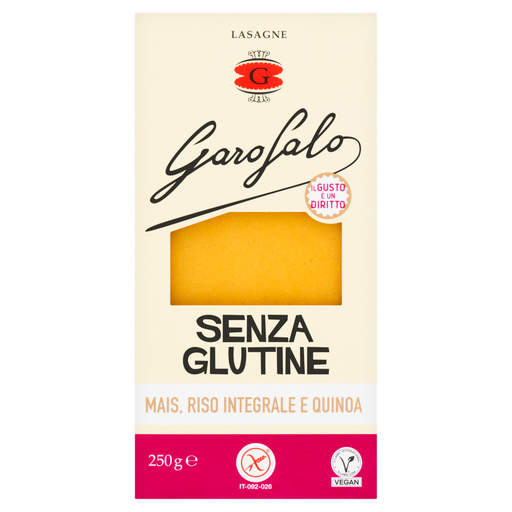
For a lasagne meal where gluten-free pasta is needed, this 250g pack provides a specifically labelled pasta component. Check the sauce separately for gluten suitability and salt, and follow the preparation directions on the current pack.
 No image available
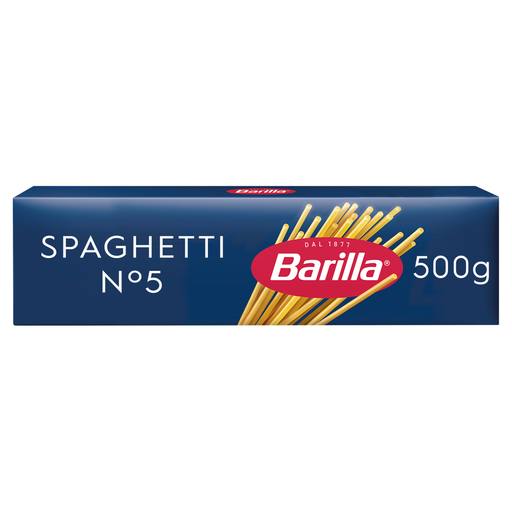
This 500g spaghetti is an option when you want to choose the sauce and its portion separately. It contains wheat; if you are trying to limit added salt, consider omitting the salt suggested for the cooking water and check the sauce label.
 No image available
Choose the sauce separately with this 500g spaghetti. Its stated salt figure is less than 0.01g per 100g and per 75g uncooked serving; compare those figures with the current pack and the sauce you intend to use. It contains wheat.
 No image available
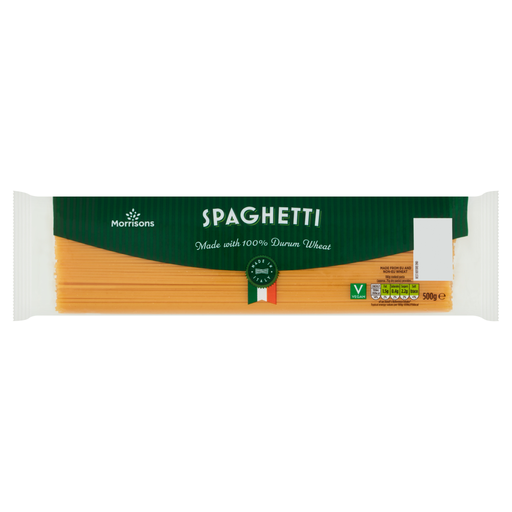
This 500g spaghetti keeps the sauce choice separate. Its salt entry reads ‘Trace’, which is not a precise figure for comparing amounts; check the current pack and sauce label. It contains wheat, and the cooking directions call for slightly salted water.
No. Check salt separately: Sainsbury’s lists 0.75g salt per 112g portion for Dolmio Low Fat Bolognese and marks the portion medium salt. An explicit reduced-salt claim should be assessed using the comparison stated on the current product.
The NHS gives maximum daily amounts of 3g for ages 4 to 6, 5g for ages 7 to 10, and 6g for ages 11 and over. These are whole-day figures, not targets for one pasta meal; check the amount in the portion being served.
Do not assume so: ordinary durum-wheat spaghetti contains wheat. Sainsbury’s separately labels its maize-and-rice Free From spaghetti as gluten free. When gluten must be avoided, check the chosen pasta and sauce individually.
Check the individual school’s policy and the pupil’s needs before packing it. England’s Department for Education allergy-safety guidance addresses how schools manage allergen risks, including packed lunches; it does not make every school’s arrangements identical.