Parents packing cold pasta lunches
A dried shape that works cold can make lunch preparation more straightforward. The cooked meal still needs suitable storage until lunchtime, particularly when chilled ingredients are added.


For a cold school lunch, a short dried shape such as fusilli is a practical starting point when the exact pasta is suitable for cold serving. Choose regular or wholewheat according to the child’s age, preferences and dietary needs; standard wheat pasta will not meet a gluten-free requirement. Once cooked, the lunch needs an appropriate cold-storage plan, especially when it contains chilled ingredients.
A dried shape that works cold can make lunch preparation more straightforward. The cooked meal still needs suitable storage until lunchtime, particularly when chilled ingredients are added.
Ordinary durum-wheat pasta is not a suitable substitute for pasta that meets a wheat-free or gluten-free requirement. Check the current pack label and the school’s food policy before packing.
Wholewheat offers another pasta option, but whether to pack it depends on the child’s age and whether they will eat it. NHS advice for young children also calls for variety rather than relying only on wholegrain or high-fibre foods.
Check ingredients and school rules before settling on a pasta type. Then consider how the cooked lunch will be kept cold and whether the child will eat it.
| Concern | Buying checks | Who this matters to |
|---|---|---|
| Allergens and school rules | Read the exact pack’s ingredients and allergen information; check the school’s current packed-lunch policy. | When wheat or gluten must be avoided, I need to know whether the pasta and the packed meal are permitted. About 33% of consumers put allergen suitability and school rules first. |
| Cold-lunch practicality | Look for stated suitability for cold serving; plan refrigeration or an insulated lunchbox with an ice pack where needed. | If lunch will be eaten cold, I need a shape I can serve that way and a way to keep the prepared meal chilled. Cold-lunch practicality is the main concern for about 27% of consumers. |
| Wholewheat and acceptance | Compare regular and wholewheat ingredients, and consider the child’s age and whether they will eat the pasta cold. | I may want a wholewheat option, but it is little use in the lunchbox if my child will not eat it. About 20% of consumers chiefly weigh pasta type against age and acceptance. |
| Cupboard convenience | Check pack storage and cooking instructions; plan suitable protein and fruit or vegetables alongside the pasta. | For routine lunches, I want a dried pasta I can keep in the cupboard and turn into a meal with other ingredients. Keeping preparation straightforward is the primary need for about 20% of consumers. |
Regular and wholewheat durum-wheat fusilli contain wheat. The Food Standards Agency identifies pasta as a food that can contain cereals containing gluten.
Check the current ingredients and allergen information for the exact pack. If wheat or gluten must be avoided, choose a specifically suitable alternative.
Cooking and preparing a lunch changes the storage decision. GOV.UK identifies cooked dishes and ready-to-eat salads among foods that need chilling.
Keep the prepared lunch chilled before leaving home. NHS advice for lunchboxes without refrigeration is to use an insulated box with an ice pack.
An insulated lunchbox and ice pack may be needed if the school does not refrigerate lunchboxes.
Tesco labels its wholewheat fusilli a source of fibre, but NHS guidance says not to give only wholegrain foods before age 2 or only high-fibre foods before age 5.
Consider the child’s age and whether they will eat wholewheat pasta; regular pasta can remain part of the choice.
NHS lunchbox guidance includes pasta as a main item, while School Food Matters recommends planning the main food alongside protein, fruit and vegetables.
Choose suitable additions and sides when planning the lunch, rather than relying on pasta alone.
Tesco Groceries lists regular and wholewheat dried fusilli in 500 g packs, describing both as suitable for hot or cold serving.
Barilla’s Classic Blue Box range includes Fusilli N°98, a durum-wheat semolina pasta.
Dolmio is a sauce option to pair with cooked pasta, rather than a choice of dried pasta shape. Its UK range includes a no-added-sugar tomato, herb and spice sauce.
These regular and wholewheat dried fusilli options suit cupboard-based lunch preparation. If serving either one cold is essential, check its preparation guidance before buying; keep the cooked lunch appropriately chilled.
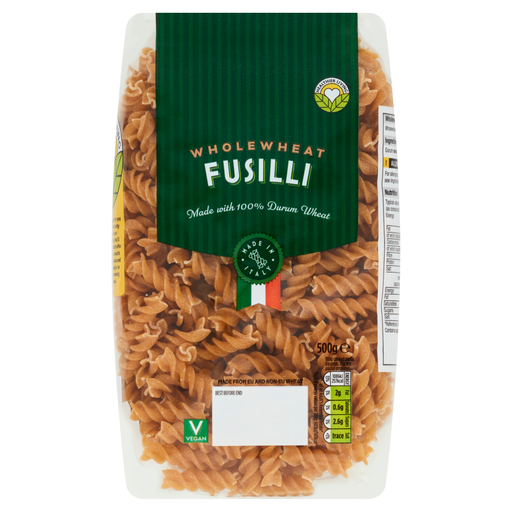 No image available
A wholewheat dried-pasta option when the child accepts it and wheat is suitable for their diet. Check the current pack label and any cold-serving instructions; NHS advice for younger children cautions against making high-fibre foods the only choice.
 No image available
A regular dried-pasta base for a packed lunch when wheat is suitable for the child. Check the current pack label and cold-serving instructions, and plan the other lunch components rather than packing pasta alone.
Standard pasta made from durum wheat semolina contains wheat, a cereal containing gluten. Check the current label of the exact pasta rather than judging suitability by its shape or brand.
Only if another reliable method keeps the lunch appropriately chilled. GOV.UK identifies cooked dishes and ready-to-eat salads among foods that need chilling; NHS advice for lunchboxes without refrigeration is to use an insulated box with an ice pack.
No. Tesco labels its wholewheat fusilli a source of fibre, but the child’s age and willingness to eat it matter. NHS guidance says not to give only wholegrain foods before age 2 or only high-fibre foods before age 5.
Check the individual school’s current packed-lunch policy and the labels of every packed ingredient. NHS guidance for nursery lunchboxes advises checking the setting’s food policy and informing it when a child has a food allergy.
Use pasta as the main starchy component and plan suitable protein, fruit and vegetables alongside it. NHS lunchbox ideas include pasta as a main item, while School Food Matters recommends a main food with protein plus fruit and vegetables.