Households stocking a familiar shape
If you cook the same pasta regularly, consider how many planned meals a pack will cover and where you will keep it after opening.


For a weekly big shop, choose pasta shapes your household will use, then match pack sizes to the meals planned. Check the current pack for ingredients, allergens, storage and cooking instructions; a larger pack is less useful if its shape does not fit those meals.
If you cook the same pasta regularly, consider how many planned meals a pack will cover and where you will keep it after opening.
If your list is built around sauces or a pasta bake, choosing the required shape can help you avoid buying a pack that stays in the cupboard.
If you need gluten-free pasta or are planning a quick weekday meal, check the exact product labels and preparation instructions before choosing a pack.
For a weekly pasta shop, settle any essential ingredient requirement first, then consider which shapes and quantities fit the meals you intend to make.
| Concern | What to check | Who this matters to |
|---|---|---|
| Using the whole pack | Match the pack size to planned meals. Check storage directions for after opening. | If I cook the same shape across several dinners, I want a pack I can use and store properly; about 42% of consumers would make usable pack size their primary concern. |
| Shape and texture | Choose the shape for the planned sauce or bake. Check texture descriptions on the exact product. | When a sauce or bake is already on the menu, I need pasta that fits that dish rather than another cupboard staple; around 25% of consumers would put meal fit first. |
| Ingredient compatibility | Read the current ingredients and allergen statements on both pasta and any prepared sauce. | If I need to avoid wheat or gluten, I have to check the exact products before they go in my basket; about 17% of consumers would prioritise dietary compatibility. |
| Weekday preparation | Check the pack's cooking instructions and whether a prepared sauce fits the meal plan. | On a busy weekday, I want to know what preparation the whole meal requires; roughly 16% of consumers would put preparation time first. |
A larger pack may sit unused if its shape does not suit the meals you make or you cannot store it as directed after opening.
Plan the dishes and quantities first, then choose a pack you can use and store.
Sainsbury's describes its spaghetti as suited to smooth, oily sauces, while M&S describes a rougher surface on its bronze-die spaghetti. Those descriptions apply to the stated products, not every pasta from either brand.
Choose the dish before the pasta, and check the description of the shape you intend to buy.
The cited Tesco and Sainsbury's spaghetti products contain durum wheat semolina. Barilla's gluten-free range is a separate corn-and-rice range.
For an allergy, intolerance or coeliac requirement, read the current ingredients and allergen statement on the exact pack.
A prepared sauce is a separate product with its own ingredients and serving information.
If the meal plan includes sauce, check its label alongside the pasta label.
These brands illustrate different pasta and sauce choices; the details below apply to the named products or ranges, not every item bearing the brand.
An own-label option for households that regularly use dried spaghetti.
An own-label 500g spaghetti option for a meal plan that calls for that shape.
A dried-pasta brand with distinct standard and gluten-free UK ranges.
An own-brand option for shoppers seeking the texture described for its bronze-die spaghetti.
A pasta-sauce brand to consider when a planned meal includes a prepared sauce.
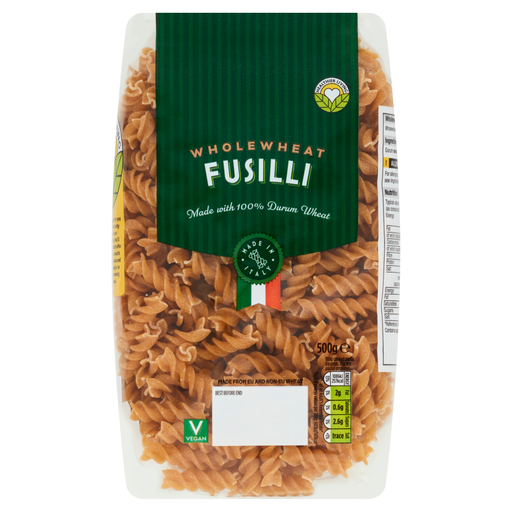
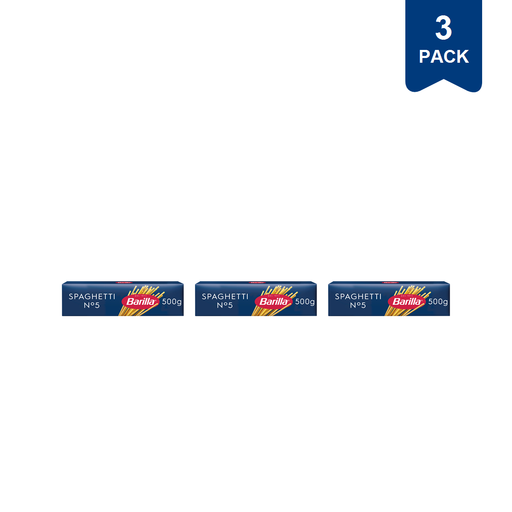
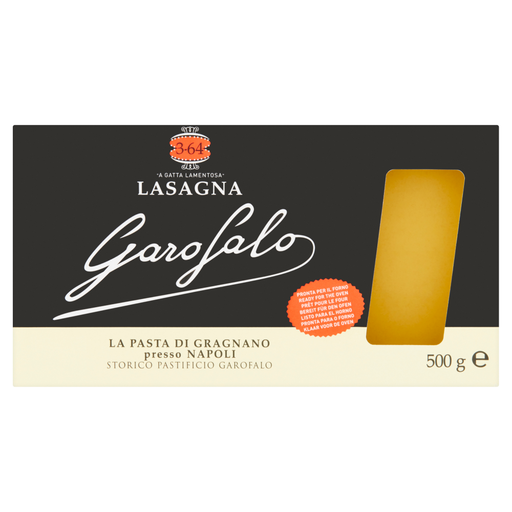
These dried-pasta selections include fusilli, spaghetti and lasagne sheets for different planned meals. Choose by the shape and quantity you will use, and check the current pack for preparation and dietary details.
 No image available
Consider this pack when planned meals call for wholewheat fusilli. Check its current ingredients, allergen statement and cooking instructions before use.
 No image available
The 500g fusilli pack suits a meal plan that calls for this spiral shape. Follow the current pack's cooking and storage instructions, and check its allergen statement where relevant.
 No image available
For households planning several spaghetti meals, this bundle contains three 500g packs. Check the current packs' ingredients, allergen statements and cooking instructions.
 No image available
Choose lasagne sheets when that bake is on the meal plan rather than substituting a general-purpose pasta shape. Check the current pack's baking directions and allergen statement.
 No image available
This 500g spaghetti pack is an option when spaghetti fits a planned meal. Use the current pack for cooking, storage, ingredient and allergen information.
No. A larger pack makes sense when you expect to use that shape across planned meals and can store it as directed after opening. Otherwise, choose a quantity that fits what you intend to cook.
Start with the guidance on the exact pack and adjust your shopping quantity to your household's meals. Tesco gives approximately 75g of dry pasta per person for its cited spaghetti; the amount your household uses may differ.
Follow the product's storage directions. Tesco instructs shoppers to keep its cited spaghetti in a cool, dry place and to use an airtight container after opening.
Not necessarily: the cited Tesco and Sainsbury's spaghetti products contain durum wheat semolina. Barilla has a separate gluten-free corn-and-rice range; for a gluten-free requirement, check the current ingredients and allergen statement on the exact pack.
Use the current pack label to check ingredients, allergens and preparation before using the product. Product information can change when a food is reformulated.