Organisers serving hot pasta on the day
You need the sauce's storage and preparation instructions to fit the time between buying, cooking and serving. For a chilled sauce, check that refrigeration is available throughout that plan.


Choose a chilled sauce if you can keep it refrigerated and prepare the pasta close to serving time, following the exact pack's heating, use-by and post-opening instructions. A shelf-stable finished sauce is easier to buy ahead, while passata gives you control over the recipe but needs cooking and seasoning. Whichever route you take, check the ingredients of the complete pasta portion and the school's food policy before serving or packing it.
You need the sauce's storage and preparation instructions to fit the time between buying, cooking and serving. For a chilled sauce, check that refrigeration is available throughout that plan.
If unopened shelf storage matters more than a chilled format, compare finished jarred or stir-in sauces. Check pack size against the number of portions you intend to prepare.
You need current labels for the sauce, pasta and additions, as well as the school's food policy. Decide whether portions will be packed before they are offered for sale so you can check which labelling duties apply.
Set the serving and packing plan first: it determines whether chilled storage, advance cooking or ready-to-use sauce is practical.
Choose when: You can refrigerate the sauce and prepare the pasta close to service.
Trade-off: Use-by dates and post-opening instructions restrict the timetable; follow the exact pack's heating guidance.
Choose when: You need to buy unopened sauce ahead without chilled storage.
Trade-off: Pack sizes and preparation methods vary, so check how much you need for the planned batch.
Choose when: You have time to cook and season a consistent recipe yourself.
Trade-off: Napolina describes passata as a tomato base, not a finished sauce; every addition becomes part of the recipe you must document.
| Concern | What to check | Who this matters to |
|---|---|---|
| Storage and serving time | Storage conditions, use-by date and instructions for opening, heating or reheating. | If I am serving hot pasta, the sauce must fit the time and refrigeration available between preparation and sale; about 36% of consumers put this serving-timetable need first. |
| Allergens and school policy | Current labels for every ingredient, the school's rules and whether portions will be prepacked for direct sale. | Before I pack portions, I need to know what is in the finished dish and how it must be labelled. For about 29% of consumers, that planning is the primary concern. |
| Batch quantity | Pack weight, stated servings where given and whether extra ingredients are needed to turn a base into sauce. | When making several portions, I want enough sauce for the planned amount of pasta without treating a small stir-in pot like a larger jar; roughly 21% of consumers prioritise batch quantity. |
| Recipe consistency | Ingredients and flavour variant, including any cheese, meat, pesto or chilli additions. | For a recipe I can make consistently, I need to decide between a finished sauce and seasoning passata myself. Ingredient control comes first for around 14% of consumers. |
Sauce, pasta and toppings are separate ingredients. A sauce's name cannot establish the allergen information for the completed portion.
Check the current label of each component and keep one ingredient-and-allergen record for the recipe you actually serve.
Chilled products need refrigeration, and their use-by and post-opening instructions may limit advance preparation. An instruction not to reheat can also rule out a proposed second heating step.
Work back from serving time to check the purchase date, fridge space, opening time and preparation method against the exact pack.
A missed use-by date or post-opening limit may leave sauce that cannot be used for the event.
Mascarpone, cheese, pesto, meat and chilli variants change the finished recipe. A substitution can therefore affect both flavour and ingredient information.
Choose a specific variant before preparing labels or sharing allergen details, and check its current ingredients rather than relying on another sauce in the range.
Where a food business makes food that qualifies as prepacked for direct sale, Food Standards Agency guidance for England, Wales and Northern Ireland and Food Standards Scotland guidance require its name, a full ingredients list and allergens emphasised in that list.
Decide how portions will be offered before packing them. If the arrangement may fall within these rules, confirm the requirements for the event and prepare labels from the final recipe.
Preparing an accurate label for each prepacked portion takes time and materials.
These examples illustrate different sauce formats; choose by the particular product label and your serving plan, not by brand name alone.
Tesco lists a 350 g tomato and mascarpone sauce for a creamy tomato route.
Sainsbury's lists chilled 350 g tomato-and-basil and tomato-and-mascarpone sauces.
Asda lists a chilled 350 g Sweet Tomato & Basil Sauce labelled suitable for vegans.
M&S lists both a chilled 350 g Tomato and Basil Sauce and a shelf-stable 340 g Tomato and Basil Pasta Sauce.
Dolmio's 150 g Tomato and Basil Stir In Sauce is a shelf-stable finished-sauce option.
Napolina describes passata as a tomato base to cook into a sauce, rather than a finished pasta sauce.
These tomato-and-basil finished sauces are options to consider when buying ahead suits the school bake sale. Check each current pack's storage and preparation directions before settling on a serving plan.
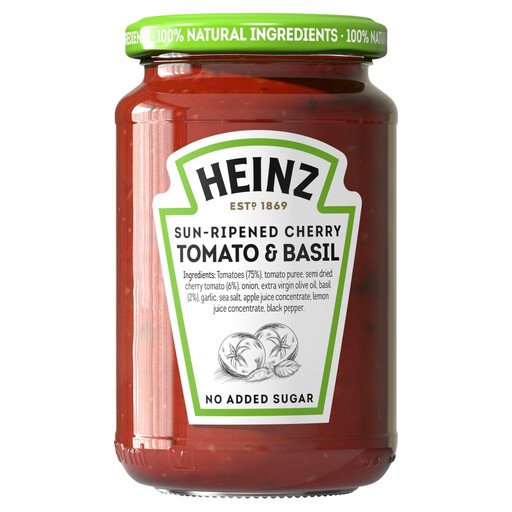 Image unavailable
Consider this for a tomato-and-basil dish when buying ahead fits your plan. The pack is 350 g; check its current storage, heating, use-by and allergen information alongside the pasta and any toppings.
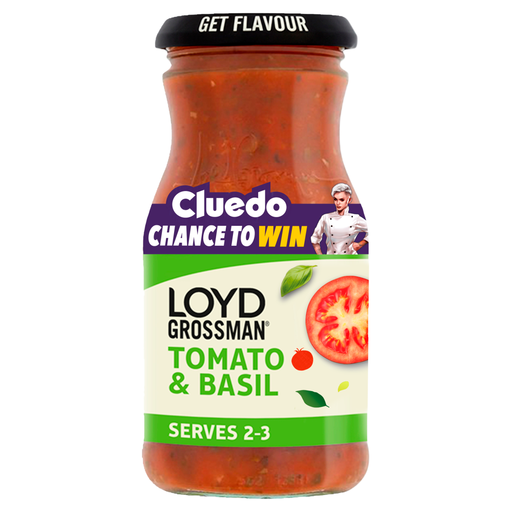 Image unavailable
Consider this 350 g sauce for a planned tomato-and-basil batch. Its product information gives conflicting allergen indications, including a possible-nuts statement, so read the current pack before using it at a school event; also check its heating and storage directions.
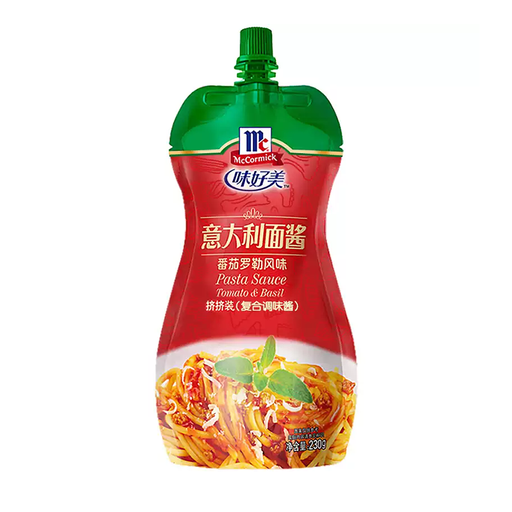 Image unavailable
The 230 g pouch is a smaller-format option for a planned pasta batch. Its product description declares soy and carries a warning that E110 and E102 may adversely affect activity and attention in children. Check the current pack, the school's policy and the complete recipe before serving.
No: the category name does not tell you whether a particular sauce contains a gluten-containing ingredient. Check the current sauce and pasta packs separately, then include any toppings or other additions when assessing the finished portion.
If a food business makes portions that qualify as prepacked for direct sale, they need the food name, a full ingredients list and allergens emphasised within that list. This is set out in Food Standards Agency guidance for England, Wales and Northern Ireland and Food Standards Scotland guidance for Scotland. Confirm how the event's preparation and sale arrangements are classified before making labels from the final recipe.
Check the exact sauce's instructions before planning a second heating step. Asda's chilled Sweet Tomato & Basil Sauce says not to reheat, while M&S specifies refrigerated storage and a 24-hour post-opening limit for its chilled Tomato and Basil Sauce. Choose a preparation plan that follows the pack you buy.
A shelf-stable finished sauce can suit buying ahead when unopened chilled storage is inconvenient, but follow its own preparation and opened-pack instructions. For example, the Dolmio stir-in sauce listed by Asda is stored in a cool, dry place unopened and stirred into hot pasta without heating the sauce separately.
The current label is essential for checking each ingredient, but it does not replace the school's own food-sharing and allergen policy. Ask the school about its event rules before choosing a recipe, and assess the sauce, pasta and additions as one finished portion.