Sugar-label comparers
If avoiding added sugar is your starting point, compare total sugars and salt on the nutrition panel too. A sauce made with tomatoes and vegetables can still contain naturally occurring sugars.


For a pasta side or warm accompaniment to grilled food, choose a ready-made tomato sauce if quick preparation matters, or plain passata if you want to season it yourself. A no-added-sugar claim does not mean zero sugars, so compare sugars per 100g on the exact pack; match the flavour and quantity to your diners, and do not assume a pasta sauce is suitable for direct grilling.
If avoiding added sugar is your starting point, compare total sugars and salt on the nutrition panel too. A sauce made with tomatoes and vegetables can still contain naturally occurring sugars.
A ready-made sauce can be warmed for pasta alongside grilled food. Check its heating directions rather than treating it as a sauce for the grill itself.
Plain passata gives you a tomato base to season with your choice of herbs or chilli. Unlike a finished sauce, it needs further preparation.
For a BBQ pasta side, compare the label first, then choose a flavour and pack that fit the meal.
| Concern | What to check | Who this matters to |
|---|---|---|
| Sugar claims and nutrition | Compare sugars and salt per 100g on the exact product, as well as its ingredients and no-added-sugar wording. | I want to avoid added sugar without mistaking the claim for a zero-sugar product. About 50% of consumers put label comparison first. |
| Flavour and serving method | Choose mild tomato, basil or chilli to suit the diners; follow the pack’s heating directions rather than assuming direct-grill use. | If some diners do not want heat, I need a sauce they can enjoy or a separate chilli option. Flavour and meal pairing come first for about 30% of consumers. |
| Pack size and preparation | Compare stated servings and opened-pack storage; decide whether you want a seasoned sauce or passata to prepare yourself. | When the pasta is only one part of the meal, I want enough sauce without leaving more than I can use. Around 20% of consumers prioritise pack size and preparation. |
Tomato-based sauces can contain naturally occurring sugars. Sainsbury’s lists 3.9g sugars per 100g for its No Added Sugar Tomato & Hidden Veg sauce, while its Loyd Grossman Bolognese listing gives 4.6g per 100g.
Compare the sugars per 100g and ingredients on the products you are considering, rather than relying on the front-of-pack wording alone.
A chilli sauce brings a different flavour to the meal from a tomato-and-vegetable or basil sauce.
If heat preferences vary, choose a mild sauce for the shared pasta or offer chilli sauce separately.
The ready-made sauce directions considered here describe gentle heating, not application to food on a hot grill.
Warm the sauce separately for pasta or as an accompaniment unless the exact pack gives grilling instructions.
Storage instructions vary: Sainsbury’s says to refrigerate its Tomato & Hidden Veg sauce and use it within seven days of opening; the Napolina Passata listing says two days.
Check the pack before choosing a larger quantity or planning to use leftovers at another meal.
These examples illustrate different ways to make a tomato sauce for a grilled meal; compare individual products rather than assuming every sauce in a brand’s range has the same label or flavour.
Its 500g No Added Sugar Tomato & Hidden Veg pasta sauce is a ready-made tomato-and-vegetable option stated to serve four.
The 350g no-added-sugar sauce options include Bolognese, Tomato & Basil and Tomato & Chilli flavours.
Dolmio UK describes a no-added-sugar pasta sauce made with tomatoes, herbs and spices.
Its 500g passata is a tomato ingredient base, not a ready-seasoned pasta sauce.
These tomato-based options can be considered for pasta alongside a grilled meal: one passata to prepare and season, plus two flavoured pasta sauces. Check each exact pack if a no-added-sugar claim is essential to your choice.
 No image available
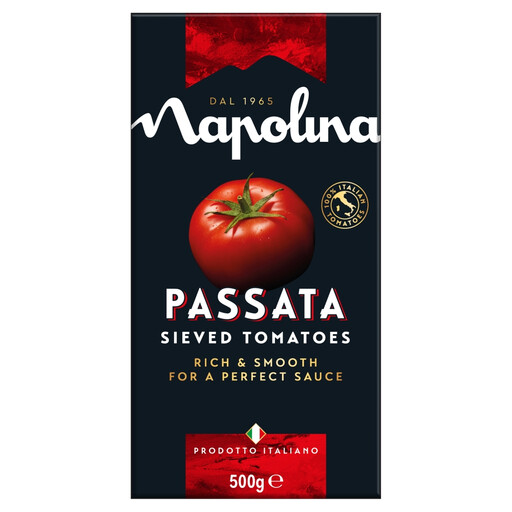
Choose this tomato base if you want to prepare and season a sauce for your pasta side. The Napolina passata information lists 4.3g sugars per 100g; it is not a ready-seasoned sauce. Refrigerate after opening and use within two days. Check the exact pack if no-added-sugar wording matters to you.
 No image available
Consider this 400g tomato-and-chilli sauce when the diners want a chilli flavour with their pasta side. Check the exact pack’s sugars value, any no-added-sugar wording and heating directions; do not assume that a pasta sauce can be used directly on the grill.
 No image available
This 350g tomato-and-cheese pasta sauce is an option for a warm pasta side. Its listing mentions apple juice concentrate alongside a no-added-sugar claim; check the exact pack’s ingredients, claim and nutrition panel before choosing it for that purpose. Do not assume it has directions for direct grilling.
No. Tomatoes and vegetables can contribute naturally occurring sugars. Sainsbury’s lists 3.9g sugars per 100g for its No Added Sugar Tomato & Hidden Veg sauce, so check the sugars figure on the nutrition panel if total sugars matter to your choice.
Start with the number of people eating pasta and the pack’s stated servings. Sainsbury’s describes its 500g Tomato & Hidden Veg sauce as serving four, while the 350g Loyd Grossman no-added-sugar jars are described as serving two to three; other dishes at the meal may affect how much you use.
Use a sauce as a warmed accompaniment unless its exact packaging gives instructions for grilling. The ready-made pasta-sauce directions considered here describe gentle heating rather than application to food on the grill.
Follow the instructions for the exact product. Sainsbury’s says to refrigerate its Tomato & Hidden Veg sauce and use it within seven days of opening; the Napolina Passata listing says to refrigerate it and use it within two days.
Check the individual ingredients and claims rather than assuming the two statements are interchangeable. Sainsbury’s specifically describes its Tomato & Hidden Veg sauce as having no added sugar or sweetener; that wording should not be assumed for another product.