Buyers working to a sugar specification
These hotel buyers need to distinguish a no-added-sugar recipe from a required comparative reduced-sugars claim, then check the sugars figure on the product they order.


For a hotel breakfast buffet, a no-added-sugar jar is an option only if that wording meets the purchasing brief; a low-fat label does not establish the same thing. If the brief requires a tin or a comparative reduced-sugars claim, confirm those requirements on the exact product before ordering. For any sauce under consideration, compare sugars per 100g, pack size, storage after opening and allergens against the dish you plan to serve.
These hotel buyers need to distinguish a no-added-sugar recipe from a required comparative reduced-sugars claim, then check the sugars figure on the product they order.
When sauce becomes part of a loose buffet dish, these teams need ingredient details for the complete recipe and allergen information guests can access. GOV.UK guidance covers allergen information for non-prepacked food.
Where demand changes from one service to the next, jar size and the stated storage period after opening affect how much sauce the kitchen can use.
| Concern | What to check | Who this matters to |
|---|---|---|
| Sugar wording and content | Check the exact claim, ingredient list and sugars per 100g on the delivered product. | If my brief calls for no added sugar or a particular sugars figure, I need the product to meet that precise requirement, not just carry another nutrition claim. About 42% of consumers put this sugar check first. |
| Buffet allergens | Check the exact sauce and every ingredient added to the dish; update the allergen information available at service. | Once I serve a prepared dish from the buffet, guests need accurate information about what it contains. Allergen control is the primary concern for about 33% of consumers. |
| Pack size and opened storage | Compare jar size and the label's refrigeration and use-after-opening instructions with expected servings. | With breakfast numbers changing, I need an opened jar I can use within its stated storage period. About 25% of consumers chiefly need to match the pack to likely demand. |
A no-added-sugar label does not itself establish a comparative reduced-sugars claim. ASDA Groceries lists sugar among the ingredients of Dolmio Low Fat Bolognese, so its low-fat positioning does not meet a no-added-sugar brief.
Write down the claim the hotel requires and any sugars-per-100g limit, then check both against the delivered sauce.
The jar alone cannot tell guests what is in the finished buffet dish, particularly when other ingredients are added. ASDA Groceries lists celery and a may-contain-nuts warning for Loyd Grossman No Added Sugar Bolognese.
Keep the exact product details with the recipe, update the dish's allergen information when ingredients change and make that information accessible at service.
Opened-storage instructions differ between the researched sauces. Tesco Groceries states 14 days refrigerated after opening for its No Added Sugar Bolognese; ASDA Groceries states seven days for its Smooth Bolognese and three days for the Loyd Grossman sauce.
Estimate portions for the planned dish and choose a pack the kitchen can use within the instructions on its delivered label.
Tesco Groceries lists a 500g No Added Sugar Bolognese Pasta Sauce in a jar.
ASDA Groceries lists a 500g Smooth Bolognese Pasta Sauce labelled No Added Sugar.
ASDA Groceries lists a 350g No Added Sugar Bolognese Pasta Sauce in a jar.
ASDA Groceries lists Dolmio Low Fat Bolognese Pasta Sauce as a low-fat option, not a no-added-sugar one.
These Joybuy options are a tomato-and-cheese pasta sauce and a no-added-sugar carbonara pasta-bake sauce. Choose according to the dish being served, then check the exact sugar requirement and delivered label.
 Image unavailable
Consider this 350g tomato-and-cheese sauce if its flavour suits the planned pasta dish. Check the delivered label for sugars, allergens and storage after opening before using it for buffet service; its name does not establish a reduced-sugars claim.
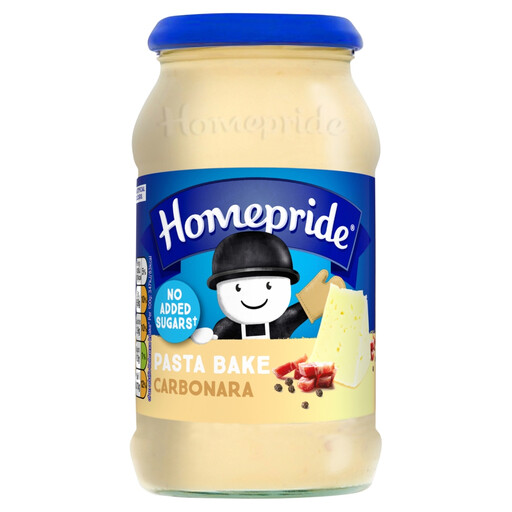 Image unavailable
This 485g no-added-sugar sauce is for a carbonara pasta bake, so check that the planned buffet dish suits that preparation. Confirm the delivered product's sugars figure, allergens and opened-storage instructions; the no-added-sugar wording does not establish a comparative reduced-sugars claim.
No: check the two requirements separately. Food and Drink Federation guidance describes a comparative nutrition claim as a difference measured against a comparator. A no-added-sugar sauce can still contain naturally occurring sugars; Tesco Groceries lists 4.5g sugars per 100g for its No Added Sugar Bolognese.
The hotel needs to provide allergen information for the food it serves. GOV.UK guidance covers both prepacked and non-prepacked food, while Food Standards Scotland says food businesses must tell consumers when food contains any of the 14 allergens. Check the complete prepared dish, not just the sauce jar, and make its current information available to guests.
No. Follow the instructions on the exact delivered product. Tesco Groceries states refrigeration and use within 14 days after opening for its No Added Sugar Bolognese; ASDA Groceries lists seven days for its Smooth Bolognese and three days for Loyd Grossman No Added Sugar Bolognese.
Not necessarily. ASDA Groceries lists sugar in the ingredients of Dolmio Low Fat Bolognese. Check the claim and ingredients of the exact sauce rather than treating its low-fat wording as a sugar claim.