Calorie-and-portion comparers
You plan the amount of sauce in a meal and want to read both the per-100g figure and the stated serving figure before choosing a jar, pouch or fresh pot.


For a planned pasta meal, compare sauces by kcal per 100g and by the portion you intend to use, then check sugars, salt and whether you can use the pack before its opened-life ends. ASDA Tomato & Garlic lists 38 kcal per 100g; Napolina passata lists 28 kcal per 100g but needs preparing as a sauce; M&S Tomato & Mascarpone lists 116 kcal per 100g and requires chilled storage. These are individual product examples, so check the current pack and account for anything you add to the meal.
You plan the amount of sauce in a meal and want to read both the per-100g figure and the stated serving figure before choosing a jar, pouch or fresh pot.
You want a pack size that provides usable servings without leaving sauce you cannot use within its after-opening storage period.
You want a convenient sauce but need to check its sugars, salt, allergens and storage instructions rather than relying on its front-of-pack wording.
Start with the portion you expect to use, then compare labels on the same per-100g basis. A ready sauce saves preparation, while passata gives you a tomato base to season and cook yourself.
| Concern | What to check | Who this matters to |
|---|---|---|
| Energy and portions | Compare kcal per 100g with the labelled serving size, then measure the amount you plan to use. | If I am planning a pasta meal, I need the sauce quantity to match the portion I will actually serve. About 40% of consumers would put energy and portion comparison first. |
| Usable servings | Check pack size, stated servings and the instruction for storage after opening. | A pack that leaves more sauce than I can use before its opened-life ends does not suit my meal plan. Roughly 30% of consumers would prioritise usable servings. |
| Sugars and salt | Read sugars and salt per 100g and per serving; use traffic-light colours where shown. | If a sauce says no added sugar, I still want to assess its salt separately. Around 20% of consumers would make sugars and salt their primary label concern. |
| Ingredients and storage | Read the ingredient and allergen statements, plus any refrigeration or use-by instructions. | When an allergen warning or chilled storage affects whether I can use a sauce, I need to resolve that before choosing it. About 10% of consumers would put ingredient and storage suitability first. |
A sauce label describes the sauce, not the pasta or additions such as cheese, oil or meat.
Use the labelled serving as a starting point, then account for the quantities you intend to put on the plate.
A larger pack may leave sauce unused if its after-opening period does not fit your next meals.
Compare stated servings with your plans and follow the storage instruction on the specific pack.
Sauce discarded after its opened-life ends reduces the number of servings you can use.
Sainsbury's Hidden Veg sauce carries a no-added-sugar claim but also shows an amber salt indicator per stated serving.
Compare sugars and salt separately, using both the per-100g figures and the portion you expect to eat.
M&S Tomato & Mascarpone contains milk ingredients and requires refrigeration. Its Tomato & Basil sauce carries milk and egg allergy suitability warnings despite vegetarian and vegan labelling.
Read the current pack's allergen statement and storage directions before buying or serving it.
The figures below describe the named products in retailer listings, not every sauce made by each brand. Compare the current pack when deciding between variants.
Own-label, ready-to-use tomato sauces, including Tomato & Garlic and Spicy Tomato.
An own-label tomato and vegetable sauce for shoppers interested in its ingredient list and no-added-sugar claim.
Ready-to-use sauce represented here by Smooth Tomato Bolognese-style sauce.
Passata for shoppers who want to cook and season a tomato sauce themselves.
Tomato sauces in both cupboard-stored and chilled formats.
These products cover passata to prepare as a sauce and ready-to-use tomato sauces. Choose between them by the preparation you want, the pack size you can use and the current label.
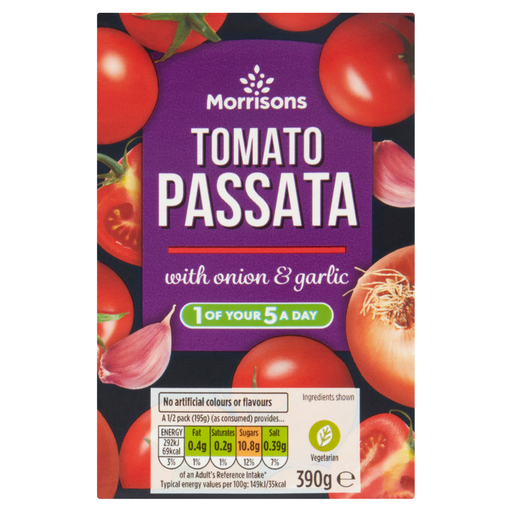 Image unavailable
This tomato base suits a meal where you intend to prepare the finished sauce yourself. The pack is 390g; refrigerate it after opening and use it within two days, according to the product information.
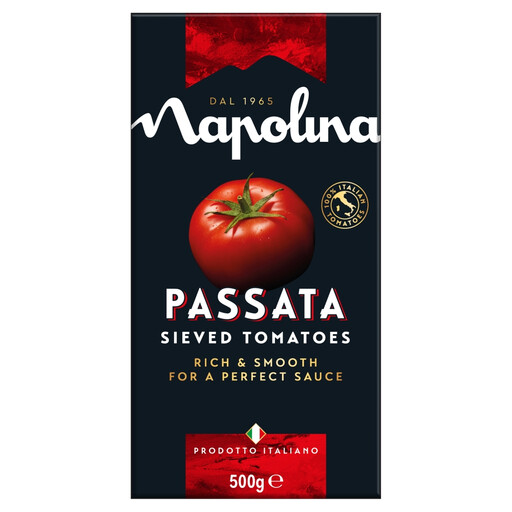 Image unavailable
Choose this 500g passata if you have time to season and cook a tomato base rather than heat a finished sauce. Its product information calls for refrigeration after opening and use within two days.
 Image unavailable
This 400g tomato and chilli sauce suits a meal where you want a prepared sauce rather than passata. Its product information says to refrigerate after opening and consume within five days; it also warns that the sauce may contain milk and nuts.
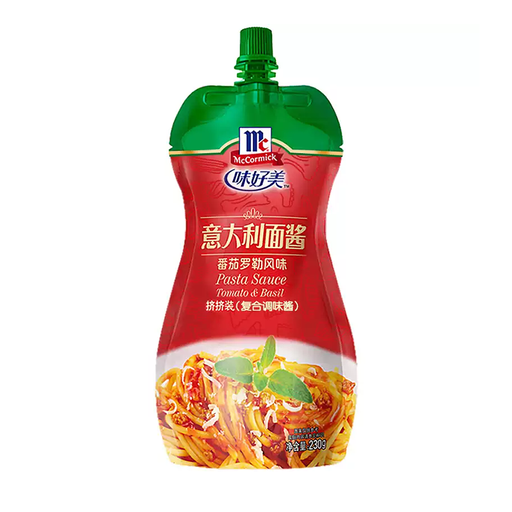 Image unavailable
This 230g pouch is a ready-to-use tomato and basil sauce for a meal where you do not want to prepare a base. Check the current pack for serving and after-opening instructions, its soya ingredient and the warning concerning E110 and E102 if serving it to children.
Compare their stated servings and after-opening instructions alongside the amount you expect to use. A pack that fits several planned meals may be more useful to you than one that leaves sauce unused after its opened-life ends.
No. Sainsbury's Hidden Veg sauce says it has no added sugar or sweetener and lists 32 kcal per 100g, but its stated serving also shows an amber salt indicator. Read the sugars, salt and energy figures for the portion you intend to use.
Follow the instruction on the specific pack: the listed Napolina passata example says to use it within two days, while the researched Dolmio and M&S Tomato & Basil examples say within three days. Storage directions differ between products and may change with the recipe or packaging.
No. Marks & Spencer's Tomato & Basil sauce is labelled vegetarian and vegan but states that it is not suitable for people with milk or egg allergy. Check the allergen statement on the exact product; its Tomato & Mascarpone sauce also contains milk ingredients.
Food Standards Agency guidance says green denotes low, amber medium and red high levels of fat, saturates, sugars and salt. Use the colours where displayed, then read the nutrition table and serving size to compare the sauces you are considering.