Label-first lunch shoppers
If lower total sugars matter to you, compare the nutrition panels of similar sauces. A no-added-sugar claim tells you something different from the total sugars figure.


Compare total sugars and salt per 100g among similar pasta sauces rather than assuming that ‘no added sugar’ means sugar-free. For a lunch you will prepare more than once, pack size and instructions for storing an opened sauce also matter; compare a carbonara pasta-bake sauce separately from tomato sauces.
If lower total sugars matter to you, compare the nutrition panels of similar sauces. A no-added-sugar claim tells you something different from the total sugars figure.
If one jar needs to cover more than one meal, consider its size, how much sauce you will use each time and the instructions for storing it after opening.
If texture or a hidden-vegetable recipe influences your choice, you can use those preferences to narrow the options, then compare sugars and salt on the label.
Start with comparable sauces and their per-100g labels, then consider how much you will use and whether the opened pack suits your lunch plans.
| Concern | What to check | Who this matters to |
|---|---|---|
| Total sugars and label claims | Compare ‘of which sugars’ per 100g between similar sauces; check what any no-added-sugar claim says. | If I am choosing sauce chiefly to reduce total sugars, I need the nutrition figure rather than the front-of-pack wording alone. About 42% of consumers put that distinction first. |
| Salt and the rest of lunch | Compare salt per 100g, then consider the amount of sauce you plan to serve. | A lower sugars figure would not settle my choice if I also want to compare salt across the sauces I use for lunch. For about 33% of consumers, salt and the wider meal are the primary concern. |
| Usable portions | Check pack size and the exact pack’s instructions for storage after opening. | When I make lunches on different days, I need a pack size I can use within its storage instructions. That practical need comes first for about 25% of consumers. |
A tomato sauce can contain naturally occurring sugars even when no sugar has been added. Sainsbury's describes its Loyd Grossman No Added Sugar Bolognese as containing naturally occurring sugars.
Use the claim to identify a recipe you are interested in, then compare total sugars per 100g with similar sauces.
A sugars figure does not tell you the salt content. The Tesco and Heinz no-added-sugar bolognese examples list different amounts of both nutrients per 100g.
Read both lines of the nutrition panel and consider how much sauce you intend to use.
A larger pack is useful for several lunches only if you can use it in line with its after-opening instructions.
Check the storage directions on the jar you buy before planning meals around the remaining sauce.
Ingredients and nutrition information can change, which matters particularly when you are choosing around an ingredient or allergen.
Read the current pack label before use and check availability when you shop.
Its No Added Sugar Bolognese Pasta Sauce is an own-label tomato-based option.
Sainsbury's lists an own-label No Added Sugar Tomato & Hidden Veg Pasta Sauce.
Its Tomato & Roasted Garlic No Added Sugar sauce is a garlic-flavoured option.
The Mr Ridiculously Good's Smooth Bolognese is a smooth, hidden-vegetable sauce.
Its red-sauce range offers tomato-and-herb and chilli styles for shoppers choosing by flavour.
These selections cover a no-added-sugar carbonara pasta-bake sauce and a tomato-and-chilli pasta sauce. Compare each with sauces of a similar type rather than treating their labels as a single like-for-like comparison.
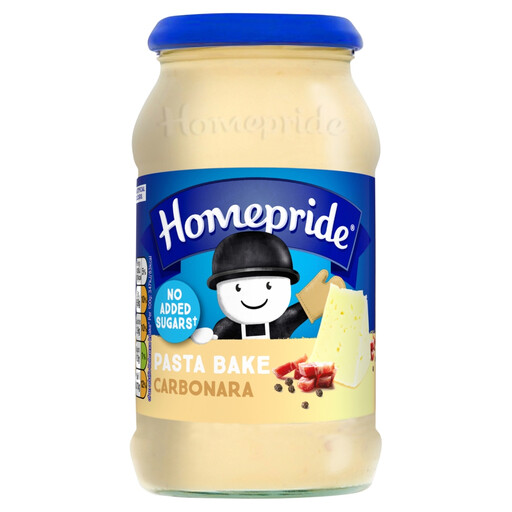 Image unavailable
Consider this if you want a carbonara-style pasta bake rather than a tomato sauce. The 485g pack carries a no-added-sugar claim; check its current nutrition and ingredients label, and compare it with similar pasta-bake sauces.
 Image unavailable
Consider this 400g tomato-and-chilli sauce if that flavour suits your pasta lunch. Compare its current per-100g sugars and salt with other tomato sauces, and check the ingredients if a no-added-sugar claim matters to you.
No. Sainsbury's describes Loyd Grossman No Added Sugar Bolognese as containing naturally occurring sugars. Check total sugars on the nutrition panel if that figure is central to your choice.
Compare similar sauces using their sugars figures per 100g, then consider the amount you will serve. NHS food-label guidance explains the per-100g basis used for nutrition information; it lets you compare packs of different sizes without treating a whole jar as one portion.
Yes, if salt matters to your choice: a lower sugars figure does not establish a lower salt figure. Tesco Groceries lists 0.64g salt per 100g for its No Added Sugar Bolognese, while Sainsbury's lists 0.8g per 100g for Heinz Mr Ridiculously Good's Smooth Bolognese.
Check the storage and use-after-opening instructions on the exact jar before planning several lunches from it. The instructions can differ between pasta sauces, so pack size alone does not tell you whether a jar suits your schedule.