Sugar-first sauce comparers
If total sugars are your main concern, compare similar sauces per 100g rather than relying on the wording on the front of the pack. Then check how much sauce you plan to serve.


For an Italian-night meal, compare total sugars per 100g across similar pasta sauces if lower total sugars are your priority; the NHS classifies 5g or less per 100g as low in total sugars. Choose a no-added-sugar sauce if avoiding added sugar matters most, but check its total-sugars figure too. A stir-in sauce may simplify preparation, though convenience alone says nothing about its sugar or salt content.
If total sugars are your main concern, compare similar sauces per 100g rather than relying on the wording on the front of the pack. Then check how much sauce you plan to serve.
If you want to avoid sugar added as an ingredient, look for the relevant claim and read the ingredients list. The NHS notes that naturally occurring sugars in vegetables still appear in the total-sugars figure.
If preparation time and a sauce for a shared meal come first, check the cooking directions and stated servings alongside the nutrition panel, ingredients and any dietary requirements.
For a pasta-sauce comparison, use the per-100g nutrition panel first, then consider the amount you will serve and how the sauce fits the meal.
| Concern | What to check | Who this matters to |
|---|---|---|
| Total sugars | Compare similar sauces by total sugars per 100g. The NHS classifies 5g or less per 100g as low. | If I am choosing a tomato sauce for pasta, I want comparable figures even when jars and suggested portions differ; about 36% of consumers would put total sugars first. |
| Added sugar | Check the no-added-sugar claim, ingredients and total sugars per 100g. | I may chiefly want to avoid sugar added to the sauce, while accepting that tomatoes contain naturally occurring sugars; roughly 29% of consumers would make avoiding added sugar their primary concern. |
| Preparation and servings | Check the cooking instructions and stated servings, as well as the nutrition panel. | When I am making pasta for a small group with little preparation time, the sauce format and amount matter most; about 21% of consumers would prioritise convenience and sharing. |
| Ingredients and dietary fit | Read the current ingredients and allergen statement; check dietary labels where relevant. | If someone at the table has an ingredient or dietary restriction, a suitable sugar figure is not enough on its own; around 14% of consumers would put dietary compatibility first. |
Sugars naturally present in tomatoes and other vegetables still count towards the total-sugars figure, as the NHS explains. Two sauces with different front-of-pack claims can therefore have different per-100g totals.
Read both the claim and the nutrition panel. If total sugars are your priority, compare similar sauces per 100g.
Different jar sizes and suggested servings make per-portion figures harder to compare directly.
Use per 100g for the initial comparison, then check the portion you expect to use for the meal.
ASDA Groceries lists 6.5g sugars and 1.1g salt per 100g for its Tomato & Basil Stir-In Sauce. Those figures describe that product, not stir-in sauces as a category.
If speed leads your decision, compare the chosen stir-in sauce with jarred alternatives on per-100g sugars and salt before buying.
The ingredients, allergen information and instructions that matter are those for the pack you will serve.
Check the current pack before purchase and again before serving, particularly when an allergy or dietary restriction is involved.
A pasta-sauce brand with a no-added-sugar range for shoppers focused on added sugar.
An option to consider when tomato-and-basil flavour is the starting point for the pasta dish.
A retailer carrying a listed no-added-sugar tomato-and-basil sauce for a small shared meal.
A retailer with listed no-added-sugar tomato-and-basil and bolognese options.
A retailer with a stir-in sauce format for a pasta meal where preparation time matters.
A retailer listing a specific tomato-and-basil sauce that can be compared by its nutrition panel.
These options cover tomato-based sauces and a no-added-sugar carbonara pasta bake for an Italian-night meal. Compare the current pack labels according to whether total sugars, added sugar or the style of dish matters most to you.
 No image available
For a tomato pasta meal featuring mascarpone and Grana Padano. Compare its current total sugars per 100g with similar sauces, and check the ingredients and allergen statement for everyone eating.
 No image available
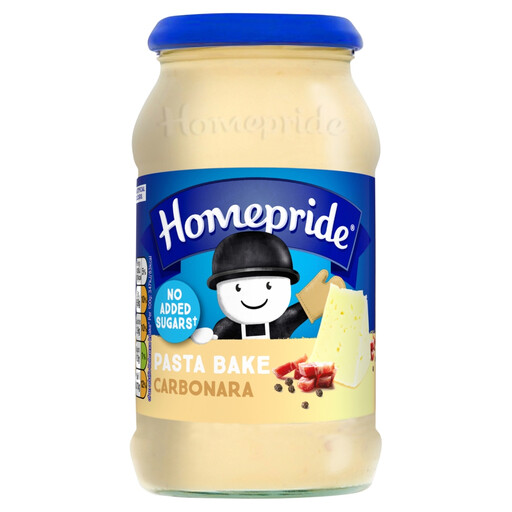
A no-added-sugar option when the meal is a carbonara pasta bake rather than tomato pasta. Check total sugars per 100g as well as the ingredients and allergen statement; the claim alone does not establish the total-sugars figure.
 No image available
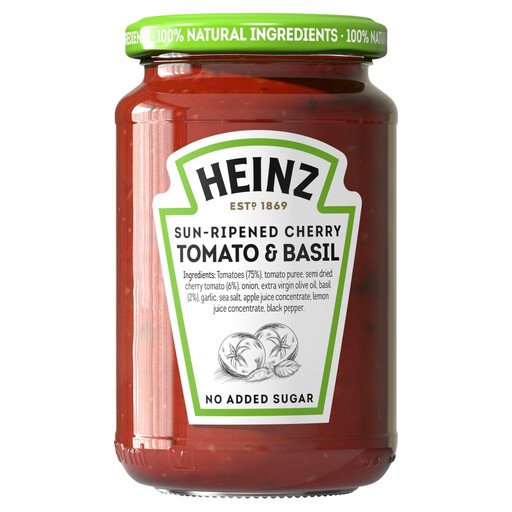
For a cherry tomato-and-basil pasta dish. Compare the pack’s total sugars per 100g with similar sauces, and read its ingredients if avoiding added sugar is your priority.
 No image available
For a tomato-and-chilli pasta meal. Use the current per-100g sugars figure to compare it with other tomato sauces, and check the ingredients if added sugar is a concern.
No. The NHS explains that naturally occurring sugars in vegetables are included in the total-sugars figure. Compare similar sauces per 100g; the NHS classifies 5g or less of total sugars per 100g as low.
Start with per 100g to compare sauces on a common basis, then look at the amount you expect to serve. A manufacturer’s suggested portion may differ from yours.
Yes. Sugar figures do not establish whether a sauce meets an allergy or other dietary requirement. Check the current ingredients and allergen statement for the exact product rather than assuming that every sauce from a brand has the same formulation.
Follow the instructions on the individual pack. For example, the Daylesford Organic Tomato and Basil Sauce listed by Marks & Spencer says to refrigerate after opening and use within five days; another sauce may give different instructions.