Buffet planners comparing sugar labels
You want to distinguish a no-added-sugar claim from the total-sugars value and compare sauces on the same per-100g basis.


Choose a sauce format that fits the dish you plan to serve, then compare total sugars per 100g rather than relying on a ‘no added sugar’ claim alone. The NHS explains that naturally occurring sugars in vegetables still appear in the total-sugars figure; for a buffet, also check the exact sauce’s portions, salt, allergens and opened-jar instructions.
You want to distinguish a no-added-sugar claim from the total-sugars value and compare sauces on the same per-100g basis.
You need the preparation method and stated portions to fit your menu, whether sauce is stirred through cooked pasta or baked with it.
You need to check the exact sauce and the rest of the dish for relevant ingredients, dietary labels and allergen information.
For a Boxing Day pasta buffet, settle on the serving method before comparing jars: a pasta-bake sauce and a sauce heated separately call for different preparation.
| Concern | What to check | Who this matters to |
|---|---|---|
| Added versus total sugars | Compare sugars per 100g, then read the no-added-sugar claim and ingredients. Total sugars alone do not identify free sugars. | If I am choosing between sauces with no-added-sugar claims, I want to understand what their total-sugars figures include; about 42% of consumers put label comparison first. |
| Portions and preparation | Check the stated portions and whether the sauce is heated for cooked pasta or prepared as an oven bake. | When I am feeding buffet guests, I need enough sauce in a format I can serve as planned; about 33% of consumers make portions and preparation their primary concern. |
| Dietary suitability | Read the exact product’s ingredients, allergen information and dietary claims; check the pasta and additions separately. | For guests with stated dietary requirements, I need to know whether the complete dish suits them; about 25% of consumers put those checks first. |
The NHS explains that naturally occurring sugars in vegetables are included in the total-sugars figure. A tomato sauce can therefore have a no-added-sugar claim and still list sugars per 100g.
Use the claim alongside the ingredients and per-100g nutrition panel, rather than treating it as a sugar-free label.
A pasta-bake recipe can call for dry pasta, added water and oven cooking, while a sauce for cooked pasta follows a different serving method.
Decide which dish you are making, then check the jar’s instructions and stated portions before working out how much to prepare.
Ocado’s listings for the reviewed Homepride Tomato & Herb pasta-bake sauce and Mr Organic Mushroom Ragu give different salt values: 0.67g and 1.02g per 100g respectively.
Compare salt as well as sugars on a per-100g basis, particularly when choosing sauces for dishes with other salty ingredients.
A gluten-free or vegan label applies to the specified sauce, not automatically to the pasta, toppings or serving arrangements. Individual sauces can also carry precautionary allergen statements.
Check the current label of the exact sauce and review the other ingredients and serving utensils for guests with declared requirements.
These examples refer to individual sauces listed by Ocado, not to every product made by each brand. Check the current pack when selecting a sauce.
Its No Added Sugar Tomato & Basil sauce is a 660g jar labelled as serving 4–5 people.
Classic Tomato Red Pasta Sauce is a tomato base labelled gluten free and no added sugar.
Its No Added Sugar Tomato & Herb Pasta Bake Sauce is intended for an oven-cooked dish.
Mushroom Ragu offers a mushroom-based option labelled organic, suitable for vegans and no added sugar.
The reviewed Tomato & Basil sauce carries a no-added-sugar claim.
These sauces cover two hot buffet dishes: a carbonara pasta bake and sauces to heat for serving with cooked pasta. Compare their per-100g labels and ingredients against the dish and guests you have in mind.
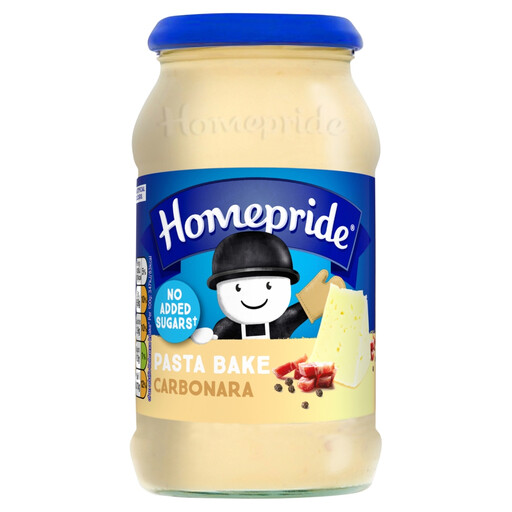 Image unavailable
For a hot carbonara pasta bake rather than a tomato-sauce station. The product description states no added sugars and lists 1.1g sugars and 0.6g salt per 100g. It contains bacon and milk, and lists barley, celery and eggs as allergens; check the pack’s recipe and portion instructions when planning the dish.
 Image unavailable
For heating and stirring into cooked pasta. Its product description states no added sugar and lists 4.7g sugars and 0.74g salt per 100g. It contains milk and egg; check the current label and jar’s portion guidance before serving guests.
 Image unavailable
For a heated tomato-and-chilli sauce served with pasta. Its product information lists 4.2g sugars and 0.94g salt per 100g; check the current pack if a no-added-sugar claim matters to your choice. The description says it may contain milk and nuts, so review the label and the complete dish for guests with allergies.
No. The NHS explains that naturally occurring sugars in vegetables are included in the total-sugars figure on food labels. Check that figure per 100g even when a sauce has a no-added-sugar claim.
Compare the sugars values per 100g first, then look at how much sauce you expect to serve. GOV.UK’s UK nutrition-labelling guidance specifies per-100g or per-100ml nutrition information, giving you a common basis for reading labels.
Use one if you plan to serve an oven-baked pasta dish and can follow that product’s cooking instructions. Homepride’s reviewed Tomato & Herb Pasta Bake Sauce uses dry pasta, sauce and water in an ovenproof dish; check its stated portions against the amount you intend to serve.
No. Check the current label of the exact sauce, then the pasta, toppings and other components separately. For example, Ocado lists Heinz Classic Tomato Red sauce as gluten free, while its listing for Mutti Tomato & Basil includes precautionary milk and nut information.
Check each jar’s refrigeration and use-after-opening instructions before preparing ahead. The instructions can differ between sauces, so use the directions for the exact product rather than applying one storage period to every jar.