Low-waste cottage stockers
Hosts with changing guest numbers or uncertain cooking plans who want to avoid leaving an opened pack unused between stays.


A catering-size tin makes sense when guests or a shared kitchen will use its contents within the pack's post-opening instructions; for irregular cottage bookings, separately sealed smaller packs may leave less opened sauce unused. Choose a ready-made sauce for a straightforward guest meal, or passata and tinned tomatoes when you can provide the ingredients and guidance to turn them into a sauce.
Hosts with changing guest numbers or uncertain cooking plans who want to avoid leaving an opened pack unused between stays.
Properties stocking the ingredients for a family pasta meal that guests can prepare without making a sauce from scratch.
Hosts who want a cupboard tomato ingredient for pasta, pizza, soups or stews and are prepared to supply the other ingredients a recipe needs.
Match the amount opened at once to likely meal size and the pack's storage instructions, then decide whether guests need a finished sauce or a tomato base.
| Concern | What to check | Who this matters to |
|---|---|---|
| Opened-pack waste | Compare likely servings with pack size; read the refrigeration and use-after-opening instructions. | If bookings and meal plans vary, I would rather open a small jar or one tin than leave most of a catering tin unused. About 33% of consumers would put avoiding opened-pack waste first. |
| An easy guest meal | Check whether it is a finished sauce, its stated servings and its flavour. | For a family arriving ready to cook pasta, I want a sauce that does not need a separate recipe. Around 27% of consumers would make meal convenience their primary concern. |
| Use across recipes | Distinguish finished sauce from passata or tinned tomatoes; check what seasoning and equipment guests will have. | If the cupboard needs to support several dishes, I can work with a tomato base rather than commit to one sauce flavour. About 20% of consumers would prioritise that flexibility. |
| Ingredients and dietary suitability | Read the current pack's ingredients, allergen information and any vegetarian or vegan claim. | When guests' dietary requirements change between bookings, I need to check the exact product being supplied. For roughly 20% of consumers, current label information would be the leading concern. |
A catering-size tin suits high-volume cooking, but opening it for one small meal leaves more sauce to store and use within its labelled open-life.
Before buying, consider how many servings are likely to be cooked after opening. For variable bookings, compare smaller jars or a multipack of separately sealed tins.
Passata offers a tomato base for several dishes, but guests may need other ingredients and seasoning to make the meal they expect.
Stock a finished sauce for a low-preparation pasta meal. Choose passata or tinned tomatoes when the cupboard also has suitable recipe ingredients and guidance.
Dietary claims belong to particular products and recipes can change. A vegetarian or vegan claim on one sauce does not apply to every sauce from its brand.
Check the current physical pack for ingredients, allergens, dietary claims and storage instructions before supplying it to guests.
Ready-made sauce for guests preparing a straightforward pasta meal.
Passata and separately sealed tinned tomatoes for hosts planning more than one tomato-based dish.
Own-label 500g tomato and basil sauce for a ready-made meal option.
A 500g ready-made pasta sauce with tomato, mushroom and basil.
Own-label 500g tomato sauces for a ready-made cupboard option.
A smaller jar option when a catering-size pack does not fit the planned meal.
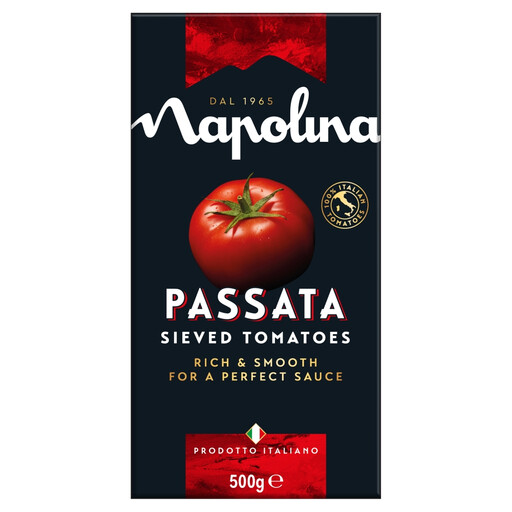
This passata is a tomato base for hosts planning to supply the ingredients for pasta sauce or other tomato-based dishes, rather than a finished guest meal or a catering-size tin.
 No image available
Consider this 500g passata when you can provide the seasoning and other ingredients needed to make a sauce. It is a tomato base, not a finished pasta sauce; check this pack's own storage instructions before stocking it for guests.
Buy one when cooking volume is predictable and the opened contents can be handled within that tin's label instructions. Iberico Foods positions its 2.55kg tomato sauce tin for high-volume cooking; for occasional small meals, separately sealed smaller packs avoid opening that much at once.
Passata can be used to make pasta sauce, but it is a tomato base rather than a finished sauce. Choose it if guests will have the ingredients and guidance to complete the dish; use a ready-made sauce when the aim is a meal with fewer preparation steps.
Follow the instructions on the exact pack, including any refrigeration and use-after-opening directions. Food Standards Scotland advises checking the label; the Napolina 690g passata listing, for example, says to empty, cover and refrigerate its contents after opening and use them within two days. Do not apply that pack's timeframe to every sauce.
Check the current product's ingredients, allergen information, date marking and storage instructions, along with any dietary claim you intend to rely on. GOV.UK food-labelling guidance addresses these types of pack information, while Food Standards Agency guidance identifies allergen control and avoiding cross-contamination as considerations when food is handled.