For a budget shop, compare pasta sauces by salt per 100g, then check the amount you expect to use; a smaller pack or quicker format is not necessarily lower in salt. Check any reduced-salt wording against the exact product’s nutrition panel, and read its allergen and storage information before choosing.
Who is this for?
Salt-first budget shoppers
If salt is your main concern, compare the per-100g figures before deciding whether a jar or stir-in pot suits the portions you make. The checked Sainsbury’s products list different salt levels for those two formats, so the format name alone does not settle the choice.
Meal planners watching portions
If one pack needs to cover several meals, check its size and stated servings against how much sauce you actually use. A serving figure is useful only when its portion resembles yours.
Quick-dinner shoppers with dietary checks
A stir-in sauce can simplify preparation, but speed does not tell you its salt content or allergen suitability. Dolmio says its Tomato and Basil Stir In sauce can be mixed into hot pasta without heating; the exact pack still needs checking.
What matters when choosing?
Start with a like-for-like salt comparison, then consider your portion and whether the sauce fits the way you cook and serve pasta.
| Concern |
What to check |
Who this matters to |
| Salt in the amount eaten |
Compare salt per 100g across sauces, then check the salt for the portion you expect to use. GOV.UK notes that a traffic-light label, where present, can help with an at-a-glance comparison. |
If I am choosing pasta sauce chiefly to cut down on salt, I need a common figure before thinking about pack size. About 50% of consumers would put that salt comparison first. |
| Portions from one pack |
Check pack weight and stated servings, then consider how much sauce your meals require. |
When I am planning several meals from one shop, I want to know whether a pack covers the portions I intend to make. Portion planning would be the main concern for about 30% of consumers. |
| Preparation and dietary fit |
Read the heating directions, ingredients, allergen statement and instructions for storing the opened pack. |
If dinner needs to be quick or I am serving someone with an allergy, the sauce must fit those practical requirements. For about 20% of consumers, preparation and dietary fit would come first. |
Common buying mistakes
-
Assuming a quick stir-in sauce has less salt
Convenience describes preparation, not salt content. Dolmio lists 1.3g salt per 100g for its Tomato and Basil Stir In sauce, which it says needs no separate heating.
Read the salt figure on the exact pot or jar and compare products on the same per-100g basis.
-
Assuming tomato sauces contain similar amounts of salt
Recipe matters: Marks & Spencer lists 0.60g salt per 100g for its Tomato and Basil Pasta Sauce, while Tesco Groceries lists 2.16g per 100g for Napolina Sundried Tomato & Basil Stir-In sauce. These are different products and formats, not a comparison of everything either brand sells.
Check the nutrition panel for the particular recipe and pack you are considering.
-
Skipping allergen checks for a tomato-led sauce
A tomato-based name does not establish allergen suitability. Marks & Spencer labels its Tomato and Basil Pasta Sauce as unsuitable for people with milk or egg allergy.
Read the current pack’s ingredients and allergen statement when buying for someone with a relevant allergy.
Brands to compare
These examples show why the exact recipe and format matter more than a brand-wide assumption about salt.
Sainsbury’s
Its own-label range includes jars and smaller stir-in pots, giving shoppers different pack and portion formats to consider.
- Sainsbury’s lists 0.68g salt per 100g for its Tomato Mushroom & Basil 500g jar.
- Its Tomato & Basil 150g stir-in pot lists 0.82g per 100g. Neither figure, by itself, establishes that the product carries a reduced-salt claim.
M&S
Its Tomato and Basil Pasta Sauce provides a jarred example for comparing salt per 100g.
- Marks & Spencer lists 0.60g salt per 100g for this sauce.
- The product is labelled unsuitable for people with milk or egg allergy; that warning matters even if its salt figure suits your comparison.
Dolmio
Its Tomato and Basil Stir In sauce is intended to be mixed into hot pasta without separate heating.
- The no-heat instruction offers a preparation option when cooking time matters.
- Dolmio lists 1.3g salt per 100g for this pot, so its convenience should not be mistaken for a lower-salt claim.
Napolina
Its Sundried Tomato & Basil Stir-In sauce offers a different tomato recipe and stir-in format.
- The named recipe lets shoppers consider sundried tomato and basil when choosing a flavour.
- Tesco Groceries lists 2.16g salt per 100g for this product. Check its allergen statement as well as its salt figure before choosing it.
Joybuy products to consider
These selections cover a passata that can be used for pasta dishes and two tomato sauces. Compare the exact pack’s salt and serving information before treating any of them as a lower-salt choice.
 No image available
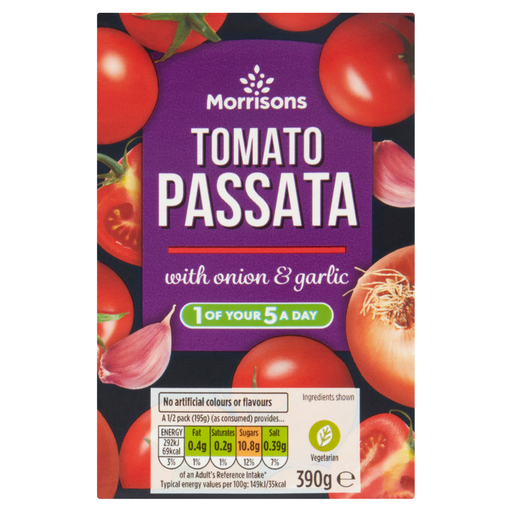
Morrisons Passata With Onion & Garlic 390g
Consider this passata if you are preparing a pasta dish rather than choosing a sauce labelled specifically for pasta. The pack is 390g; check its salt figure, directions and allergen information against the meal you plan to make.
Joybuy
 No image available
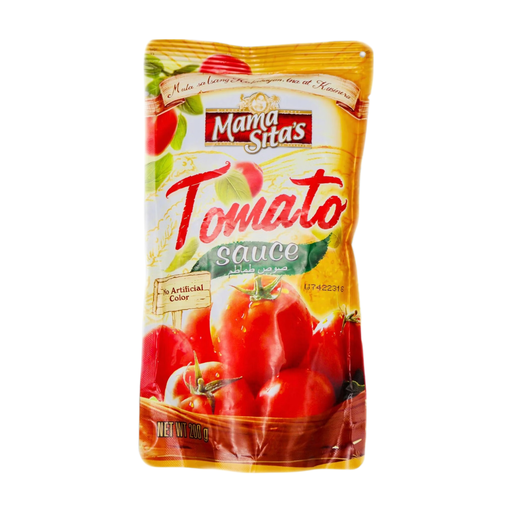
Mama Sita’s Tomato Sauce 200g
This 200g tomato sauce is an option to assess for pasta dishes. Check the pack’s salt per 100g, the amount you would use and its instructions for storage after opening.
Joybuy
 No image available
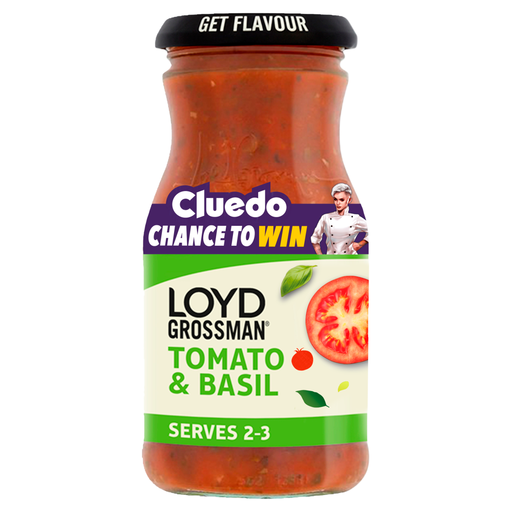
Loyd Grossman Tomato & Basil Sauce 350g
Choose this 350g tomato-and-basil sauce only after comparing its salt label with the other sauces you are considering. If allergens matter, check the current pack’s nut-allergen wording before serving.
Joybuy
Questions about pasta sauce
How should I compare salt between a jar and a stir-in pot?
Start with salt per 100g so both products are on the same basis. Then check the amount you would actually eat: stated servings differ between products, so a per-serving figure is meaningful only alongside its serving size. GOV.UK says a traffic-light label, where present, can also help with an at-a-glance comparison.
Is a reduced-salt claim enough to choose a pasta sauce?
No. Read the exact product’s salt per 100g and compare it with the sauces you might otherwise buy, then consider your portion. Do not assume that a quick stir-in format or a small pack has less salt.
How long can I keep pasta sauce after opening it?
Follow the instructions on the exact pack. The checked Sainsbury’s Tomato & Basil stir-in sauce, Marks & Spencer Tomato and Basil Pasta Sauce and Napolina Sundried Tomato & Basil Stir-In sauce each instruct shoppers to refrigerate after opening and use within three days; that is not a rule for every pasta sauce.
Does a tomato-based sauce still need an allergen check?
Yes, if you are buying for someone with a relevant allergy. Marks & Spencer labels its Tomato and Basil Pasta Sauce as unsuitable for people with milk or egg allergy, so check the current ingredients and allergen statement rather than relying on the sauce’s name.


