Everyday cyclists reducing meal salt
If pasta is part of your regular meals, compare salt per 100g and the amount of sauce you use. A front-of-pack claim alone will not tell you the salt in your serving.


For cycling meals, start with the sauce’s salt figure per 100g: the NHS defines low salt as 0.3g or less per 100g, which a “reduced salt” claim does not establish on its own. Passata can give you more control over seasoning if you have time to cook, but the salt in a pasta meal should not stand in for planning fluids and electrolytes for a prolonged or hot ride.
If pasta is part of your regular meals, compare salt per 100g and the amount of sauce you use. A front-of-pack claim alone will not tell you the salt in your serving.
You may want a lower-salt pasta meal while making separate decisions about drinks and fuelling on longer or hotter rides. Sweat and sodium losses vary between people and conditions.
If you prefer a finished jar or chilled sauce, weigh preparation time against its salt figure, your portion size, storage instructions and any dietary requirements.
| Concern | What to check | Who this matters to |
|---|---|---|
| Actual salt level | Compare salt per 100g with the NHS low-salt reference of 0.3g or less, then consider the amount of sauce you will use. | If I want less salt in regular pasta meals, a “reduced” claim does not tell me what is in my serving; about 31% of consumers put the absolute salt figure first. |
| Ride fuelling | Consider ride duration, heat and your own response separately from the sauce label. British Cycling advises practising event food and drink choices in training. | On a long or hot ride, I need to plan drinks separately from what goes into dinner; roughly 31% of consumers prioritise keeping those decisions apart. |
| Preparation and storage | Decide whether you have time to season a passata base or need a finished sauce, and read the pack’s after-opening instructions. | When dinner needs to be quick, I have to balance a finished sauce against the cooking involved in using passata; about 23% of consumers put that convenience-and-control decision first. |
| Ingredient suitability | Read the ingredient and allergen statements on the current pack alongside its nutrition panel. | If I avoid certain ingredients, the salt number cannot tell me whether a sauce suits my diet; around 15% of consumers put ingredient and allergen suitability first. |
Dolmio lists 0.67g salt per 100g for its Low Fat Bolognese sauce, above the NHS low-salt reference of 0.3g or less per 100g. The two label claims answer different questions.
Read the salt figure separately, both per 100g and for the amount you intend to eat.
“Reduced” compares a product with another version; it does not by itself tell you whether the sauce is low in salt.
Use the nutrition panel to compare sauces on a per-100g basis, then account for your portion.
Research published in Sports Medicine describes substantial variation in athletes’ sweat rates and sweat sodium concentrations. A sauce’s salt figure cannot settle what to drink during a particular ride.
Keep meal selection separate from your approach to drinks and fuelling for demanding rides, and practise that approach in training.
Chilled and cupboard sauces can carry different after-opening instructions. A dietary description such as “vegan” also does not replace the product’s allergy statement.
Check the pack you are buying and plan how soon you will use an opened sauce.
Finished Bolognese-style sauces offer a quicker route to a pasta meal than making a sauce from a tomato base.
Its passata offers a tomato base for people who would rather build and season their own pasta sauce.
Its tomato pasta-sauce range includes cupboard and chilled options, with recipes that differ in ingredients and storage instructions.
These passata products are cooking bases for pasta meals, rather than finished sauces or products for on-bike hydration. Compare the current pack’s salt figure and ingredients before deciding whether either suits your lower-salt meal.
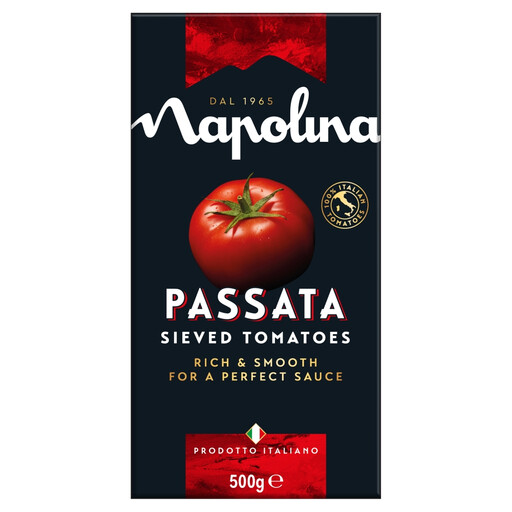 Image unavailable
Choose this passata base if you want to season a pasta sauce yourself and have time to cook it. Check the pack’s salt per 100g, ingredients and after-opening instructions for the meal you plan to make.
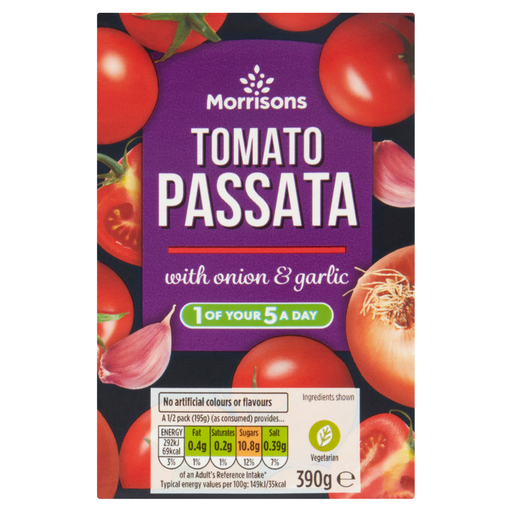 Image unavailable
Consider this passata if onion and garlic suit the pasta sauce you intend to make. Unlike a plain tomato base, its named variant includes those ingredients; check the current pack’s salt per 100g, full ingredient list and storage instructions.
No. “Reduced salt” is a comparative claim, while the NHS defines low salt as 0.3g or less per 100g. Read the sauce’s salt figure per 100g rather than relying on the claim alone.
Compare their salt figures per 100g first, so pack size does not distort the comparison. Then use the amount of sauce you expect to eat to assess your portion, which may differ from the serving shown on a label.
No: the sauce’s salt content alone cannot determine fluid or sodium needs around a long ride. Research published in Sports Medicine describes variation in sweat rate and sweat sodium concentration between athletes, so keep ride drinks and fuelling decisions separate from choosing a lower-salt dinner.
Passata can work as a base if you are willing to cook and season it yourself. Napolina describes passata as usually tomatoes without added herbs, oil or seasoning, but check the ingredients and salt figure on the particular pack before choosing it.
Check the ingredients, allergen statement and storage instructions alongside the nutrition panel. These details matter especially if you avoid particular ingredients or will use the sauce across more than one meal.