No-added-sugar label checkers
You want to avoid added sweetening in a convenient sauce while recognising that tomatoes and vegetables can still contribute sugars. Check the claim alongside the ingredients and total sugars.


If avoiding added sweetening is your priority, start with a pasta sauce labelled no added sugar; if total sugars matter more to your choice, compare the per-100g figures rather than relying on that claim. For weight-management meal planning, compare calories and salt too, then account for the amount of sauce you will use. A plain tomato base gives you control over what you add, but its own label still needs checking.
You want to avoid added sweetening in a convenient sauce while recognising that tomatoes and vegetables can still contribute sugars. Check the claim alongside the ingredients and total sugars.
You plan pasta meals around the amount you serve. The sauce’s per-100g calories, sugars and salt are more useful when you also know how much will go on the plate.
You need a sauce that fits your preferred flavour, household size and plans for leftovers. Compare the pack and its label rather than assuming a branded or larger jar will suit you better.
Decide whether avoiding added sugar or comparing total sugars is your starting point. Then use the same per-100g basis across sauces before considering your serving and the rest of the meal; the NHS advises that a pack’s stated portion may differ from the amount you eat.
| Concern | What to check | Who this matters to |
|---|---|---|
| Added versus total sugars | Check the no-added-sugar wording, ingredients and sugars per 100g. The claim does not mean sugar-free. | I want to avoid added sweetening, but I still need to know how much sugar is in the tomato sauce. About 44% of consumers put avoiding added sugar first. |
| Calories and portions | Compare calories and salt per 100g, then consider the amount of sauce you expect to serve. | When I plan a pasta meal, the amount of sauce I use matters more than the jar’s suggested serving alone. For about 33% of consumers, portion and calorie planning is the primary concern. |
| Flavour and pack fit | Check the flavour, pack size and after-opening instructions against the meals you have planned. | I need a quick sauce I will enjoy and can finish within its storage instructions. Convenient flavour and a suitable pack come first for about 23% of consumers. |
Tomatoes and vegetables can contribute naturally occurring sugars. An added-sugar claim does not tell you the sauce’s calorie or salt content.
Read the ingredients and sugars per 100g, then compare calories and salt on the same basis. The UK no-added-sugars claim conditions are set out in the legislation published by legislation.gov.uk.
Jars and suggested portions differ, so per-serving numbers may describe different amounts of sauce.
Start with the per-100g panel and work out what the amount you intend to use contributes. NHS food-label guidance notes that pack portions may not match your own.
A no-added-sugar sauce can still contain salt. The Sainsbury’s No Added Sugar Tomato & Hidden Veg sauce lists 0.61g salt per 100g.
Compare salt per 100g and consider ingredients you plan to add to the pasta, such as cheese or stock.
After-opening instructions vary between sauces, which matters if one meal will use only part of the jar.
Check the current jar’s refrigeration and use-within instructions before deciding which pack size fits your meals.
Sauce left beyond its stated storage period may have to be discarded.
Its No Added Sugar Tomato & Hidden Veg Pasta Sauce is a 500g tomato-and-vegetable option for shoppers seeking that specific claim.
Tesco lists a 500g No Added Sugar Bolognese Pasta Sauce for shoppers considering a ready-to-use Bolognese style.
Dolmio has a Tomato and Basil No Added Sugar variant for shoppers who want that flavour and claim together.
Its Tomato and Basil Pasta Sauce is an option for shoppers comparing flavour and the full nutrition label without requiring a no-added-sugar claim.
Napolina’s tomato products offer a starting point if you would rather season a sauce yourself.
These two sauces offer different choices: a no-added-sugar carbonara pasta-bake sauce and a tomato-and-chilli pasta sauce. If a tomato sauce with a no-added-sugar claim is essential, check the exact product label rather than transferring either product’s description to the other.
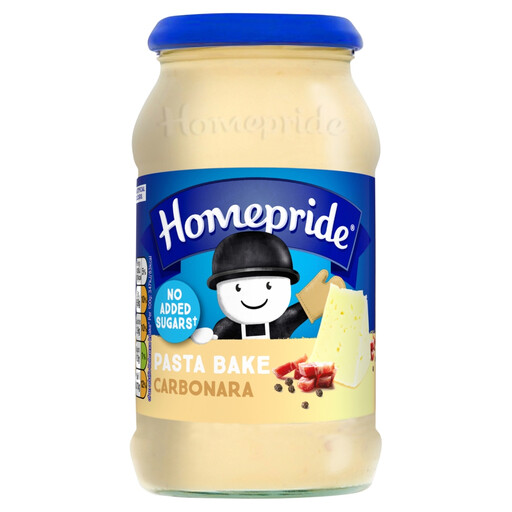 Image unavailable
Consider this if avoiding added sugar matters more to you than choosing a tomato-style sauce. It is a 485g carbonara pasta-bake sauce, so check its ingredients and allergens if the style needs to fit your meal. Use the current nutrition label and the amount you intend to serve when comparing it with other sauces.
 Image unavailable
Consider this 400g tomato-and-chilli sauce if that flavour suits your meal and you prefer to compare the label rather than select by a no-added-sugar claim. Check its current ingredients, sugars and salt per 100g, particularly if avoiding added sugar is your first priority.
No. The UK no-added-sugars claim conditions published by legislation.gov.uk concern added sugars; naturally occurring sugars can remain. Check the “of which sugars” figure per 100g to compare the total in two sauces.
Compare calories, sugars, fat, saturates and salt per 100g, then consider how much sauce you will actually use. NHS food-label guidance notes that a manufacturer’s stated portion can differ from yours; pasta and additions to the meal need considering separately.
They provide a quick way to compare the nutrients they display, but read the per-100g panel and ingredients too. GOV.UK describes the traffic-light colours as indicating low, medium or high levels, while the amount you serve may differ from the pack’s portion.
Follow the instructions on that jar rather than applying one period to every sauce. Sainsbury’s gives seven days refrigerated after opening for its No Added Sugar Tomato & Hidden Veg sauce, while Marks & Spencer gives three days for its Tomato and Basil Pasta Sauce.
Read the current pack’s ingredients and allergen information before using the sauce. Retailer listings can help you shortlist products, but Sainsbury’s and Marks & Spencer caution that product information can change.