Who is this for?

Short-stay second-home cooks

You want a sauce ready for an occasional visit, but need to use or refrigerate any remainder within the period stated on its jar. The Tesco, Sainsbury’s and ASDA product listings show why that instruction matters when planning meals.

Consumers comparing sugar labels

You want to distinguish a no-added-sugar claim from the total sugars shown per 100g. The NHS explains that naturally occurring sugars are included in the total-sugars figure.

Pasta-bake planners checking allergens

You have an oven meal in mind and need to read the declaration for its exact sauce before serving a shared meal. ASDA’s listings for the checked Homepride bake sauces declare milk, eggs, barley and celery.

What matters when choosing?

For a second-home stock-up, start with the sauce you intend to cook, then compare its label and the number of meals you can make before an opened jar must be used.

Concern What to check Who this matters to
Sugar-label comparison For sauces used in the same way, compare “of which sugars” and salt per 100g; do not read “no added sugar” as sugar-free. If avoiding added sugar comes first, I still want to know the total sugars in the sauce I will use. About 45% of consumers put sugar-label comparison first.
Opened-jar life Check pack size, refrigeration instructions and the exact consume-within period after opening. When visits are far apart, I need to finish an opened jar before I leave rather than rely on it being usable next time. For about 33% of consumers, avoiding an unused remainder is the primary concern.
Meal and ingredient fit Check whether the sauce is for stovetop pasta or a bake, then read the exact pack’s ingredients and allergen declaration. If I am cooking for others, the planned dish and its ingredients need to suit the people sharing it. Meal format and allergen fit come first for about 22% of consumers.

What should you avoid overlooking?

  • Reading “no added sugar” as “no sugar”

    Tomato and vegetables can contribute naturally occurring sugars. The NHS says these are included in the total-sugars figure, and the checked Tesco, Sainsbury’s and Loyd Grossman tomato sauces list sugars per 100g despite their no-added-sugar names.

    Compare the nutrition panels of sauces intended for the same kind of meal, rather than relying on the front-of-pack phrase.

  • Leaving part of a large jar for the next visit

    An unopened jar and an opened jar have different storage needs. The checked Tesco Bolognese, Sainsbury’s Hidden Veg and Loyd Grossman Tomato & Basil listings specify refrigerated use within 14, 7 and 3 days respectively after opening.

    Choose a size you can use during the stay, and follow the instruction on the pack you buy.

    Sauce left unused beyond its opened-life may need to be discarded.

  • Using a pasta-bake sauce as a general tomato sauce

    A bake sauce is intended for a different recipe. ASDA’s listings for the checked Homepride bake varieties also declare milk, eggs, barley and celery, so their ingredients cannot be assumed to match those of a tomato sauce.

    Choose a bake sauce for a planned bake and check the allergen declaration for its exact flavour.

  • Relying only on an older online listing

    Ingredients and pack instructions can change, which matters when you are stocking food for later use or cooking for someone with an allergy.

    Read the physical pack’s ingredients, allergen statement, best-before date and storage instructions when buying and before serving.

Relevant brands to consider

Tesco

Tesco lists own-label no-added-sugar tomato sauces for pasta, including a 500g Bolognese variety.

  • Tesco Groceries lists 4.5g sugars and 0.64g salt per 100g for its No Added Sugar Bolognese.
  • Its 14-day refrigerated period after opening applies to that checked sauce, not every Tesco variety.

Sainsbury’s

Sainsbury’s lists a 500g no-added-sugar Tomato & Hidden Veg sauce for stovetop pasta meals.

  • Its listing gives 3.9g sugars and 0.61g salt per 100g for this variety.
  • The checked jar must be refrigerated and used within 7 days after opening.

Dolmio

Dolmio UK describes a No Added Sugar pasta-sauce range.

  • It provides a branded tomato-sauce range to consider for pasta meals.
  • Compare the nutrition panel and after-opening instructions on the exact jar before stocking it.

Loyd Grossman

The checked range includes a 350g no-added-sugar Tomato & Basil sauce and a separate white lasagne sauce.

  • ASDA lists 4.0g sugars per 100g for the Tomato & Basil variety, which it describes as serving 2–3.
  • The checked Tomato & Basil jar requires refrigeration and use within 3 days after opening. The white lasagne variety contains milk and eggs and serves a different recipe.

Homepride

Homepride’s checked no-added-sugar Tomato & Herb and Tomato & Cheddar sauces are intended for pasta bakes.

  • ASDA’s listings describe using these varieties with dry pasta for an oven bake.
  • Both checked varieties declare milk, eggs, barley and celery and specify use within 3 days after opening; check each flavour’s own label.

Joybuy pasta-bake sauce selection

This selection is for a planned pasta bake at a second home. Check the pack’s ingredients and opened-jar instructions against the meal and length of your visit.
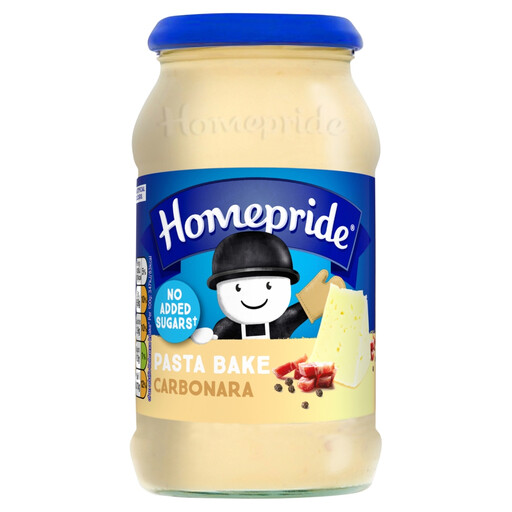
Homepride No Added Sugar Carbonara Pasta Bake 485g

Homepride No Added Sugar Carbonara Pasta Bake 485g

A no-added-sugar sauce for a planned pasta bake, rather than a general tomato sauce for several different meals. For a shared meal, check the pack’s allergen declaration; after opening, refrigerate and consume within 3 days.

View on Joybuy

Common questions

Does “no added sugar” mean pasta sauce is sugar-free?

No. The NHS explains that naturally occurring sugars are included in the total-sugars figure. Tesco’s checked No Added Sugar Bolognese, for instance, lists 4.5g sugars per 100g; read the nutrition panel when comparing sauces.

How should I compare two no-added-sugar sauces?

Start with their sugars and salt values per 100g if they serve the same kind of meal. Then check pack size, ingredients, allergens and after-opening storage so the sauce also fits your stay.

Can an unopened sauce jar stay in a second-home cupboard?

Follow the storage instruction and best-before date on the exact jar. Once opened, the checked sauces require refrigeration, with consume-within periods that differ by product; do not assume an opened jar will keep until your next visit.

Are “reduced sugar” and “no added sugar” interchangeable?

No. They describe different claims, and a no-added-sugar name does not establish how its total sugars compare with another sauce. Read the claim on the pack and compare the per-100g nutrition figures for products you would use in the same way.

What should I check before buying a pasta-bake sauce for a group?

Check that its cooking instructions fit the planned bake and read the exact pack’s ingredients and allergen declaration. ASDA’s listings for the checked Homepride Tomato & Herb and Tomato & Cheddar bake sauces declare milk, eggs, barley and celery; a no-added-sugar claim says nothing about allergen suitability.