Parents checking added sugar
If you are choosing sauce for a routine toddler pasta dinner, distinguish a no-added-sugar claim from the total sugars shown on the nutrition panel. Tomato-based sauces can still contain naturally occurring sugars.


For a toddler dinner, start with a sauce labelled no added sugar if avoiding added sugar is the priority, but compare its total sugars and salt per 100g before choosing. Texture, ingredients and the exact jar’s allergen information matter too; a no-added-sugar claim does not mean the sauce is sugar-free or suitable for every meal.
If you are choosing sauce for a routine toddler pasta dinner, distinguish a no-added-sugar claim from the total sugars shown on the nutrition panel. Tomato-based sauces can still contain naturally occurring sugars.
If visible pieces of vegetables make a sauce less acceptable to your child, a product explicitly described as smooth may be worth considering. Check its salt, ingredients and allergens just as you would with a chunkier sauce.
For a meal packed to eat away from home, check the sauce, pasta and every addition against the child’s needs. Confirm the relevant school’s food policy rather than assuming every pasta sauce contains gluten.
For a toddler dinner, screen for the sugar claim you want, then compare labels and choose a texture the child is likely to accept. Check allergens across the complete meal, not just the sauce.
| Concern | What to check | Who this matters to |
|---|---|---|
| Added sugar | Look for the exact no-added-sugar claim, then read the ingredients and total sugars per 100g. | If I want to avoid added sugar in a tomato sauce, I still need to understand what its sugars figure includes. About 36% of consumers put avoiding added sugar first. |
| Salt | Compare salt per 100g on sauces that meet your other requirements; consider how much sauce will be used. | When choosing between acceptable sauces, I want to see the salt figure rather than decide on the sugar claim alone. Salt is the primary concern for about 29% of consumers. |
| Texture and ingredients | Check whether the sauce is described as smooth and which vegetables appear in its ingredients. | If my toddler dislikes visible pieces, a smooth sauce could make this dinner easier to plan. About 21% of consumers prioritise texture and vegetable acceptance. |
| Allergens and school requirements | Read the current jar’s allergen declaration, check the rest of the meal and confirm the school’s policy. | Before packing pasta, I need to know whether every part of the meal meets the child’s requirements. For about 14% of consumers, allergen or school-policy checks come first. |
Tomatoes and other ingredients can contribute naturally occurring sugars. The claim does not replace the total-sugars figure.
Compare sugars per 100g on the current labels of sauces that otherwise meet your needs.
No-added-sugar sauces can have different salt figures. A sugar claim alone cannot tell you which label fits the meal you are planning.
Compare salt per 100g alongside sugars, and consider the amount of sauce you intend to serve.
The Food Standards Agency notes that cereals containing gluten can occur in sauces. A gluten-free declaration on one sauce also says nothing about the pasta or additions served with it.
Check the exact jar and every component of the meal against the child’s requirements and any relevant school policy.
Refrigeration and use-after-opening instructions vary by product, which matters if you expect to use the jar across several dinners.
Choose a jar size you can use within its labelled storage period and follow the instructions on the one you buy.
Sauce left beyond that period may go to waste.
These brands provide label-checking starting points, not a guarantee that every sauce in their ranges has the same sugar, salt or allergen profile.
Tesco Groceries lists a 500g No Added Sugar Bolognese Pasta Sauce.
Dolmio UK describes a no-added-sugar pasta-sauce line, including a Tomato & Basil variant listed by Tesco Groceries.
M&S lists several pasta-sauce formats; the exact recipe determines whether one fits an added-sugar preference.
Napolina has described a no-added-sugar pasta-sauce range.
Sainsbury's lists Loyd Grossman No Added Sugar Bolognese as a branded shopping option.
This selection is a no-added-sugar carbonara pasta-bake sauce for a cooked pasta dinner, rather than a plain tomato sauce. Check whether that sauce style suits the meal you intend to make.
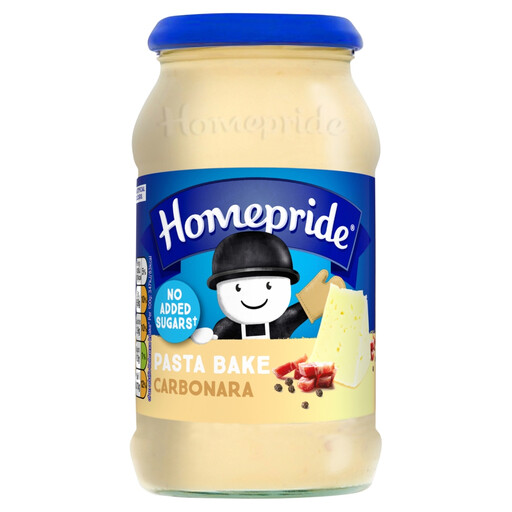 Image unavailable
Consider this 485g carbonara pasta-bake sauce if a no-added-sugar claim matters and you are making a cooked pasta bake rather than a tomato-sauce dinner. Follow the jar’s cooking and storage instructions, and check its current allergen declaration against the child’s needs and any school policy.
No. A no-added-sugar sauce can still contain sugars naturally present in its ingredients. For example, Tesco Groceries lists 4.5g total sugars per 100g for its No Added Sugar Bolognese; read the total-sugars line as well as the claim.
No. It addresses one part of the decision. Compare salt per 100g, ingredients and allergens, then consider the amount served and whether the texture suits your child. NHS guidance for young children makes sugar and sweeteners relevant checks, but the whole meal still matters.
No. The Food Standards Agency notes that cereals containing gluten can occur in sauces, but that does not establish the status of every jar. Check the sauce’s current declaration and the pasta and additions served with it.
Follow the refrigeration and use-after-opening instructions on the exact jar. These instructions differ between products, so check them before choosing a size intended to cover several meals.