Solo lunchers with a microwave
A smaller unopened tin can be practical if you can use its contents for one lunch and have the equipment needed to heat it according to the label.


Choose a 200g or 205g tin if you want one unopened item for lunch and can follow its preparation instructions at work without managing leftovers. A 400g tin makes more sense if you can share it or store the remainder as directed; preparing dry pasta separately gives you more control over the meal but takes more preparation and packing.
A smaller unopened tin can be practical if you can use its contents for one lunch and have the equipment needed to heat it according to the label.
A 400g tin is worth considering if you can share it or pack and store the unused portion according to its instructions.
Check the exact variant for wheat, soya, meat ingredients and any vegetarian or vegan statement. A sauce description alone does not establish dietary suitability.
Start with how you will prepare lunch at work, then choose a portion you can use and check the exact tin’s label.
Choose when: You want one unopened tin for one office lunch without storing a remainder.
Bear in mind: Check the nutrition information for the whole tin when deciding what else to pack.
Choose when: You can share the contents or plan to use them across more than one meal.
Bear in mind: The checked Sainsbury’s 400g products are labelled as two servings, and their unused contents need refrigerated storage after opening.
Choose when: You can prepare lunch separately and want to set the pasta and sauce portions yourself.
Bear in mind: This route needs preparation and a suitable container rather than just an unopened tin.
| Concern | What to check | Who this matters to |
|---|---|---|
| One-use portion | Check the tin’s net weight and nutrition information for the whole tin. | I want to pack one tin and finish it at lunch rather than carry opened food home; about 29% of consumers would put a one-use portion first. |
| Workplace preparation | Check the pack’s heating directions and whether you have the required equipment. | If my lunch break relies on the office microwave, I need a way to prepare the contents as directed. For about 29% of consumers, workable heating would be the primary concern. |
| Ingredients and allergens | Read the exact variant’s ingredients, allergen declaration and dietary-suitability statement. | When I need to avoid a particular ingredient, the current label matters more than the name of the sauce; roughly 24% of consumers would prioritise dietary certainty. |
| Using the whole tin | Check the servings stated on the pack and its instructions for storing unused contents. | A larger tin only fits my lunch plan if I can use or store what remains. About 18% of consumers would put managing the second portion first. |
The checked Sainsbury’s 400g spaghetti and rings are labelled as two servings, whereas Heinz listings include smaller 200g and 205g formats.
Choose a tin whose contents fit your lunch plan, or arrange to share or refrigerate the remainder as the label directs.
Unused food may go to waste if you cannot store the opened portion.
The checked Sainsbury’s heating instructions direct you to empty the food into a microwave-safe dish and heat it until piping hot.
Check your chosen product’s directions and bring a suitable bowl and spoon if they will not be available at work.
Some checked tomato-sauce pasta is labelled vegetarian and vegan, but the checked pasta variants differ in their ingredients and declared allergens.
Read the current ingredients and allergen information for the exact tin, rather than relying on another variant’s label.
Tesco Groceries and Sainsbury’s list Heinz canned-pasta options in 200g and 205g formats alongside larger tins.
Tesco Groceries lists its own-label spaghetti rings in a 410g tin.
Sainsbury’s lists 400g tomato-sauce spaghetti and rings, including a spaghetti product labelled suitable for vegetarians and vegans.
Barilla UK presents dry pasta, gluten-free pasta, pesto and red sauces as ingredients for a prepared lunch.
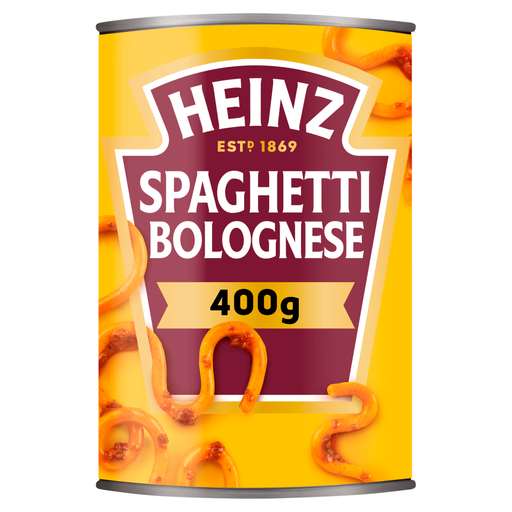
This 400g canned-spaghetti option suits a lunch plan in which you can use the contents across meals and store any remainder as directed.
 No image available
Consider this tin if you can portion a 400g serving plan and refrigerate what you do not use. Its allergen information declares wheat and soya; the listed instructions say to refrigerate unused contents and use them within two days. Check the tin’s heating directions before relying on it for a hot office lunch.
Follow the directions on your exact tin rather than putting the tin in the microwave. The checked Sainsbury’s labels instruct you to empty the contents into a microwave-safe dish, cover and stir them during heating, check that they are piping hot, and allow them to stand for one minute.
Follow that product’s opened-storage instructions. For the checked Sainsbury’s 400g products, this means transferring unused contents to a non-metallic container, refrigerating them and using them within two days.
Do not assume they are: checked spaghetti and ring products list wheat ingredients. Read the current allergen declaration on the exact variant; GOV.UK says that prepacked foods containing any of the 14 listed allergens must identify them clearly in the ingredients list.
Check each product’s storage directions. An unopened tin labelled for cool, dry storage differs from a prepared lunch that needs chilling; once the tin is opened, follow its instructions for refrigerating unused contents.