Who these options suit

Long-ride fuel planners

If you are planning food for a longer ride, distinguish a meal before or afterwards from carbohydrate you can eat while cycling. British Cycling advises regular carbohydrate intake during a sportive; a tin’s portion and preparation need to fit the time you intend to eat it.

Low-prep meal buyers

If cooking time is limited, prepared tinned spaghetti offers a different starting point from dried pasta. Check how the particular tin is prepared; cooking pasta with sauce or tomatoes gives you more control over the finished portion.

Diet-specific pasta buyers

If protein, fibre, gluten avoidance or an allergen declaration drives your choice, compare exact formulations rather than relying on the word “pasta”. Barilla’s Protein+, whole-wheat and gluten-free spaghetti lines have different ingredients and label values.

What to check before buying

Tinned spaghetti

Choose it when: You want a prepared pasta meal around a ride and can follow the tin’s preparation instructions.

Trade-off: The pasta and sauce come together in a fixed portion; Tesco’s 410 g example requires heating.

Dried pasta with sauce

Choose it when: You can cook pasta and want to set its portion separately from the sauce.

Trade-off: A sauce jar is an accompaniment, not a complete pasta meal on its own.

Dried pasta with tinned tomatoes

Choose it when: Your single tin is intended as the tomato base for a meal you will make.

Trade-off: You still need to cook the pasta and prepare the sauce.

ConcernWhat to checkWho this matters to
Carbohydrate and timing Read carbohydrate per serving and per full container; decide whether the food is for a meal or for carrying on the ride. If I am planning a longer ride, I need food I can eat at the intended time, not simply a tin containing pasta. About 36% of consumers would put carbohydrate planning and timing first.
Preparation Check the heating method, container size and whether you need a bowl or saucepan. After a ride, I may want a pasta meal without cooking dried pasta, provided I can prepare the tin as directed. Low-prep meals would be the primary concern for about 29% of consumers.
Protein in the meal Compare protein for the amount you will eat, using the complete meal rather than sauce or pasta alone. When assembling a post-ride meal, I want to know how much protein the pasta and other ingredients contribute. About 21% of consumers would make meal protein their first consideration.
Dietary fit Check the exact product’s ingredients, allergen statements and fibre value where relevant. If I need to avoid an ingredient or deliberately choose a different pasta formulation, the current pack matters more than a category name. Dietary compatibility or fibre preference would come first for about 14% of consumers.

Common buying mistakes

  • Assuming a pasta tin is convenient on-bike fuel

    British Cycling’s sportive guidance concerns regular carbohydrate intake during the ride. The Tesco tinned-spaghetti example requires heating, so its convenience as a meal does not make it convenient to carry and eat while cycling.

    Decide when you intend to eat it, then check the tin’s carbohydrate information and preparation instructions against that plan.

  • Comparing a sauce tin with a complete pasta tin

    Tinned tomatoes and pasta sauce are meal components; tinned spaghetti already contains pasta and sauce. Their labels do not describe equivalent finished meals.

    For a meal made from separate ingredients, assess the pasta and additions together. For prepared tinned pasta, use the amount you will actually eat.

  • Assuming a pasta category settles allergen questions

    Protein-enriched, whole-wheat and gluten-free pasta have different formulations. Barilla Protein+ Spaghetti contains wheat and has precautionary statements for soy and mustard.

    Check the current pack of the exact product, including its ingredients and precautionary allergen wording.

Brands and product lines to consider

Tesco

Tesco Short Cut Spaghetti in Tomato Sauce is a prepared pasta product in a 410 g can, rather than dried pasta or a sauce ingredient.

  • Tesco lists 27.1 g carbohydrate, 4.1 g protein and 0.66 g salt per 205 g half can.
  • It contains wheat and requires heating; check whether that suits when and where you plan to eat.

Barilla

Barilla offers dried Protein+, whole-wheat and gluten-free spaghetti for different ingredient and meal-planning requirements.

  • Barilla lists 20 g protein per 100 g for Protein+ Spaghetti and 8 g fibre per 100 g for Whole Wheat Spaghetti.
  • These products require cooking, and their formulations are not interchangeable for allergen or gluten requirements.

Dolmio

Dolmio Original Bolognese sauce is an accompaniment for pasta you cook separately, not a single-tin pasta meal.

  • Dolmio’s instructions recommend 100 g dried pasta per person, leaving the pasta portion to be prepared separately.
  • Assess the sauce alongside the pasta and any other ingredients when considering the finished meal.

M&S

M&S tinned tomatoes can form the base of a pasta sauce rather than serve as a prepared pasta meal.

  • M&S lists tinned tomato options in 400 g cans for cooking with other ingredients.
  • The pasta still needs to be supplied and cooked separately.

Tinned spaghetti on Joybuy

This selection covers tinned spaghetti for a meal around cycling. Check the pack size, portion information and preparation against when you intend to eat.
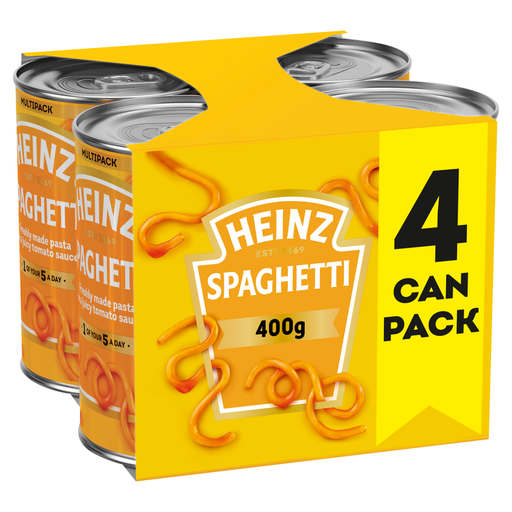
Heinz Spaghetti in Tomato Sauce, four 400 g cans

Heinz Spaghetti in Tomato Sauce, 4 × 400 g

Consider this tinned pasta for a meal around a ride if its preparation suits your schedule. The pack contains four 400 g cans; the listing gives 25.1 g carbohydrate and 3.2 g protein per half can. It contains wheat. Check the current pack and its preparation instructions before relying on it for a particular mealtime.

Joybuy

Questions about pasta for cycling

Can a tin of spaghetti be my main on-bike food?

Do not assume it will be practical to eat on the bike. British Cycling advises regular carbohydrate intake during a sportive, while Tesco’s tinned-spaghetti example requires heating. Check the portion you would eat and plan separately for food you can carry and consume during the ride.

How do I compare protein in tinned and dried pasta?

Compare the amount you would actually eat and include the other ingredients in the meal. Barilla lists 20 g protein per 100 g for its dried Protein+ Spaghetti; Tesco lists 4.1 g per 205 g half can for its tinned spaghetti. Those figures describe different products and portion bases, not a personal post-ride requirement.

Is an online ingredient listing enough for an allergen check?

Check the current physical pack of the exact product before eating it, including ingredients and any precautionary allergen statements. Formulations and listings can change; do not infer suitability from terms such as “plant-based” or from another pasta in the same range.

Should I choose whole-wheat or gluten-free pasta for cycling?

Choose according to the ingredient requirement or fibre preference that matters to you, not because either label establishes a universally preferable cycling meal. Barilla lists 8 g fibre per 100 g for Whole Wheat Spaghetti, while its Gluten-Free Spaghetti uses corn and brown-rice flours. Check the exact product and consider how its portion and meal timing fit your plans.