For frequent access to labelled pastry trays, assess an upright freezer with shelves that fit your trays; for larger reserves of already-frozen portions, a chest freezer may suit less frequent access. A compact freezer may fit a smaller preparation area, while blast-freezing equipment is a separate choice for a verified rapid-freezing requirement. In a food-business kitchen, storage organisation and the applicable food-safety procedures also affect the decision.
Who needs which kind of storage?
Tray-based pastry prep teams
For teams loading and retrieving portioned pastry on repeatable trays, shelf access makes batches easier to identify and rotate. Check the exact shelf dimensions and Gastronorm (GN) compatibility rather than assuming every upright takes the trays in use.
Shared-kitchen stock controllers
When several users share frozen space, labelled areas and clear responsibility for stock matter alongside capacity. A lock or temperature display may be useful, but those features vary by model; GOV.UK advises food businesses to label food they freeze.
Bulk batch storage teams
For a substantial reserve of already-frozen, labelled portions or ingredients, a chest freezer is worth assessing if staff do not need frequent access to individual trays. Check how older batches will remain reachable beneath newer stock.
What should you check before choosing?
Start with the temperature of the pastry when it enters the appliance and the time allowed to freeze a batch. Then match tray access and shared-stock controls to the space available.
Upright freezer with GN-compatible shelves
Consider it when: People regularly load and retrieve labelled trays, and the exact cabinet accepts their tray format.
Allow for: Cabinet height, depth and doorway clearance; locks and recording features depend on the model.
Chest freezer
Consider it when: The main task is holding larger quantities of already-frozen, labelled stock rather than retrieving individual trays often.
Allow for: Floor and lid-opening space, plus a way to reach and rotate stock lower down.
Counter or undercounter freezer
Consider it when: Frozen portions need to be kept near preparation work and the available footprint is limited.
Allow for: Restricted internal tray space compared with a full-height cabinet; check usable dimensions.
Blast freezer with separate storage
Consider it when: Warm or freshly cooked batches need a specified rapid-freezing cycle at the required batch size.
Allow for: Separate frozen storage and model-specific installation and electrical requirements.
| Concern |
What to check |
Who this matters to |
| Freezing process |
Note whether each batch enters chilled, at room temperature or warm. If rapid freezing is necessary, compare stated batch capacity and cycle conditions. |
If warm batches must be frozen within a defined production window, I need a process suited to that load rather than a storage-temperature figure alone; roughly 46% of consumers would put the freezing process first. |
| Shared-stock control |
Plan labelled shelves or baskets by user and batch. Check whether the exact model offers the access and temperature-checking features your kitchen needs. |
When several people use the freezer, I need to identify my portions and know who is responsible for stock checks; around 27% of consumers would make shared-stock control their primary concern. |
| Space and tray access |
Measure trays, usable internal space, the delivery route and the clearance needed to open the door or lid. |
If preparation space is tight, I need enough reachable room for my trays without obstructing the kitchen; approximately 27% of consumers would prioritise space and tray access. |
Mistakes to avoid
-
Choosing storage when the batch needs rapid freezing
A storage freezer’s temperature range does not establish how quickly it can freeze a particular load. Foster specifies a rapid cycle for its BFT48 blast freezer, but that specification does not transfer to an ordinary storage cabinet.
Before choosing, record the starting temperature, batch weight, tray format and required turnaround.
If the process requires a separate rapid-freezing stage, adding it later can disrupt the preparation workflow.
-
Putting warm cooked products straight into shared storage
GOV.UK advises food businesses to cool cooked dishes before freezing and to divide food into smaller portions. A shared storage freezer should not be treated as a verified rapid-cooling process.
Set out the cooling and freezing sequence before deciding whether a blast freezer is needed.
-
Buying by litres without measuring the fit
Advertised capacity does not show whether pastry trays fit or batches remain accessible. For scale, Polar specifies its UA031 upright cabinet at 2150 mm high and 810 mm deep; chest freezers also need space above the lid.
Measure the trays, delivery route, installation space and full door or lid opening before ordering.
-
Leaving shared batches unlabelled and unsorted
Without an agreed arrangement, different users may struggle to identify and rotate their portions. GOV.UK advises food businesses to label everything they freeze.
Assign labelled shelves, baskets or zones by user, product and date. If this is a food-business kitchen, align the arrangement with its food-safety procedures.
Relevant brands for reference
TEFCOLD
Its commercial range includes upright and chest formats worth comparing when choosing between tray access and bulk storage.
- TEFCOLD specifies GN2/1 compatibility, adjustable shelves, a lock and a digital temperature display for the CAF1250 upright freezer.
- Those features are model-specific. Its RF710X1 has a different specification, including ventilated cooling and data export.
Polar
The UA031 is an upright commercial-cabinet example for teams assessing shelf-based storage and GN tray flexibility.
- Polar specifies adjustable shelves, 1/1GN and 2/1GN compatibility, a lockable self-closing door and a digital display for the UA031.
- At a specified 2150 mm high and 810 mm deep, the UA031 needs a checked installation space and delivery route.
Foster
Its BFT48 illustrates the separate blast-freezing route when a kitchen has a defined rapid-freezing process.
- Foster specifies a BFT48 cycle of up to 48 kg from +70°C to -18°C within 240 minutes under its stated conditions.
- The BFT48 specifies a 400/50/3 electrical supply. Check the required throughput and installation before considering it alongside separate storage.
Compact freezer options on Joybuy
These models offer compact or integrated frozen storage to assess where kitchen space is limited. Check the internal fit and freezing process for your pastry batches; the Bosch model is stated to be unsuitable for commercial use.
 No image available
CHiQ JKR90DWE 55 cm White Under-Counter Freezer
Consider this under-counter model when floor space is limited and adjustable shelves could help separate labelled batches.
The listing gives dimensions of 545 × 575 × 845 mm and describes three adjustable shelves. Measure your trays and allow for the required installation clearance; check the freezing rate against your batch size.
View on Joybuy
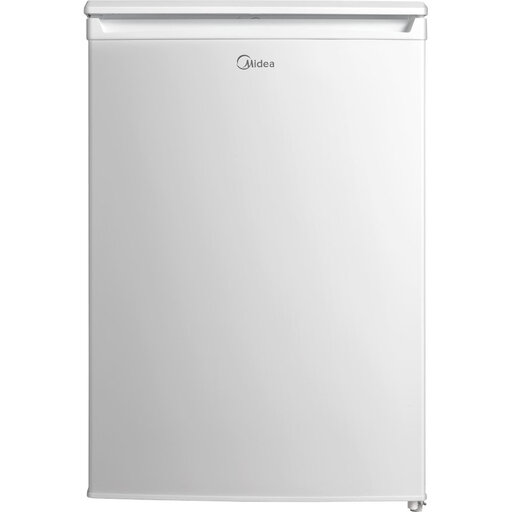 No image available
Midea MDRU129FZE01 83 L White Under-Counter Freezer
Its three transparent drawers may help users keep labelled batches apart in an under-counter space.
The listing gives dimensions of 84.5 × 55.3 × 57.4 cm and specifies manual defrosting. Measure the drawer interiors against your trays and check whether its freezing capability suits your batch size.
View on Joybuy
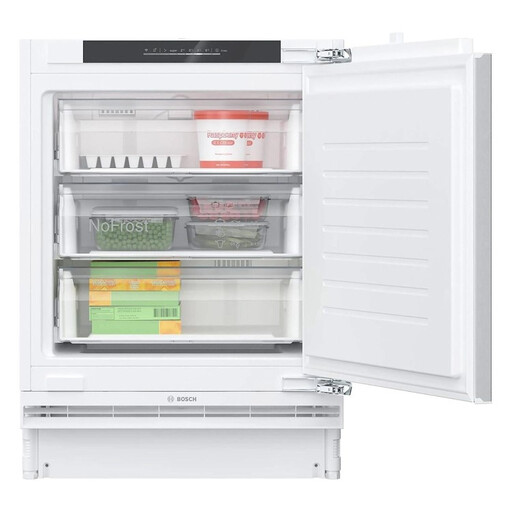 No image available
Bosch GUN21VFE0G Series 4 No Frost Built-Under Freezer
This built-under model offers separate drawers for frozen portions if the shared kitchen is within the appliance’s stated household or similar-use scope.
The listing describes 85 litres and three transparent drawers, but states that the appliance is not intended for commercial use. If the kitchen operates as a food business, do not assume it is suitable; also check tray fit and installation requirements.
View on Joybuy
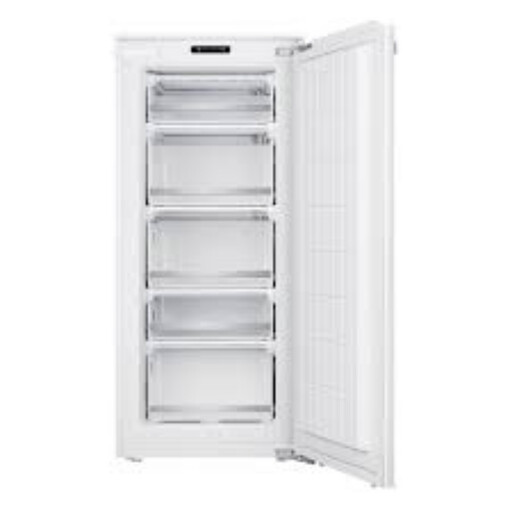 No image available
CDA FW582 White Integrated Three-Quarter-Height Freezer
Consider this integrated model when the available cabinet space and its removable baskets suit the way users separate portions.
The listing describes a fast-freeze function, but that feature alone does not establish a blast-freezing cycle or suitable batch rate. Check basket dimensions, installation fit and the freezing process you need.
View on Joybuy
Frequently asked questions
Do I need a blast freezer for pastry portions?
Not automatically: assess a blast freezer when a defined batch must be frozen rapidly, especially if products enter warm or freshly cooked. Foster specifies that its BFT48 can take up to 48 kg from +70°C to -18°C within 240 minutes; for routine storage of appropriately cooled portions, compare storage freezers against your tray and capacity needs instead.
Is an upright or chest freezer more practical for shared pastry stock?
An upright is worth assessing for frequent, shelf-by-shelf tray access; a chest freezer suits bulk reserves better when individual batches need retrieving less often. In either format, check internal tray space, stock rotation and the clearance needed to open the appliance.
What should happen before cooked pastry goes into a freezer?
For food businesses, GOV.UK advises cooling cooked dishes before freezing, dividing food into smaller portions and labelling everything frozen. Agree how batches will be identified and rotated when several people use the space.
Does a shared food-business kitchen need temperature checks?
A food-business kitchen should assess temperature monitoring as part of its food-safety arrangements: Food Standards Agency MyHACCP guidance calls for facilities appropriate to the operation. Establish who checks and records temperatures under the kitchen’s applicable procedures, rather than assuming that a freezer’s display provides a complete record.


